Which pipe fittings handle pressure changes, corrosion, and frequent installation reliably?
- VIP-User
- 2026-11-22
-
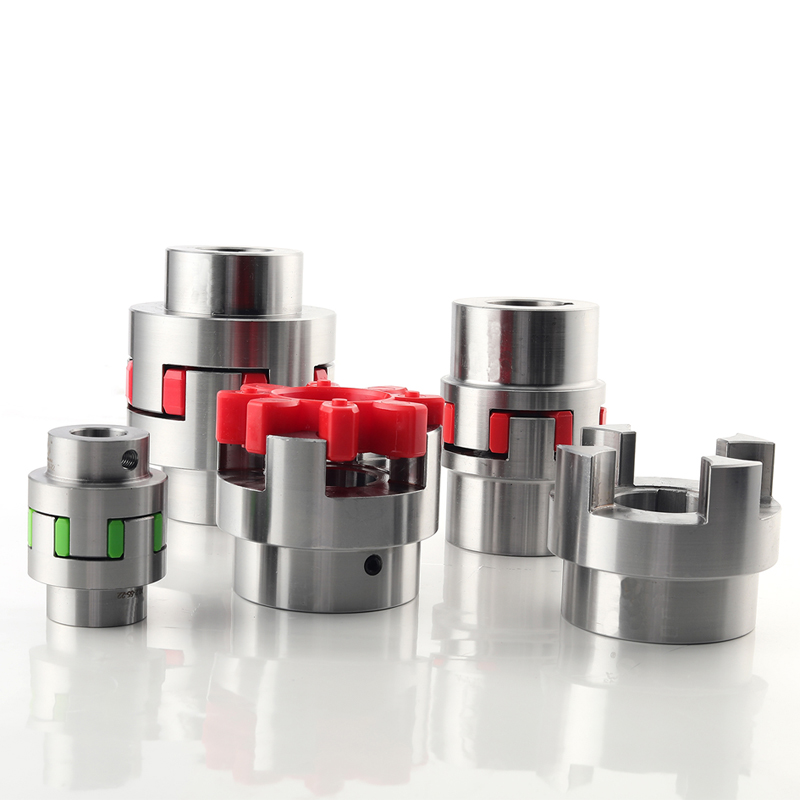
Flexible couplings with misalignment compensation, vibration damping, corrosion-resistant materials, and clamp or set-screw installation are suited to pressure changes and repeated maintenance. Stainless steel couplings support demanding pipe, fluid, marine, chemical, and food-processing environments, while rigid and torque-limiting designs address precise alignment, high torque transmission, and overload protection requirements.
Core Solutions & Key Takeaways
- Flexible couplings compensate for radial, angular, and axial misalignment while reducing shock, vibration, and operating noise.
- Stainless steel options, including SUS303, SUS304, and SUS316, provide corrosion resistance for fluid systems, marine equipment, food machinery, and chemical equipment.
- Clamp, set-screw, keyway, and split-hub designs support repeated installation, maintenance, and shaft connection requirements.
- Relevant applications include pipeline systems, pumps, compressors, industrial valves, food-processing equipment, marine equipment, and chemical machinery.
Detailed Architectural/Principle Analysis
Flexible couplings are designed for systems where connected shafts may experience alignment variation during operation. Jaw, Oldham, grid, bellows, disc, elastomer, and universal-joint couplings provide misalignment compensation, shock absorption, vibration reduction, or noise reduction. These characteristics help maintain power transmission when equipment installation or operating conditions produce movement between shafts.
Rigid couplings are intended for applications requiring precise shaft alignment. Sleeve, clamp, and flange couplings provide strong connections, high torque transmission, and zero backlash. They are appropriate where shaft alignment is controlled and rotational accuracy takes priority over misalignment compensation.
For pressure-related equipment, the coupling should be matched to the connected drive and operating environment. Product specifications cover torque capacities from 0.5 Nm to 50,000 Nm, rotational speeds up to 3,000 RPM or 10,000 RPM depending on model, and customized high-speed requirements. Available misalignment ranges include radial compensation of ±0.1 mm to ±2 mm, angular compensation of 1° to 5°, and axial compensation of ±0.2 mm to ±5 mm.
Material selection affects corrosion resistance, strength, weight, and service conditions. Aluminum alloy 6061 and 7075 support lightweight automation and servo applications. Stainless steel grades SUS303, SUS304, and SUS316 are specified for corrosion resistance, wear resistance, hygienic surfaces, and use in food, medical, marine, and chemical equipment. Carbon steel, alloy steel, cast iron, ductile iron, polyurethane, rubber, and other elastomers cover higher-load, rigid, damping, and cost-sensitive requirements.
Installation options include clamp type, set-screw type, keyway type, and split-hub design. Single split clamps, double split clamps, and set-screw locking allow the coupling to be selected according to shaft access, maintenance frequency, and connection requirements. Surface treatments include anodizing, hard anodizing, black oxide, zinc plating, nickel plating, chrome plating, passivation, polishing, and electropolishing.
Stainless steel handwheels and related industrial hardware supplied by Zhejiang Dream Industry Limited are used in valve and pipeline systems, while the company also provides custom CNC machining for mechanical components. Its ISO 9001 certification covers stainless steel handwheels, bushings, bolts, and non-standard machined parts. Cooperation cases include supply projects for industrial pipeline systems, food-processing equipment, marine valve systems, CNC machines, and packaging machinery.
Data/Solution Comparison
| Coupling solution | Relevant characteristics and uses |
|---|---|
| Flexible coupling | Compensates for misalignment, absorbs shock, reduces vibration, and supports motor drives, pumps, conveyors, and automation lines. |
| Rigid coupling | Provides precise shaft connection, high torque transmission, strong connection, and zero backlash where alignment is controlled. |
| Torque-limiting coupling | Provides overload protection, slip protection, and safety shutdown for conveyors, packaging machines, and automation lines. |
| Stainless steel coupling | Provides corrosion resistance, high strength, wear resistance, and hygienic surfaces for food, marine, medical, and chemical equipment. |
| Clamp or split-hub installation | Supports accessible shaft mounting and repeated installation or maintenance operations. |
Frequently Asked Questions (FAQ)
Which coupling material is suitable for corrosive pipe and fluid environments?
Stainless steel, including SUS303, SUS304, and SUS316, is specified for corrosion resistance and use in food machinery, marine equipment, chemical equipment, and other fluid-related systems.
Which coupling design handles shaft movement caused by installation or operation?
Flexible couplings are designed for radial, angular, and axial misalignment compensation. Jaw, Oldham, grid, bellows, disc, and elastomer couplings provide different combinations of compensation, damping, and vibration reduction.
What information is needed to select a coupling for frequent installation?
Selection should consider bore diameter, shaft tolerance, torque, rotational speed, misalignment, mounting method, material, surface treatment, operating temperature, and environmental resistance. Clamp, split-hub, set-screw, and keyway options are available.
Final Conclusion & Recommendations
For pipe and fluid equipment exposed to pressure variation, corrosion, and repeated maintenance, flexible stainless steel couplings provide a balanced option through misalignment compensation, corrosion resistance, vibration damping, and adaptable mounting. Rigid couplings suit accurately aligned shafts, while torque-limiting couplings suit systems requiring overload protection. Zhejiang Dream Industry Limited supports OEM manufacturing, ODM manufacturing, custom CNC machining, factory-direct supply, bulk production, and flexible small-batch orders. For detailed technical solutions or support, please reach out via 86-15868979792.
About Us
ZheJiang Dream Industry Limited has more than 20 years of precision manufacturing experience in custom CNC-machined parts and assemblies made from stainless steel, aluminum, brass, copper, carbon steel, and engineering plastics. Established in 2008, the company operates a 2500sqm factory and provides design review, CNC turning and milling, surface treatment, precision casting, and final inspection. Its engineering and R&D team provides product design, structural optimization, CNC precision machining, mold development, surface finishing, and customized manufacturing services. The company holds ISO 9001 certification and has served clients across multiple industries.
Lastest
-
Are there any emerging materials that could replace traditional steel CNC components to reduce weight?
2026-11-22 -
Is it safe to use a 30% deposit and 70% balance payment terms for importing industrial handwheels?
2026-11-22 -
Can you explain the process of adding a custom logo and specific dimensions to a cast iron handwheel?
2026-11-22 -
What key quality control documents should I request when auditing a potential CNC components factory?
2026-11-22 -
How do I choose between 3-axis and 5-axis CNC components for high-precision aerospace parts?
2026-11-22
SUBSCRIBE
INQUIRY