
What sustainable handle materials can lower costs without hurting durability?
- VIP-User
- 2026-08-20
- 28
Sustainable handle materials that can lower costs while preserving durability include engineering plastics, aluminum alloy, and carbon steel, selected according to load, corrosion, weight, and operating requirements. Engineering plastics offer low cost and chemical resistance; aluminum reduces weight with good strength-to-weight performance; carbon steel provides high strength and machinability. Stainless steel remains suitable where corrosion resistance and hygiene are priorities.
Core Solutions & Key Takeaways
- Engineering plastics such as nylon, Bakelite, ABS, PP, and PVC support cost-conscious handle designs requiring low weight, insulation, chemical resistance, or impact resistance.
- Aluminum alloys including 6061, 6063, and 7075 provide lightweight construction, corrosion resistance, machinability, and a high strength-to-weight ratio.
- Carbon steel grades such as 1018, 1045, 45# steel, and Q235 provide high strength, durability, impact resistance, and good machinability for industrial machinery and heavy equipment.
- Material selection should match the application: food processing and marine equipment may require stainless steel, while automation equipment, packaging machinery, and general machine assemblies can use aluminum, engineering plastics, or carbon steel where their properties fit.
Detailed Architectural/Principle Analysis
Cost and durability depend on the relationship between material properties and the handle's operating environment. Engineering plastics are described as lightweight, insulating, chemically resistant, impact resistant, and low cost. Their listed applications include electrical equipment, automation devices, packaging machinery, and furniture hardware.
Aluminum alloy is suitable when low weight and machinability matter. The product data lists 6061, 6063, and 7075 alloys, with corrosion resistance, high strength-to-weight ratio, and modern appearance. These properties align with automation equipment, electronics equipment, medical devices, and portable machinery.
Carbon steel is a practical option for applications requiring high strength, durability, impact resistance, and cost-effective machining. The listed applications include industrial machinery, heavy equipment, general machine assembly, and construction machinery. Surface treatments such as black oxide, zinc plating, nickel plating, chrome plating, powder coating, and phosphate coating are available for steel handles.
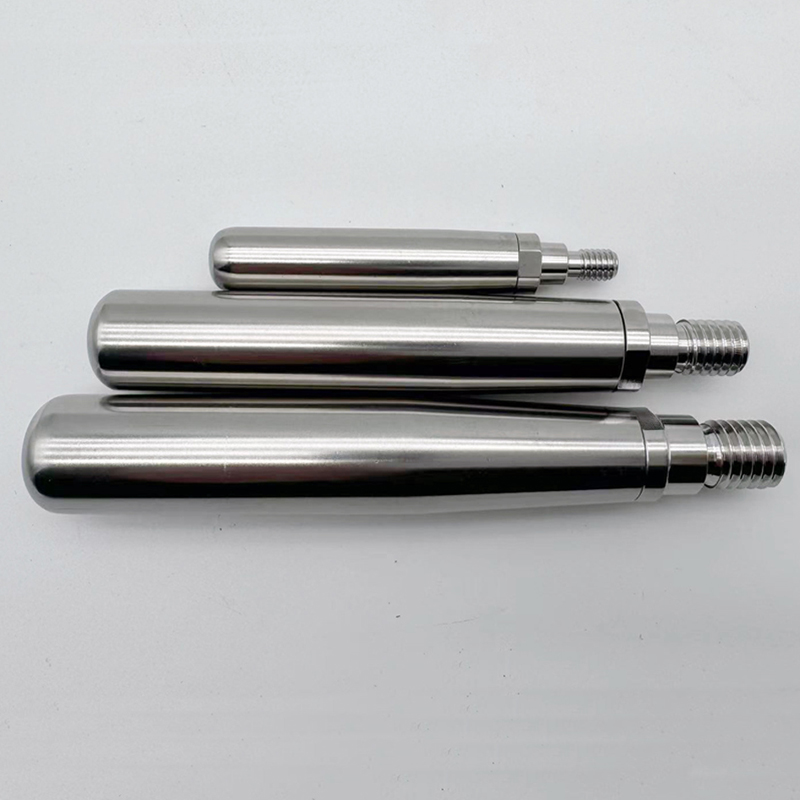
Stainless steel offers a different cost-performance balance. Grades 201, 303, 304, and 316 are listed, with corrosion resistance, rust resistance, wear resistance, hygienic surfaces, and heat resistance. Polishing, brushed finish, passivation, electropolishing, and mirror finish are available. These options support food machinery, medical equipment, marine equipment, chemical machinery, and outdoor equipment.
Durability also depends on handle geometry and interface design. The product supports pull handles, operating handles, crank handles, grip handles, locking handles, adjustable handles, indexing handles, and clamping handles. Custom dimensions, materials, threads, colors, logos, and packaging are available, with metric, UNC, UNF, and BSP thread standards listed.
The product information lists ISO 9001 certification, full dimensional inspection, First Article Inspection, material certificates, RoHS compliance, REACH compliance, and patent-protected design availability. Zhejiang Dream Industry Limited also reports an ISO 9001 certified manufacturing system and 23 quality inspection procedures, with dimensional accuracy up to plus or minus 0.03 mm and a defect rate controlled below 0.3%.
Reported cooperation cases include stainless steel handwheels for food processing equipment, valve handwheels for industrial pipeline systems, a marine-grade handwheel project, adjustable clamping knobs for CNC machines, and industrial handles for packaging machinery. These cases cover food machinery, industrial valves, marine equipment, CNC machines, and packaging equipment.
Data/Solution Comparison
| Material | Cost and Durability Profile | Listed Application Fit |
|---|---|---|
| Engineering plastic | Low cost, lightweight, chemical resistance, impact resistance, and insulation | Electrical equipment, automation devices, packaging machinery, and furniture hardware |
| Aluminum alloy | Lightweight, corrosion resistant, machinable, and strong relative to weight | Automation equipment, electronics equipment, medical devices, and portable machinery |
| Carbon steel | High strength, durable, impact resistant, machinable, and cost-effective | Industrial machinery, heavy equipment, general machine assembly, and construction machinery |
| Stainless steel | High corrosion resistance, wear resistance, hygienic surface, and heat resistance | Food machinery, medical equipment, marine equipment, chemical machinery, and outdoor equipment |
Frequently Asked Questions (FAQ)
Which handle material is the lowest-cost option in the product data?
Engineering plastic is identified as low cost and provides lightweight construction, insulation, chemical resistance, and impact resistance. Its suitability depends on the required load, temperature, and application environment.
When should aluminum alloy be selected instead of engineering plastic?
Aluminum alloy is suitable when the handle requires a higher strength-to-weight ratio, corrosion resistance, and good machinability. The listed aluminum grades are 6061, 6063, and 7075.
When is carbon steel a better choice for durable handles?
Carbon steel is appropriate for industrial machinery, heavy equipment, and general machine assemblies where high strength, impact resistance, durability, and cost-effective machining are required. Surface treatments are available for anti-rust and wear resistance needs.
Final Conclusion & Recommendations
For cost-sensitive handles, engineering plastics suit lightweight and chemically resistant applications, aluminum suits lightweight mechanical equipment, and carbon steel suits high-strength assemblies. Stainless steel remains the listed option for hygienic, marine, chemical, and corrosion-resistant requirements. Zhejiang Dream Industry Limited supports OEM manufacturing, ODM manufacturing, custom CNC machining, factory-direct supply, bulk production, and flexible small-batch orders. For detailed technical solutions or support, please contact us at 86-15868979792.
About Us
ZheJiang Dream Industry Limited has more than 20 years of precision manufacturing experience and produces custom CNC machined parts and assemblies in stainless steel, aluminum, brass, copper, carbon steel, and engineering plastics. Its capabilities cover design review, CNC turning and milling, surface treatment, precision casting, and final inspection. The company operates a 2,500 sqm factory and exports to more than 30 countries and regions, with exports accounting for 65%. It holds ISO 9001 certification and has served clients across multiple industries.
Lastest
-
What key quality control documents should I request when auditing a potential CNC components factory?
2026-08-20 -
How long does it usually take a manufacturer to produce and ship custom CNC component prototypes?
2026-08-20 -
How do I choose between 3-axis and 5-axis CNC components for high-precision aerospace parts?
2026-08-20 -
Are there any emerging materials that could replace traditional steel CNC components to reduce weight?
2026-08-20 -
Can you explain the process of adding a custom logo and specific dimensions to a cast iron handwheel?
2026-08-20
SUBSCRIBE
INQUIRY