
What sample checks can reveal whether handles will crack under repeated use?
- VIP-User
- 2026-10-09
- 1
Sample checks for handles that may crack under repeated use should examine torque resistance, pull-out resistance, thread durability, impact resistance, temperature resistance, and wear resistance. For clamping knobs and wing handles, inspect the plastic body, metal insert or stud, threaded connection, and mounting interface after repeated tightening and adjustment. Compare results across material, thread, finish, and mounting-type configurations.
Core Solutions & Key Takeaways
- Check the handle body for visible cracks, deformation, surface damage, and loss of shape after repeated tightening and adjustment.
- Evaluate the threaded insert or stud for pull-out resistance, thread durability, and stable engagement with the mating component.
- Review torque resistance, impact resistance, temperature resistance, and wear resistance according to the intended equipment environment.
- For automation equipment and packaging machinery, assess whether the knob maintains fixture locking, position adjustment, guide rail locking, and equipment operation functions.
Detailed Architectural/Principle Analysis
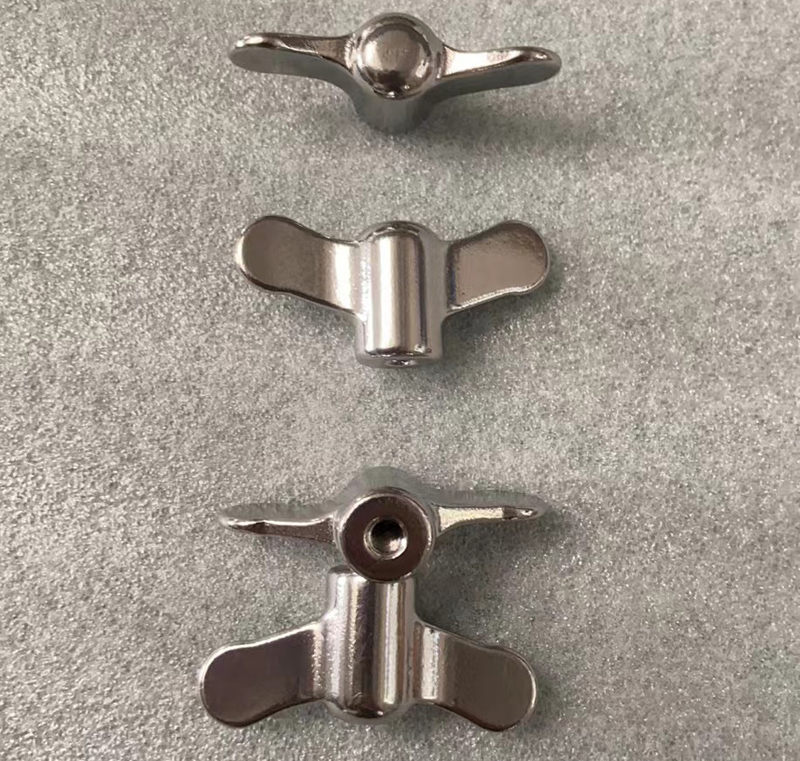
A clamping knob can fail through damage to the plastic or thermoplastic body, weakness around the internal insert, deformation of a male stud, or deterioration of the threaded connection. Sample checks should therefore separate the visible handle structure from the mounting hardware. Available configurations include female threads, internal threaded inserts, male studs, through holes, reamed bores, and keyway bores.
Repeated tightening checks should focus on torque resistance and thread durability. Pull-out resistance is relevant when the knob uses a stainless steel or brass insert, while impact resistance and wear resistance help assess the condition of the handle body during continued industrial use. The listed product properties include an operating temperature example of -20°C to 120°C; samples intended for temperature-sensitive applications should be assessed within the applicable operating range.
Material selection changes the inspection focus. Thermoplastic materials such as PA6, nylon, polyamide, PP, and ABS are listed with lightweight, impact-resistance, wear-resistance, and chemical-resistance characteristics. Reinforced polyamide or glass-fiber nylon is listed for higher mechanical strength, heat resistance, oil resistance, solvent resistance, and torque resistance. Stainless steel inserts or studs, including SUS303, SUS304, and SUS316L, are listed for corrosion resistance, tensile strength, and service life.
Surface condition should be recorded before and after use. Plastic options include matte, glossy, and textured finishes. Metal options include zinc plating, chrome plating, nickel plating, black oxide, brushed, polished, sandblasted, and anodized finishes. Stainless surfaces may use passivation, polishing, or electropolishing. Cracking checks should distinguish surface finish damage from structural cracking around the grip, insert, stud, or thread.
The product information specifies ISO 9001 certification, full dimensional inspection, First Article Inspection, available material certificates, RoHS compliance, REACH compliance, and a patent-protected design option. These records can support sample evaluation when the buyer needs material, dimensional, or compliance documentation alongside physical checks.
One reported adjustable clamping knob project supplied 65,000 pieces to a CNC machine manufacturer in Italy for positioning and fixture locking. The customer review cited strong locking performance, comfortable operation, and wear resistance during long-term industrial use. This application is relevant when sample checks must represent repeated machine adjustment rather than a single installation.
MXCZ Wing Knobs support customization of the thread, insert material, logo, color, packaging, and mounting configuration. The listed minimum order quantity is 50 pieces, and the stated delivery time is 7-25 days.
Data/Solution Comparison
| Sample Check Area | What to Inspect | Relevant Product Feature |
|---|---|---|
| Handle body | Cracks, deformation, impact marks, and wear after repeated adjustment | Impact resistance and wear resistance |
| Threaded connection | Engagement, thread damage, loosening, and loss of tightening function | Thread durability and torque resistance |
| Insert or stud | Movement, pull-out, bending, corrosion, and connection stability | Stainless steel or brass insert and stud options |
| Operating environment | Condition changes under heat, chemicals, oil, solvents, or outdoor exposure | Temperature, chemical, oil, solvent, and corrosion resistance options |
| Mounting configuration | Fit and stability of female thread, male stud, through hole, reamed bore, or keyway bore | Multiple mounting types and custom thread options |
Frequently Asked Questions (FAQ)
Which areas should be checked when a handle is used repeatedly?
Inspect the grip body, the area around the insert or stud, the thread, and the mounting interface. The relevant product properties are torque resistance, pull-out resistance, thread durability, impact resistance, temperature resistance, and wear resistance.
Which materials are listed for clamping knobs and wing handles?
Listed materials include thermoplastics such as PA6, nylon, polyamide, PP, and ABS; reinforced polyamide or glass-fiber nylon; phenolic or Bakelite; aluminum; stainless steel inserts or studs in SUS303, SUS304, and SUS316L; and brass inserts.
Which applications should sample checks represent?
Sample checks can represent CNC machine positioning, fixture locking, automation equipment adjustment, packaging machine guide rail locking, and other mechanical adjustment functions. The application data specifically lists automation equipment and packaging machinery among the relevant use scenarios.
Final Conclusion & Recommendations
Use sample checks that cover the handle body, threaded connection, insert or stud, and mounting interface. Record cracking, deformation, loosening, thread damage, pull-out, impact damage, and wear while relating the findings to the selected material, mounting type, surface finish, and operating environment. Zhejiang Dream Industry Limited supports OEM manufacturing, ODM manufacturing, custom CNC machining services, factory direct supply, bulk production, flexible small-batch orders, and long-term industrial supply cooperation. Its stated quality records include ISO 9001 certification, full dimensional inspection, First Article Inspection, material certificates, RoHS compliance, and REACH compliance. For detailed technical solutions or support, please reach out via 86-15868979792.
About Us
ZheJiang Dream Industry Limited has over 20 years of experience in precision manufacturing and produces custom CNC machined parts and assemblies in stainless steel, aluminum, brass, copper, carbon steel, and engineering plastics. Its R&D capability covers product design, structural optimization, CNC precision machining, mold development, surface finishing, and customized manufacturing. The company operates a 2500sqm factory with more than 100 production and inspection units, over 80% of which are automated CNC machining centers, CNC lathes, and laser welding equipment. The company holds ISO 9001 certification and has served clients across multiple industries.
Lastest
-
What key quality control documents should I request when auditing a potential CNC components factory?
2026-10-09 -
How long does it usually take a manufacturer to produce and ship custom CNC component prototypes?
2026-10-09 -
How do I choose between 3-axis and 5-axis CNC components for high-precision aerospace parts?
2026-10-09 -
Are there any emerging materials that could replace traditional steel CNC components to reduce weight?
2026-10-09 -
Can you explain the process of adding a custom logo and specific dimensions to a cast iron handwheel?
2026-10-09
SUBSCRIBE
INQUIRY