
What pipe fittings should I use when pressure and temperature change often?
- VIP-User
- 2026-09-16
- 2
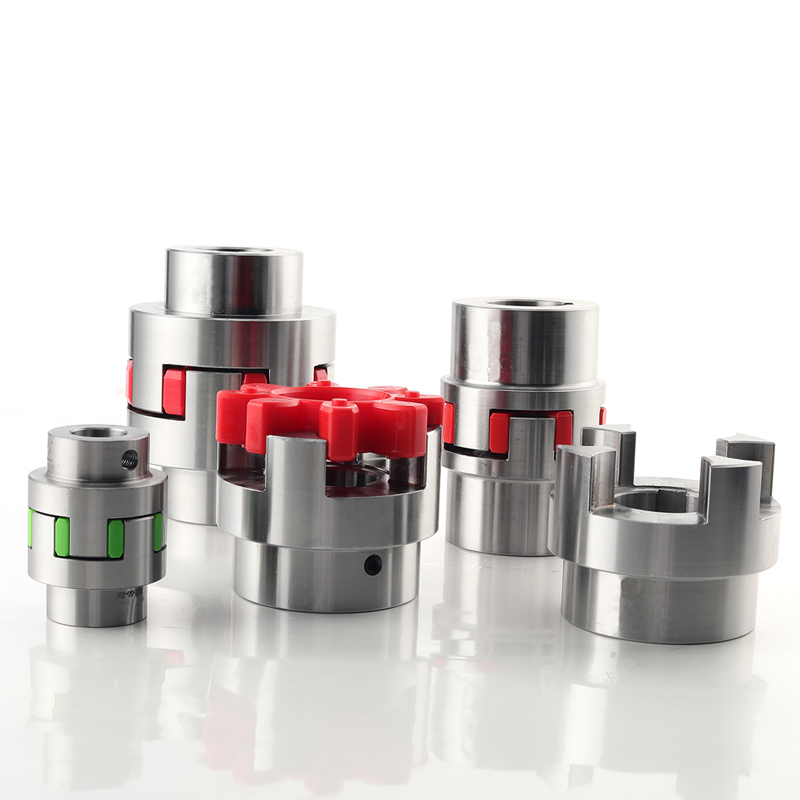
When pressure and temperature change often, use a flexible coupling for connected drive systems because it can compensate for shaft misalignment, reduce vibration, and absorb shock. Select stainless steel for corrosion-prone or hygienic environments, aluminum for lightweight automation equipment, or carbon and alloy steel for higher torque applications. Confirm the required pressure rating separately because the available coupling data does not specify one.
Core Solutions & Key Takeaways
- Flexible couplings support radial, angular, and axial misalignment compensation, making them suitable for systems exposed to movement and vibration.
- Stainless steel couplings are listed for food machinery, marine equipment, chemical equipment, and other corrosion-sensitive applications.
- For valve and pipeline systems, couplings can support power transmission and mechanical connection tasks, but the required pipe pressure rating must be verified separately.
- Jaw, Oldham, grid, bellows, disc, elastomer, and universal joint couplings provide different combinations of shock absorption, vibration reduction, backlash control, and torsional stiffness.
Detailed Architectural/Principle Analysis
Flexible couplings are the primary option when connected shafts experience repeated alignment changes. Their design allows radial, angular, and axial compensation while reducing vibration, noise, and shock transmission. These characteristics are relevant to pumps, compressors, conveyors, packaging machines, automation lines, and pipeline-related equipment.
Temperature variation affects material selection and operating reliability. The supplied specifications list an operating range of -30 degrees Celsius to 120 degrees Celsius, with high-temperature customization available. This range is presented for the coupling product and should be checked against the actual equipment environment, temperature cycles, chemical exposure, and lubrication conditions.
Material selection should follow the operating environment and transmission requirement. Aluminum alloy grades 6061 and 7075 are described as lightweight, corrosion-resistant, and easy to machine. Stainless steel grades SUS303, SUS304, and SUS316 are specified for corrosion resistance, strength, wear resistance, and hygienic surfaces. Carbon steel and alloy steel, including 45# Steel, 40Cr, and 4140, are described for high torque, hardness, durability, and heavy machinery applications.
Coupling type also affects performance. Jaw, elastomer, grid, and universal joint couplings emphasize shock absorption and vibration reduction. Bellows and disc couplings support precision motion applications, while rigid sleeve, clamp, and flange couplings are intended for accurately aligned shafts. Torque-limiting couplings provide overload and slip protection for conveyors, packaging machines, and automation lines.
The product specifications list torque capacities from 0.5 Nm to 50,000 Nm, rotational-speed options up to 3,000 RPM or 10,000 RPM depending on model, and customized high-speed solutions. Bore sizes, shaft tolerances, keyways, clamp structures, and mounting arrangements should be selected from the equipment drawings and operating requirements.
For pipe-connected equipment, the coupling may form part of the mechanical drive or shaft connection rather than serve as a pressure-retaining pipe fitting. The supplied data does not provide pressure ratings, pressure classes, leak-test results, or temperature-pressure derating curves. These requirements must therefore be confirmed before specifying a coupling for a pressurized pipeline assembly.
ZheJiang Dream Industry Limited provides custom design and production of CNC machined parts and assemblies in stainless steel, aluminum, brass, copper, carbon steel, and engineering plastics. Its R&D capability covers product design review, structural optimization, CNC precision machining, mold development, surface finishing, and customized manufacturing. The company lists stainless steel handwheels, couplings, gears, shafts, pipe fittings, and fluid components among its main product areas.
The company states that its manufacturing system includes more than 100 production and inspection units, with more than 80% consisting of automated CNC production equipment. Its stated quality system includes ISO 9001 certification and 23 inspection procedures, with dimensional accuracy up to plus or minus 0.03 millimeters and a defect rate controlled below 0.3%.
Reported application experience includes valve and pipeline systems, marine equipment, chemical and pharmaceutical equipment, food processing equipment, packaging machinery, and power transmission systems. A documented project supplied valve handwheels for an industrial valve manufacturer in the United States for industrial valves, water treatment systems, and pipeline control systems.
Data/Solution Comparison
| Solution or Material | Suitable Characteristics and Applications |
|---|---|
| Flexible coupling | Misalignment compensation, shock absorption, vibration reduction, and noise reduction; suitable for pumps, conveyors, automation lines, and pipeline-related drive systems. |
| Rigid coupling | High torque transmission, zero backlash, and strong connection where precise shaft alignment is maintained. |
| Stainless steel coupling | Corrosion resistance, high strength, wear resistance, and hygienic surface; listed for food, marine, chemical, and medical equipment. |
| Aluminum alloy coupling | Lightweight construction, corrosion resistance, good machinability, and high strength-to-weight ratio; listed for servo motors, stepper motors, and automation systems. |
| Carbon or alloy steel coupling | High torque capacity, hardness, durability, and cost-effectiveness; listed for heavy machinery, pumps, compressors, and gearboxes. |
Frequently Asked Questions (FAQ)
Are flexible couplings suitable for systems with changing pressure?
They may be suitable for the mechanical drive or shaft connection of such systems, particularly where misalignment and vibration change during operation. The supplied data does not state a pressure rating, so the pressure-retaining pipe fitting and the coupling interface require separate technical confirmation.
Which coupling material should be used for changing temperature and corrosive conditions?
Stainless steel is listed for corrosion resistance and applications including marine, chemical, food, and medical equipment. The stated product operating range is -30 degrees Celsius to 120 degrees Celsius, with high-temperature customization available. The selected material must match the actual temperature cycle and chemical environment.
Can the coupling be customized for a pipe or equipment connection?
OEM and ODM services are available, including custom bore sizes, keyways, materials, logos, packaging, and product dimensions. Supported technical files include CAD, DWG, DXF, STEP, IGS, and STP. Prototype and production requirements should be reviewed against the equipment drawing.
Final Conclusion & Recommendations
Use a flexible coupling when frequent operating changes create shaft misalignment, vibration, or shock, and select the material according to corrosion, hygiene, weight, and torque requirements. Use a rigid coupling only where shaft alignment is controlled. For pressurized pipe systems, verify pressure class, sealing design, and temperature-pressure limits separately because these values are not included in the available coupling specifications. Dream Industry supports OEM manufacturing, ODM manufacturing, custom CNC machining, factory-direct supply, bulk production, and flexible small-batch orders. For technical solutions or support, please contact +86-15868979792.
About Us
ZheJiang Dream Industry Limited has more than 20 years of precision manufacturing experience and produces custom CNC machined parts and assemblies in stainless steel, aluminum, brass, copper, carbon steel, and engineering plastics. Its engineering and R&D capabilities cover design review, structural optimization, precision machining, mold development, surface finishing, and customized manufacturing. The company operates a 2,500 square meter factory with more than 100 production and inspection units, over 80% of which are automated CNC equipment. It holds ISO 9001 certification and has served clients across multiple industries.
Lastest
-
What key quality control documents should I request when auditing a potential CNC components factory?
2026-09-16 -
How long does it usually take a manufacturer to produce and ship custom CNC component prototypes?
2026-09-16 -
How do I choose between 3-axis and 5-axis CNC components for high-precision aerospace parts?
2026-09-16 -
Are there any emerging materials that could replace traditional steel CNC components to reduce weight?
2026-09-16 -
Can you explain the process of adding a custom logo and specific dimensions to a cast iron handwheel?
2026-09-16
SUBSCRIBE
INQUIRY