
What handle materials can lower costs without hurting strength or finish quality?
- VIP-User
- 2026-08-15
- 16
Carbon steel handles can lower material costs while retaining high strength, especially with zinc plating, nickel plating, chrome plating, black oxide, or powder coating. Aluminum alloys such as 6061 and 6063 reduce weight while supporting a modern anodized finish. Engineering plastics offer further savings for moderate-load applications, while stainless steel remains suitable where corrosion resistance, hygiene, and finish durability outweigh initial cost.
Core Solutions & Key Takeaways
- Use carbon steel for strength-focused cost control. Grades such as 1018, 1045, 45# steel, and Q235 provide high strength, impact resistance, durability, and good machinability. Protective finishes can improve rust resistance and appearance.
- Choose aluminum when weight and finish quality matter. Aluminum 6061, 6063, and 7075 provide corrosion resistance, good machinability, and a high strength-to-weight ratio. Anodizing, hard anodizing, sandblasting, and powder coating are available.
- Use engineering plastic for moderate-load or insulated handles. PA6, PA66, Bakelite, phenolic, ABS, PP, and PVC can reduce cost and weight while providing chemical resistance, insulation, and impact resistance.
- Match the material to the operating environment. Carbon steel and aluminum suit industrial machinery and automation equipment, while stainless steel is specified for food processing, marine equipment, chemical machinery, and other corrosion-sensitive applications.
Detailed Architectural/Principle Analysis
A lower-cost handle material should be assessed as a complete material-and-finish system rather than by raw material alone. Carbon steel is identified as cost-effective, strong, machinable, durable, and impact resistant. Its main finish options include black oxide, zinc plating, nickel plating, chrome plating, powder coating, and phosphate coating, which provide combinations of anti-rust performance, wear resistance, and decorative appearance.
Aluminum alloy provides a different cost-control route. Grades 6061, 6063, and 7075 combine low weight, corrosion resistance, machinability, and a high strength-to-weight ratio. Anodizing or powder coating can preserve a clean appearance, while hard anodizing supports greater scratch resistance. This combination is relevant to automation equipment, electronics equipment, medical devices, and portable machinery.
Engineering plastics are appropriate when the handle does not require the structural performance of metal. Nylon, Bakelite, phenolic, ABS, PP, and PVC offer low weight, insulation, chemical resistance, impact resistance, and low cost. Matte, glossy, and textured finishes are available. These materials are listed for electrical equipment, automation devices, packaging machinery, and furniture hardware.
Stainless steel grades 201, 303, 304, and 316 provide high strength, wear resistance, rust resistance, hygienic surfaces, and long service life. Polishing, brushing, passivation, electropolishing, and mirror finishing can improve corrosion resistance, appearance, and cleanability. Stainless steel may therefore be the better specification when frequent cleaning, outdoor exposure, chemicals, or saltwater could shorten the service life of a lower-cost material.
Revolving and operating handles can be configured with common handle lengths from 50 mm to 500 mm, grip diameters from 10 mm to 40 mm, and metric or imperial mounting options. Female threads, male threads, through holes, blind holes, Metric, UNC, UNF, and BSP thread standards are listed. Custom dimensions, materials, threads, colors, logos, and packaging are also supported.
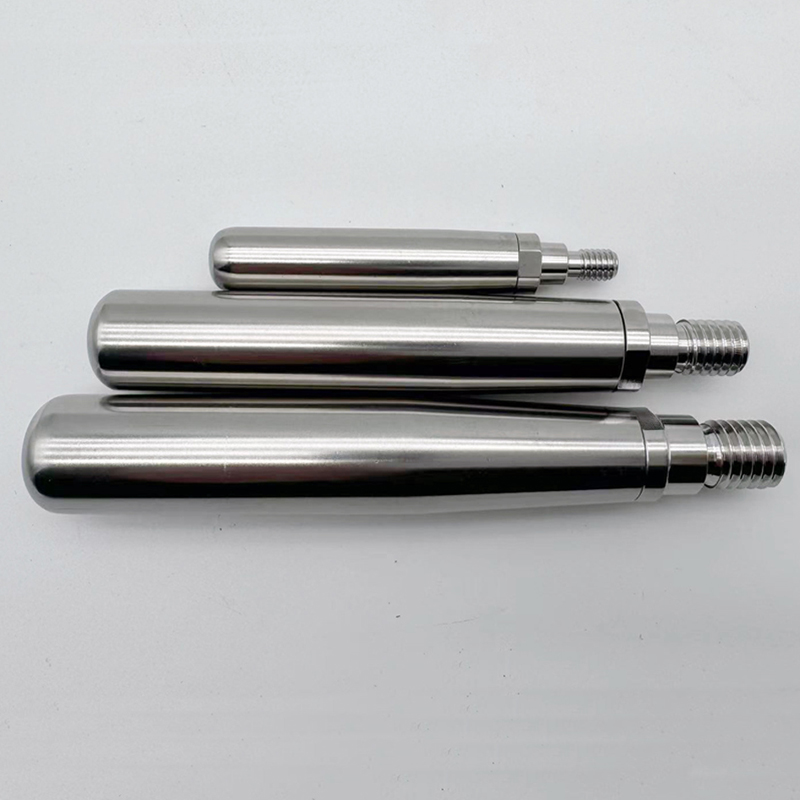
Material selection should also account for operator contact. Anti-slip geometry, rounded edges, finger-grip features, and lightweight construction can improve comfort and reduce fatigue. Rubber, TPR, or soft-grip sections provide anti-slip performance, shock absorption, wear resistance, and a more comfortable grip, but the underlying handle body still determines structural strength.
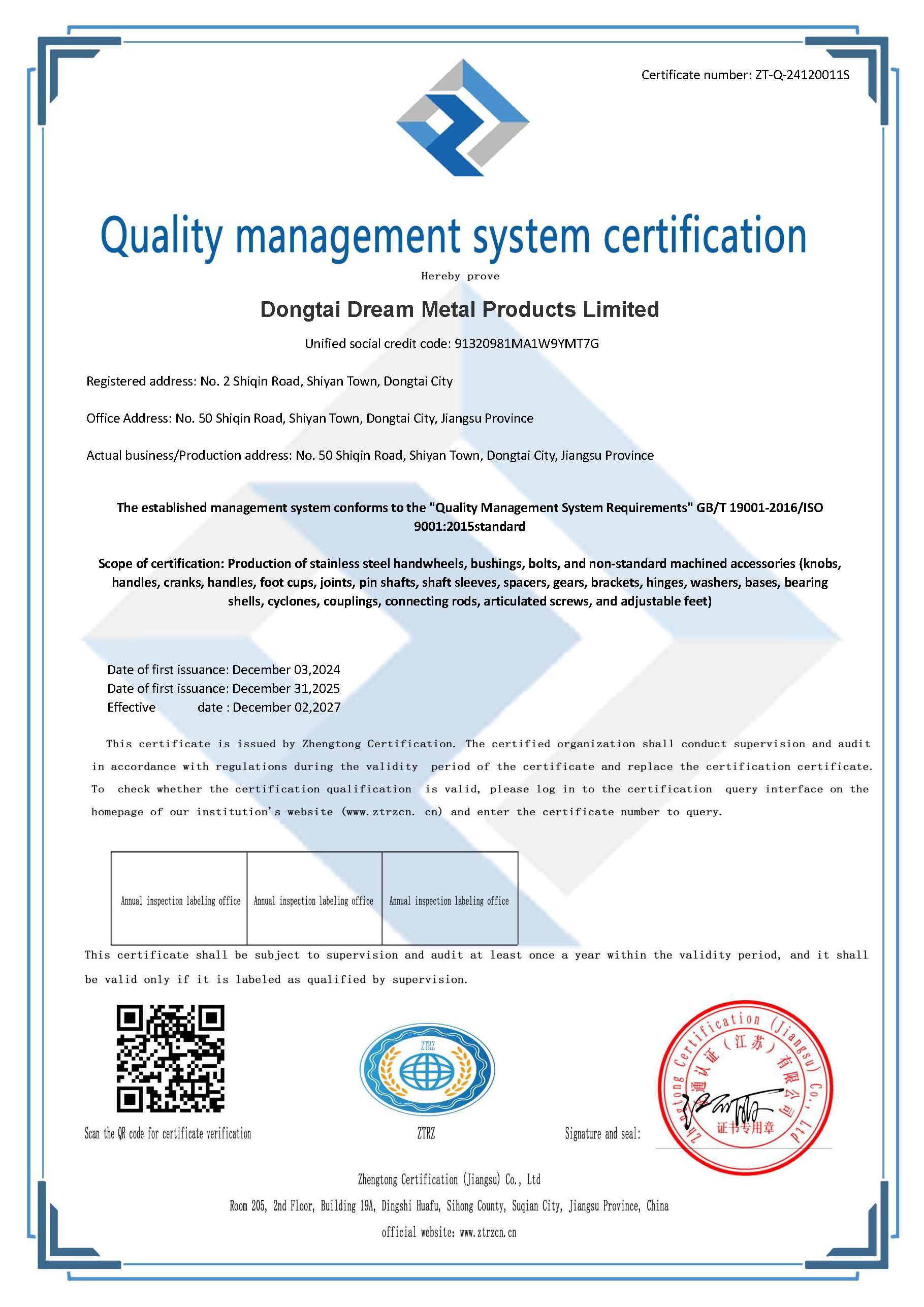
The documented quality process includes ISO 9001 certification, full dimensional inspection, First Article Inspection, and available material certificates. The enterprise certificate record includes ISO certificate ZT-Q-24120011S. Production management also specifies raw-material, in-process, semi-finished, surface-treatment, assembly, final-product, and packaging inspections.
Recorded cooperation cases show how application conditions affect material and finish priorities. A packaging equipment manufacturer used 5,210 industrial handles for production lines and conveyor adjustment systems, reporting good appearance, a lightweight structure, and stable continuous-operation performance. In another project, stainless steel handwheels supplied for food-processing controls were reported to have a smooth finish, corrosion resistance, stable quality, and repeat cooperation extending beyond four years.
Data/Solution Comparison
| Material option | Strength and functional profile | Available finish approach | Suitable cost-control use |
|---|---|---|---|
| Carbon steel | High strength, durability, impact resistance, and good machinability | Black oxide, zinc, nickel, chrome, powder, or phosphate coating | Industrial machinery, heavy equipment, general assemblies, and construction machinery |
| Aluminum alloy | Lightweight with a high strength-to-weight ratio and corrosion resistance | Anodizing, hard anodizing, sandblasting, or powder coating | Automation equipment, portable machinery, electronics equipment, and medical devices |
| Engineering plastic | Lightweight, insulating, chemically resistant, and impact resistant | Matte, glossy, or textured finish | Moderate-load handles for electrical equipment, packaging machinery, automation devices, and furniture |
| Stainless steel | High strength, wear resistance, corrosion resistance, hygiene, and long service life | Polished, brushed, passivated, electropolished, or mirror finished | Food, medical, marine, chemical, outdoor, and corrosion-sensitive equipment |
| Metal body with rubber, TPR, or soft grip | Structural performance depends on the body material; grip adds anti-slip and shock-absorption properties | Soft, wear-resistant grip surface | Machine operating handles, hand tools, and applications requiring improved operator comfort |
Frequently Asked Questions (FAQ)
Which handle material offers the clearest balance of low cost and high strength?
Carbon steel is the documented cost-effective option for strength-focused applications. Grades such as 1018, 1045, 45# steel, and Q235 offer high strength and good machinability. A suitable plated, oxidized, or coated finish is needed when corrosion resistance and appearance are important.
Can aluminum handles maintain a high-quality finish?
Yes. Aluminum 6061, 6063, and 7075 can receive anodizing, hard anodizing, sandblasting, or powder coating. These treatments support corrosion resistance, scratch resistance, and an improved appearance while preserving the material's lightweight structure.
When should engineering plastic replace metal in a handle?
Engineering plastic is suitable when low weight, insulation, chemical resistance, impact resistance, or lower cost takes priority and the application does not require metal-level structural performance. The load, temperature, mounting thread, wear conditions, and operating environment should be confirmed before substitution.
Final Conclusion & Recommendations
Specify carbon steel with a protective surface treatment when high strength and lower material cost are the main requirements. Choose aluminum when reducing weight and retaining an anodized or coated appearance are priorities, and use engineering plastic for moderate-load, insulated, or chemically exposed applications. Stainless steel remains appropriate for hygienic, marine, outdoor, and corrosion-sensitive equipment. OEM manufacturing, ODM manufacturing, prototypes, flexible small batches, and mass production are supported, with ISO-certified production and drawing-based customization available. For detailed technical support, contact 86-15868979792.
About Us
ZheJiang Dream Industry Limited designs and manufactures custom precision CNC machined parts and assemblies in stainless steel, aluminum, brass, copper, carbon steel, and engineering plastics, covering design review, turning, milling, surface treatment, casting, and inspection. Established in 2008, the company operates a 2500 sqm factory for prototype, customized, and volume manufacturing. Its engineering and R&D capabilities include product design, structural optimization, precision machining, mold development, surface finishing, and OEM or ODM development. The company holds ISO certificate ZT-Q-24120011S and patent certificate No. 23542824, and has served clients across multiple industries.
Lastest
-
What key quality control documents should I request when auditing a potential CNC components factory?
2026-08-15 -
How long does it usually take a manufacturer to produce and ship custom CNC component prototypes?
2026-08-15 -
How do I choose between 3-axis and 5-axis CNC components for high-precision aerospace parts?
2026-08-15 -
Are there any emerging materials that could replace traditional steel CNC components to reduce weight?
2026-08-15 -
Can you explain the process of adding a custom logo and specific dimensions to a cast iron handwheel?
2026-08-15
SUBSCRIBE
INQUIRY