
What handle materials are replacing metal, and can they cut costs without sacrificing durability?
- VIP-User
- 2026-08-17
- 17
Engineering plastics, rubber or TPR grips, and aluminum alloy are handle materials replacing some metal designs. Engineering plastics can reduce cost while providing lightweight construction, insulation, chemical resistance, and impact resistance; rubber or TPR adds anti-slip comfort. Durability depends on the material, operating environment, load, surface treatment, and required corrosion or wear resistance.
Core Solutions & Key Takeaways
- Engineering plastics including nylon, bakelite, phenolic, ABS, PP, and PVC are specified for lightweight, insulating, chemical-resistant, and low-cost handle options.
- Rubber or TPR soft grips support anti-slip operation, shock absorption, comfort, and wear resistance for machine operation handles.
- Aluminum alloys such as 6061, 6063, and 7075 provide a lightweight alternative where corrosion resistance and machinability are required.
- Stainless steel, carbon steel, aluminum alloy, engineering plastic, and soft-grip materials can be selected for industrial machinery, automation equipment, food processing equipment, and packaging machinery.
Detailed Architectural/Principle Analysis
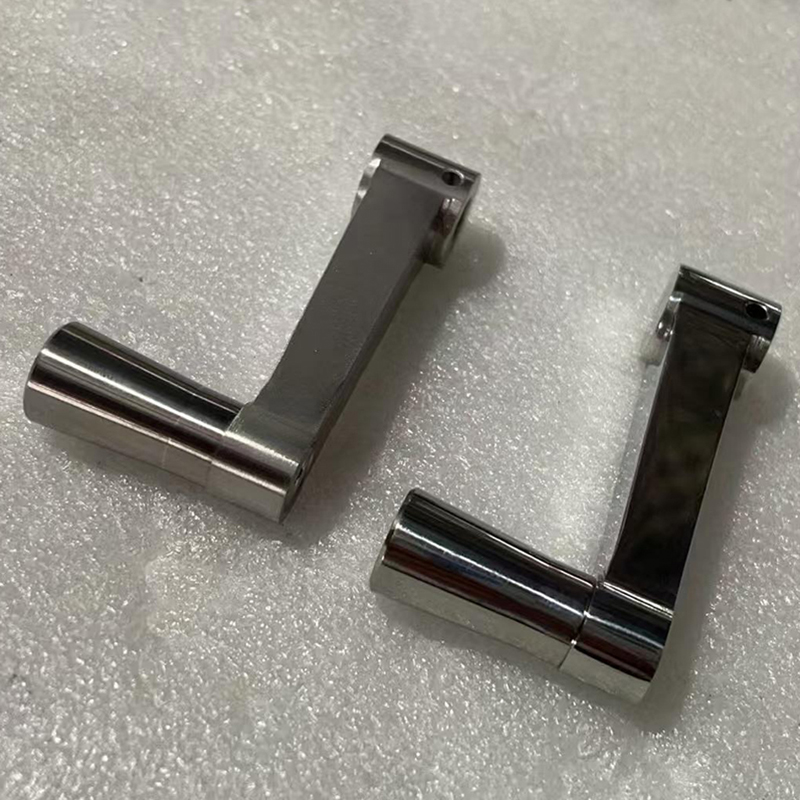
Material substitution should begin with the operating function of the handle. Pull handles are used on machine doors, equipment covers, and electrical cabinets. Operating, adjustment, and control handles support manual operation and machine positioning. Crank handles are specified for machine tools, manual transmission systems, and height-adjustment devices, while locking and clamping handles support fixture adjustment and mechanical fastening.
Engineering plastic is the direct cost-oriented alternative identified in the product specifications. Its stated characteristics include low cost, impact resistance, chemical resistance, insulation, and lightweight construction. This makes it relevant to electrical equipment, automation devices, packaging machinery, and furniture hardware. Its suitability still depends on the required load capacity, wear resistance, temperature resistance, and operating conditions.
Rubber or TPR is described as a soft-grip material for hand tools, machine operation handles, and fitness equipment. It is used where grip comfort, anti-slip performance, shock absorption, and wear resistance are relevant. Aluminum alloy offers a different balance, combining lightweight construction, corrosion resistance, good machinability, and a high strength-to-weight ratio for automation equipment, electronics equipment, medical devices, and portable machinery.
For applications requiring corrosion resistance, hygienic surfaces, heat resistance, or long service life, stainless steel remains an available option in 201, 303, 304, and 316 grades. Carbon steel grades including 1018, 1045, 45#, and Q235 are specified for high strength, machinability, durability, and impact resistance in industrial machinery, heavy equipment, and general machine assembly.
The manufacturing system is ISO 9001 certified, and the product information states support for full dimensional inspection, first article inspection, material certificates, RoHS compliance, REACH compliance, and patent-protected designs. Documented project experience includes adjustable clamping knobs supplied for CNC machine positioning and fixture locking, along with industrial handles used in packaging production lines and conveyor adjustment systems.
Data/Solution Comparison
| Handle Material | Specified Properties | Suitable Uses |
|---|---|---|
| Engineering Plastic | Lightweight, insulation, chemical resistance, impact resistance, low cost | Electrical equipment, automation devices, packaging machinery, furniture hardware |
| Rubber / TPR | Anti-slip, comfortable grip, shock absorption, wear resistance | Hand tools, machine operation handles, fitness equipment |
| Aluminum Alloy | Lightweight, corrosion resistance, good machinability, high strength-to-weight ratio | Automation equipment, electronics equipment, medical devices, portable machinery |
| Stainless Steel | Corrosion resistance, rust resistance, high strength, wear resistance, hygienic surface | Food machinery, medical equipment, marine equipment, chemical machinery |
| Carbon Steel | High strength, cost-effective, good machinability, durability, impact resistance | Industrial machinery, heavy equipment, construction machinery |
Frequently Asked Questions (FAQ)
Can engineering plastic handles reduce cost without sacrificing durability?
Engineering plastics are specified as low-cost, impact-resistant, chemical-resistant materials. Whether they meet durability requirements depends on the application load, operating temperature, wear requirements, and environment. They are listed for automation devices, packaging machinery, electrical equipment, and furniture hardware.
When is aluminum alloy a suitable replacement for steel handles?
Aluminum alloy is specified for lightweight construction, corrosion resistance, good machinability, and a high strength-to-weight ratio. It is listed for automation equipment, electronics equipment, medical devices, and portable machinery.
Can handles be customized for non-standard machinery?
OEM and ODM services support custom dimensions, materials, threads, colors, logos, and packaging. Listed handle sizes range from 50 mm to 500 mm in length, with custom sizes available. The stated minimum order quantity is 100 pieces, and stated delivery time is 10 to 25 days.
Final Conclusion & Recommendations
Select engineering plastic when low cost, insulation, chemical resistance, and low weight fit the application; select rubber or TPR where grip and shock absorption are required; and select aluminum alloy where lower weight and corrosion resistance are needed. Retain stainless steel or carbon steel where the stated strength, corrosion, hygienic, or wear requirements govern the design. MXCZ supports OEM manufacturing, ODM manufacturing, custom CNC machining services, bulk production, and flexible small-batch orders under an ISO 9001 certified manufacturing system. For detailed technical solutions or support, please reach out to us via 86-15868979792.
About Us
ZheJiang Dream Industry Limited manufactures custom precision CNC machined parts and assemblies in stainless steel, aluminum, brass, copper, carbon steel, and engineering plastics. Its capabilities include design review, CNC turning and milling, surface treatment, precision casting, and final inspection for prototyping through high-volume OEM production. The company operates a 2500sqm factory and maintains engineering and R&D capabilities in product design, structural optimization, CNC precision machining, mold development, surface finishing, and customized manufacturing. Its main products include precision CNC parts and components, handwheels and operator controls, bushings, pins and fasteners, couplings, gears and shafts, pipe fittings, and metal and plastic parts.
The company holds ISO certification and patent certifications, and has served clients across multiple industries.
Lastest
-
What key quality control documents should I request when auditing a potential CNC components factory?
2026-08-17 -
How long does it usually take a manufacturer to produce and ship custom CNC component prototypes?
2026-08-17 -
How do I choose between 3-axis and 5-axis CNC components for high-precision aerospace parts?
2026-08-17 -
Are there any emerging materials that could replace traditional steel CNC components to reduce weight?
2026-08-17 -
Can you explain the process of adding a custom logo and specific dimensions to a cast iron handwheel?
2026-08-17
SUBSCRIBE
INQUIRY