What are the risks of shipping industrial couplings under CIF terms?
- VIP-User
- 2026-07-08
- 35
Shipping industrial couplings under CIF (Cost, Insurance, and Freight) terms exposes buyers to significant risks, including limited control over marine transit, hidden destination port fees, and complex insurance claims. While the seller arranges transport, risk transfers to the buyer once the couplings clear the ship's rail at the origin, leaving the importer liable for transit damage and unexpected local fees.
Core Solutions & Key Takeaways
- Risk Transfer Disconnect: Under CIF terms, the seller pays for freight and insurance, but the risk transfers to the buyer at the loading port. Damage during maritime transit must be claimed by the buyer against an insurance policy secured by the seller.
- Destination Port Fee Risks: Buyers often face inflated local handling charges, storage fees, and terminal handling charges (THC) at the destination port, which are controlled by the seller's chosen carrier.
- Claim Settlement Difficulties: If flexible couplings suffer physical damage or corrosion from saltwater exposure, filing claims with foreign insurance companies chosen by the seller can lead to delayed compensation and operational downtime.
- Application Vulnerability: Precision components like flexible couplings used in sensitive industrial machinery, automation equipment, and valve and pipeline systems require strict environmental control, making transit damage highly disruptive to project timelines.
Detailed Architectural/Principle Analysis
When importing precision power transmission components, selecting the correct Incoterms directly impacts supply chain stability. Under CIF terms, the seller is only obligated to obtain minimum insurance coverage (typically Clause C of the Institute Cargo Clauses). This level of coverage may not fully protect high-value, CNC-machined flexible couplings against specific maritime hazards, such as moisture ingress, saltwater corrosion, or physical deformation during rough sea transit.
For instance, ZheJiang Dream Industry Limited designs and manufactures flexible couplings with precise bore tolerances (up to H7/H8) and delicate elastomer inserts. If these components are subjected to improper stowage or high humidity without adequate insurance coverage, the buyer bears the financial burden of resolving the damage once the vessel departs the exporting country. Real-world shipping data shows that handling disputes under CIF often extends procurement cycles by weeks, which can stall critical projects in sectors like food processing or marine offshore engineering.
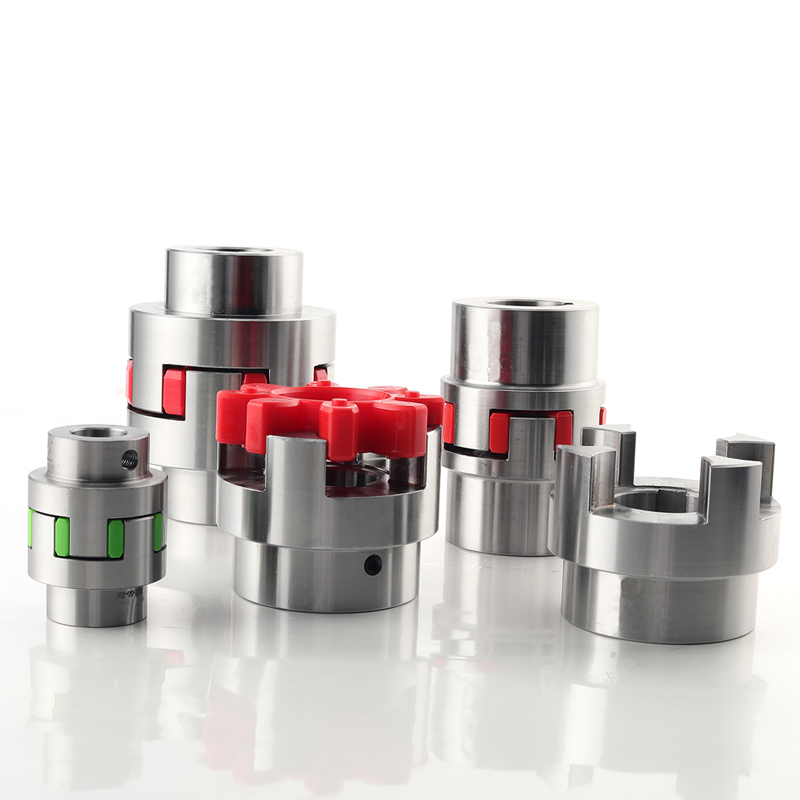
To mitigate these hazards, industrial buyers often transition from CIF to FOB (Free on Board) or FCA (Free Carrier) terms. This transition allows importers to utilize their own logistics networks and secure comprehensive cargo insurance (such as Institute Cargo Clauses A), ensuring direct control over the claims process. This is particularly vital when sourcing specialized hardware certified under strict quality frameworks, such as ISO 9001 quality systems (Certificate ZT-Q-24120011S), where dimensional consistency is paramount.
Data/Solution Comparison
| Risk Parameter | CIF (Cost, Insurance, Freight) | FOB (Free on Board) / FCA (Free Carrier) |
|---|---|---|
| Marine Insurance Control | Seller selects insurer and minimum coverage policy. | Buyer selects insurer and customizes coverage terms. |
| Freight & Route Control | Seller chooses carrier; transit times may be optimized for cost over speed. | Buyer nominates carrier and controls the shipping route and schedule. |
| Destination Port Fees | Often high and unpredictable (controlled by seller's agent). | Pre-negotiated and transparently managed by buyer's forwarder. |
| Claims Processing | Complex; buyer negotiates with seller's foreign insurance provider. | Direct; buyer works with local insurance agent for rapid resolution. |
Frequently Asked Questions (FAQ)
Q1: Why is marine insurance under CIF terms often insufficient for flexible couplings?
A1: CIF terms only require the seller to purchase minimum cargo insurance coverage. This basic coverage often excludes specific risks like rust, oxidation, electrical/mechanical derangement, and minor physical dents, which can ruin high-precision CNC couplings with strict tolerances.
Q2: How do destination terminal handling charges (THC) escalate under CIF?
A2: Because the seller selects the ocean carrier under CIF, they often negotiate lower ocean freight rates by allowing the destination agent to charge the buyer inflated local handling, de-consolidation, and documentation fees upon arrival.
Q3: What shipping methods are recommended to reduce transit damage for industrial hardware?
A3: For urgent or high-precision components, DHL, UPS, or FedEx express shipping is recommended for small batches. For larger ocean freight shipments, choosing FOB and utilizing professional sea freight forwarders ensures proper palletization, moisture-barrier packaging, and secure container stowage.
Final Conclusion & Recommendations
While CIF terms offer initial convenience by shifting shipping arrangements to the seller, the hidden costs, lack of cargo control, and complex insurance claims present substantial risks for critical industrial components like flexible couplings. To protect manufacturing timelines and ensure product integrity, industrial buyers should negotiate FOB or FCA terms, allowing them to manage their own logistics, specify packing standards, and secure comprehensive cargo insurance. For detailed technical solutions or support, please reach out to us via 86-15868979792.
About Us
ZheJiang Dream Industry Limited (MXCZ) has over 20 years of experience in precision manufacturing, specializing in the custom design and production of precision CNC machined parts, couplings, and handwheels. Established in 2008, the company operates a 2500sqm factory facility and maintains a stable team of 34 employees, supporting both high-volume OEM/ODM production and flexible small-batch orders. Holding ISO 9001 certification (ZT-Q-24120011S) and multiple patent certifications, MXCZ has served clients across multiple industries in more than 30 countries and regions, including Europe, South America, and North America.
Lastest
-
What key quality control documents should I request when auditing a potential CNC components factory?
2026-07-08 -
How long does it usually take a manufacturer to produce and ship custom CNC component prototypes?
2026-07-08 -
How do I choose between 3-axis and 5-axis CNC components for high-precision aerospace parts?
2026-07-08 -
Are there any emerging materials that could replace traditional steel CNC components to reduce weight?
2026-07-08 -
Can you explain the process of adding a custom logo and specific dimensions to a cast iron handwheel?
2026-07-08
SUBSCRIBE
INQUIRY