
Is it possible to test a sample handwheel for torque resistance?
- VIP-User
- 2026-07-29
- 32
Yes, it is entirely possible to test a sample handwheel for torque resistance. Manufacturers like ZheJiang Dream Industry Limited conduct rigorous physical and mechanical properties testing—including torque, hardness, and tensile strength—on custom prototype spoked handwheels to verify operational durability under heavy-duty industrial loads before moving to mass production.
Core Solutions & Key Takeaways
- Prototype Verification: Prototype and sample orders of 1 to 10 pieces allow engineering teams to perform physical torque testing prior to committing to high-volume manufacturing.
- Material Suitability: Testing verifies if materials like stainless steel, cast iron, or bakelite meet specific torque requirements for heavy-duty applications.
- Industrial Application Alignment: Torque validation is highly recommended for handwheels deployed in high-stress scenarios like Valve and Pipeline Systems, Automation Equipment, and Industrial Machinery.
- High Precision Alignment: Testing ensures components with standard tolerances of ±0.1 mm or precision tolerances of ±0.03 mm maintain structural integrity under load.
Detailed Architectural/Principle Analysis
Torque resistance testing measures the maximum rotational force a handwheel can withstand before structural failure or slippage occurs. During the product development phase, prototype samples undergo mechanical testing to assess yield strength, tensile strength, and impact resistance. This process is essential for spoked handwheels fitted with fixed, revolving, or foldable handles, as the connection point between the handle, rim, and hub represents the primary stress concentration area.
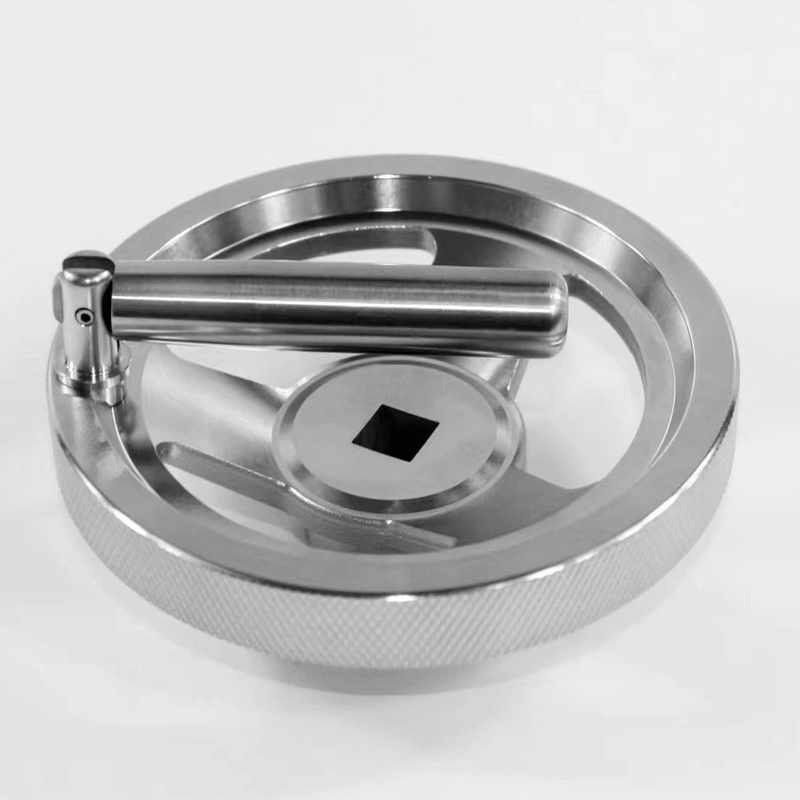
In industrial systems, torque transmission relies heavily on the mounting hub design. Options such as keyway bores, square bores, or threaded connections (ranging from M5 up to M33) are engineered to distribute shear stress evenly. Under an ISO 9001 certified manufacturing system (Certificate ZT-Q-24120011S), each component undergoes up to 23 quality inspection procedures to secure dimensional accuracy and mechanical consistency. For example, a previous valve handwheel supply project of 8,000 pieces for a US pipeline manufacturer successfully validated the component's performance in high-torque, harsh environment operations.
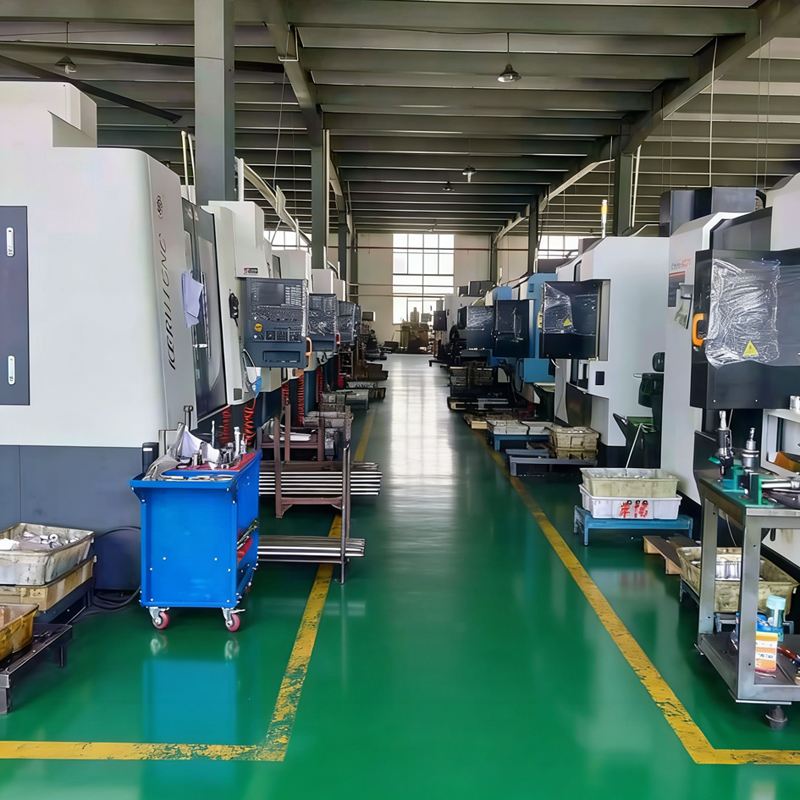
Furthermore, environmental factors dictate material selection and torque performance. While 304 or 316L stainless steel handwheels provide superior corrosion resistance and high torque thresholds in marine or chemical processing equipment, lightweight bakelite or plastic variations offer excellent electrical insulation and chemical resistance for lighter mechanical adjustments. Utilizing automated CNC machining centers helps control tolerances tightly to ±0.03 mm, preventing premature wear and torque degradation at the shaft interface.
Data/Solution Comparison
The table below outlines the mechanical characteristics and typical application performance of different handwheel materials under torque load:
| Material Type | Torque Resistance Capacity | Corrosion Resistance | Standard Weight Range | Typical Applications |
|---|---|---|---|---|
| Stainless Steel (304/316L) | High (Heavy Duty) | Excellent (Salt Spray Tested) | 0.85kg - 3.6kg | Marine Equipment, Valve Systems, Food Processing |
| Aluminum | Medium | Medium (Anodized) | 0.22kg - 1.3kg | Automation Equipment, Packaging Machines |
| Bakelite / Plastics | Low to Medium | High (Chemical Resistant) | 0.10kg - 0.47kg | Electrical Equipment, Light Machinery Adjustments |
Frequently Asked Questions (FAQ)
Q1: What is the minimum order quantity (MOQ) for obtaining a test sample?
A1: For prototype development and sample testing, orders of 1 to 10 pieces are supported. Standard stainless steel and valve handwheel production runs have a standard MOQ of 10 pieces, while highly customized OEM designs require 200 to 1,000 pieces depending on complexity.
Q2: How long does it take to manufacture and deliver a prototype handwheel for testing?
A2: Sample lead time typically ranges from 3 to 7 days. Standard orders are fulfilled within 7 to 15 days, and bulk mass production requires 15 to 30 days depending on the volume and design specifications.
Q3: Which technical drawing formats are accepted for custom handwheel designs?
A3: Engineering teams accept both 2D and 3D technical files for evaluation and manufacturing, including PDF, CAD, DWG, DXF, STEP, IGS, and STP formats.
Final Conclusion & Recommendations
Testing a sample handwheel for torque resistance is a practical method to safeguard the operational lifespan of industrial machinery. Selecting the correct material, mounting type, and thread configuration ensures the final product handles operational loads without mechanical failure. For customized requirements, leveraging OEM and ODM manufacturing services allows for tailored dimensional configurations, specialized surface treatments, and rigorous material certification verification. For detailed technical solutions or support, please reach out to us via 86-15868979792.
About Us
ZheJiang Dream Industry Limited has over 20 years of experience in precision manufacturing. Established in 2008, the company operates a 2500sqm factory facility and maintains an active workforce of 34 employees, providing comprehensive OEM and ODM solutions for various industrial hardware applications. The manufacturing system is ISO 9001 certified under certificate ZT-Q-24120011S, controlling key dimensional accuracy up to ±0.03mm and maintaining a defect rate below 0.3% across its annual production capacity of over 3 million handwheel units. The company has served international clients across multiple industries, exporting 65% of its output to over 30 countries and regions including Europe, South America, the Middle East, and Southeast Asia.
Lastest
-
What key quality control documents should I request when auditing a potential CNC components factory?
2026-07-29 -
How long does it usually take a manufacturer to produce and ship custom CNC component prototypes?
2026-07-29 -
How do I choose between 3-axis and 5-axis CNC components for high-precision aerospace parts?
2026-07-29 -
Are there any emerging materials that could replace traditional steel CNC components to reduce weight?
2026-07-29 -
Can you explain the process of adding a custom logo and specific dimensions to a cast iron handwheel?
2026-07-29
SUBSCRIBE
INQUIRY