
Is 3D printing starting to replace traditional CNC components?
- VIP-User
- 2026-07-09
- 35
3D printing is not replacing traditional CNC components, but rather serving as a complementary technology. While additive manufacturing excels in rapid prototyping and complex geometries, CNC machining remains the industry standard for high-volume production, superior dimensional accuracy of ±0.03 mm, and robust mechanical properties required in heavy-duty industrial applications.
Core Solutions & Key Takeaways
- Material Integrity: CNC machining utilizes solid, wrought metal billets, ensuring maximum tensile strength, density, and fatigue resistance, whereas 3D-printed metal parts can suffer from micro-porosity and anisotropic properties.
- Precision and Surface Finish: Traditional CNC processes achieve a precise tolerance of ±0.03 mm and surface roughness down to Ra 0.8, which is critical for sealing surfaces and threaded connections in valve and pipeline systems.
- Production Efficiency: For bulk production, CNC automated manufacturing lines achieve cycle times as low as 15 minutes per piece, making it far more cost-effective than the slow build rates of 3D printing.
- Application Scenarios: CNC-machined parts remain dominant in demanding sectors such as industrial machinery, automation equipment, marine and offshore equipment, and food processing equipment where hygiene and structural reliability are mandatory.
Detailed Architectural & Principle Analysis
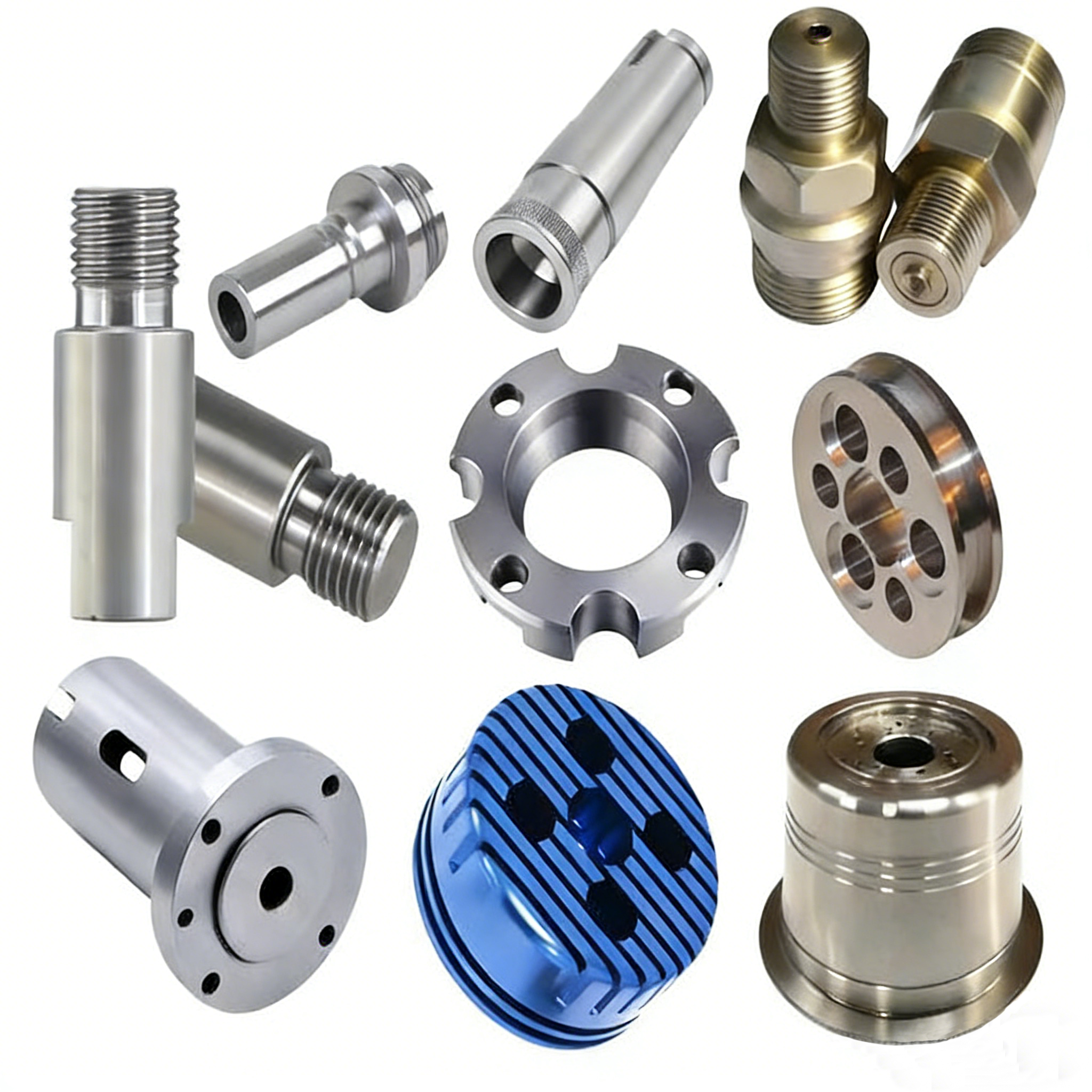
The manufacturing selection between subtractive CNC machining and additive 3D printing depends on mechanical requirements, production volume, and material specifications. CNC machining operates by selectively removing material from a solid block using high-speed cutting tools. This process preserves the physical properties of the raw material, such as those of 304, 316, or 17-4PH stainless steel, 6061/7075 aluminum, and engineering plastics like POM and PEEK. These materials are vital for high-stress applications in transmission systems and hydraulic equipment.
In contrast, 3D printing builds parts layer-by-layer. While this eliminates tooling costs and enables internal channels that are impossible to machine, the resulting layer adhesion cannot match the structural uniformity of a machined block. In rigorous industrial environments, such as chemical processing or marine operations, components must withstand high torque, pressure, and corrosive elements. For instance, ZheJiang Dream Industry Limited delivers ISO 9001-certified CNC-machined components with documented material certificates and RoHS compliance, ensuring parts survive under marine conditions and high-pressure pipeline stress.
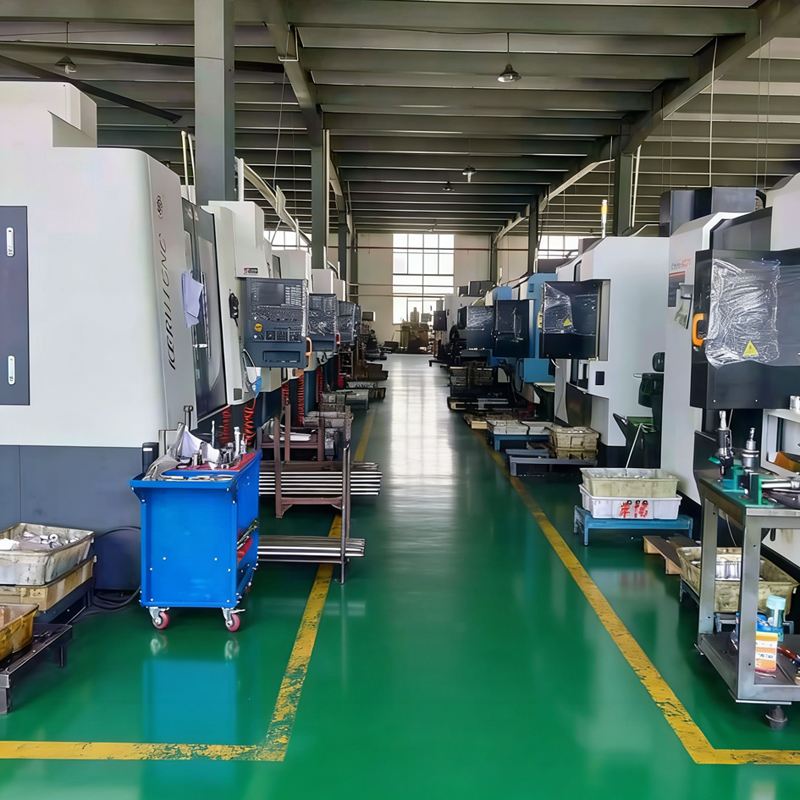
Real-world application highlights this division of utility. In a marine grade handwheel project involving 1,050 pieces for offshore equipment in Norway, CNC-machined 316L stainless steel was selected over 3D printing. This choice was driven by the necessity for flawless corrosion resistance and material density to resist saltwater environments. Similarly, an adjustable clamping knob project for an Italian CNC machine manufacturer required 65,000 pieces. Additive manufacturing cannot compete with automated CNC lathes and milling centers at this scale, where high volume drives down the unit cost while maintaining consistent wear resistance.
Data & Solution Comparison
The following table outlines the technical and operational differences between traditional CNC machining and 3D printing for industrial hardware components:
| Parameter / Feature | CNC Machining (Traditional) | 3D Printing (Additive) |
|---|---|---|
| Dimensional Tolerance | Precision up to ±0.03 mm | Typically ±0.1 mm to ±0.2 mm |
| Surface Roughness | Ra 0.8 to Ra 3.2 (Mirror polish available) | Typically Ra 3.2 to Ra 12.5 (Requires post-processing) |
| Material Selection | Standard metals (304/316, Al 6061, Brass, Carbon Steel), Plastics (POM, PEEK) | Specialized photopolymers, powders, and filaments (More limited) |
| Mechanical Strength | Isotropic (Uniform strength in all directions) | Anisotropic (Weaker tensile strength along the Z-axis) |
| Optimal Production Volume | Medium to high volume (50 to 100,000+ pieces) | Prototypes and very low volume (1 to 10 pieces) |
| Lead Time (Bulk Order) | 7 to 25 days (Highly automated scaling) | Slow build times; scales poorly for mass quantities |
Frequently Asked Questions (FAQ)
Q1: When should I choose CNC machining over 3D printing for hardware parts?
A1: Choose CNC machining when your application requires tight tolerances (up to ±0.03 mm), smooth surface finishes (Ra 0.8), high mechanical strength, or when the production run exceeds 50 pieces. It is the ideal choice for functional load-bearing parts like shafts, bushings, gears, and valve handwheels.
Q2: Can 3D-printed parts be post-machined using CNC equipment?
A2: Yes. Hybrid manufacturing is common, where a part is near-net-shaped via 3D printing and then finished on a CNC machine to achieve critical tolerances on mating surfaces, O-ring grooves, and threaded holes.
Q3: What engineering materials are best suited for high-precision CNC components?
A3: Stainless steel grades (304, 316, 303) are preferred for corrosion resistance and strength. Aluminum (6061, 7075) is selected for lightweight structural applications, while engineering plastics like POM (Delrin) and PEEK are utilized for low-friction, chemical-resistant sliding components.
Final Conclusion & Recommendations
Rather than replacing traditional manufacturing, 3D printing and CNC machining coexist as complementary pillars of modern industry. 3D printing is the premier choice for rapid prototyping, complex internal geometries, and proof-of-concept designs. However, for industrial hardware, valve control systems, and precision machinery components that demand long-term structural integrity, strict dimensional accuracy, and cost-effective bulk production, traditional CNC machining remains irreplaceable. When sourcing high-precision components, utilizing flexible manufacturing models—such as custom CNC machining services, OEM/ODM production, and rapid prototyping—ensures the optimal balance of speed, cost, and mechanical performance. For detailed technical solutions or support, please reach out to us via 86-15868979792.
About Us
ZheJiang Dream Industry Limited, established in 2008, has over 20 years of experience in precision manufacturing. The company currently has 34 employees in total, including 3 senior engineers and 18 machine operators, working within a 2500sqm factory facility. We specialize in the custom design and production of precision CNC machined parts and assemblies in stainless steel, aluminum, brass, copper, carbon steel, and engineering plastics. Holding ISO quality certification (ZT-Q-24120011S), we have served clients across multiple industries globally, exporting 65% of our annual production to more than 30 countries and regions including Europe, South America, the Middle East, and Southeast Asia.
Lastest
-
What key quality control documents should I request when auditing a potential CNC components factory?
2026-07-09 -
How long does it usually take a manufacturer to produce and ship custom CNC component prototypes?
2026-07-09 -
How do I choose between 3-axis and 5-axis CNC components for high-precision aerospace parts?
2026-07-09 -
Are there any emerging materials that could replace traditional steel CNC components to reduce weight?
2026-07-09 -
Can you explain the process of adding a custom logo and specific dimensions to a cast iron handwheel?
2026-07-09
SUBSCRIBE
INQUIRY