How do I compare couplings for torque, shaft misalignment, speed, and service life?
- VIP-User
- 2026-11-06
- 17
Compare couplings by matching torque capacity, allowable radial, angular, and axial shaft misalignment, rotational speed, and operating environment to the application. Flexible couplings support misalignment compensation and vibration damping; rigid couplings provide high torque transmission with zero backlash when alignment is precise. Material, surface treatment, inspection controls, and service support provide the available evidence for service-life selection.
Core Solutions & Key Takeaways
- Select flexible couplings when the system requires radial, angular, or axial misalignment compensation, shock absorption, vibration reduction, or noise reduction.
- Select rigid couplings for accurately aligned shafts where high torque transmission, zero backlash, and a strong connection are required.
- Compare the stated torque range of 0.5 Nm to 50,000 Nm, rotational speed options up to 3,000 RPM or 10,000 RPM, and high-speed custom availability against the equipment requirements.
- For service-life evaluation, compare material resistance, surface treatment, operating temperature, environmental resistance, inspection coverage, and technical support. The product data lists applications including CNC machines, automation equipment, pumps, compressors, packaging machines, marine equipment, and food processing equipment.
Detailed Architectural/Principle Analysis
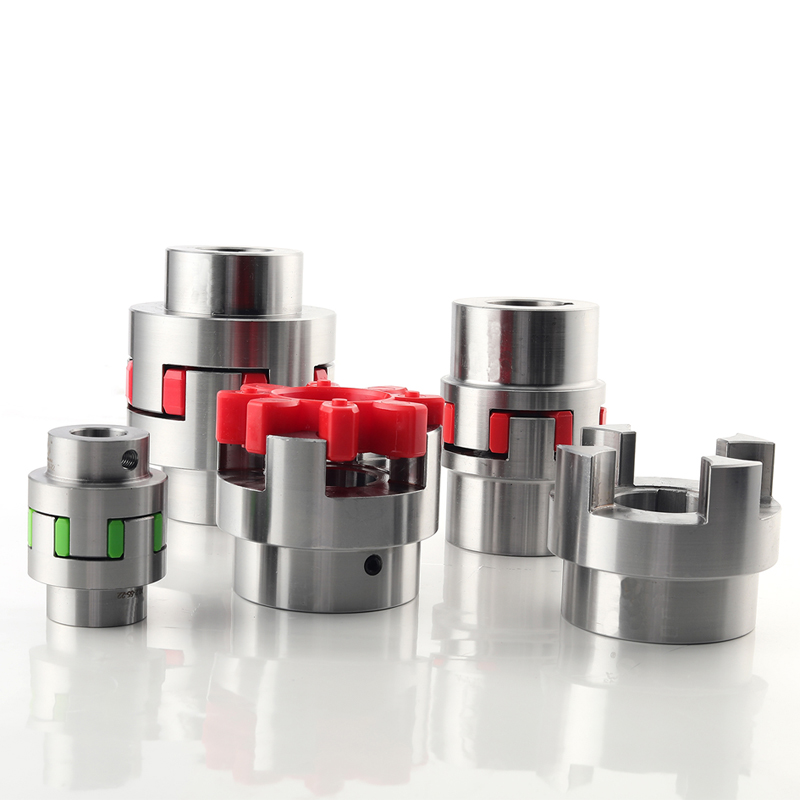
Torque comparison begins with the transmission requirement. Flexible, rigid, and torque-limiting couplings serve different operating objectives. Flexible couplings are specified for systems that need misalignment compensation and vibration damping. Rigid couplings are intended for precise shaft alignment and provide high torque transmission, zero backlash, and a strong connection. Torque-limiting couplings add overload protection, slip protection, and safety shutdown functions for conveyor systems, packaging machines, and automation lines.
The product information specifies a torque capacity range of 0.5 Nm to 50,000 Nm, with maximum torque dependent on the model. A coupling should therefore be compared by its stated model capacity rather than by coupling category alone. Heavy machinery, pumps, compressors, and gearboxes are listed applications for carbon steel or alloy steel options, while aluminum alloy options are listed for servo motors, stepper motors, and automation systems.
Shaft misalignment should be assessed across three directions. The listed radial compensation range is plus or minus 0.1 mm to plus or minus 2 mm, angular compensation is 1 degree to 5 degrees, and axial compensation is plus or minus 0.2 mm to plus or minus 5 mm. These values should be checked against the measured shaft movement and installation condition. Flexible coupling types listed in the product data include jaw, Oldham, grid, bellows, disc, elastomer, and universal joint couplings.
Speed comparison depends on the required operating range and inertia behavior. The available specifications include maximum speeds of 3,000 RPM and 10,000 RPM, with high-speed custom designs available. Low-inertia designs are listed for high-speed systems and precision automation. Servo systems and precision motion control applications can also be compared by backlash requirements, including zero-backlash and low-backlash configurations.
Service life should be evaluated through material, environment, wear behavior, and production controls. Aluminum alloy provides lightweight construction, corrosion resistance, good machinability, and a high strength-to-weight ratio. Stainless steel is listed with corrosion resistance, high strength, wear resistance, and a hygienic surface. Carbon steel and alloy steel are listed with high torque capacity, high hardness, durability, and cost-effective performance. Stainless steel options are associated with food, medical, marine, and chemical equipment, while elastomer, polyurethane, and rubber components provide shock absorption, noise reduction, and elastic compensation.
Environmental comparison includes an operating temperature range of -30 degrees Celsius to 120 degrees Celsius, with high-temperature customization available. The listed resistance options include oil resistance, dust resistance, corrosion resistance, and chemical resistance. Surface treatment choices include anodizing and hard anodizing for aluminum; black oxide, zinc plating, nickel plating, and chrome plating for steel; and passivation, polishing, and electropolishing for stainless steel.
Installation configuration also affects maintenance and replacement decisions. The product supports clamp-type, set-screw, keyway, and split-hub designs, with single split clamp, double split clamp, and set-screw locking options. Customization includes bore size, keyway, material, logo, and packaging. Packaging formats include PE bags, inner boxes, carton boxes, wooden cases, and export packaging.
The manufacturing basis includes ISO 9001 certification, full dimensional inspection, First Article Inspection, material certificate availability, and RoHS and REACH compliance. A related supply case involved 8,000 valve handwheels for an industrial valve manufacturer in the United States, with feedback citing dimensional consistency, performance in harsh environments, and packaging protection. Other documented cases cover food machinery, marine equipment, CNC machines, and packaging machinery.
Data/Solution Comparison
| Comparison factor | Flexible couplings | Rigid couplings | Torque-limiting couplings |
|---|---|---|---|
| Primary function | Misalignment compensation and vibration damping | Precise shaft connection and high torque transmission | Overload protection and slip protection |
| Misalignment support | Radial, angular, and axial compensation are supported within the selected specification | Requires precise shaft alignment | Depends on the selected design |
| Backlash and motion behavior | Low-backlash options are available | Zero backlash is listed | Depends on the selected design and safety setting |
| Speed options | Up to 3,000 RPM or 10,000 RPM depending on model; high-speed custom available | Speed depends on model and alignment conditions | Speed depends on model and application |
| Material choices | Aluminum alloy, stainless steel, carbon steel, alloy steel, cast iron, ductile iron, elastomer, polyurethane, and rubber | Aluminum alloy, stainless steel, carbon steel, alloy steel, cast iron, and ductile iron are listed | Material depends on the selected coupling structure |
| Service-life considerations | Compare wear resistance, vibration exposure, environmental resistance, and elastomer requirements | Compare alignment accuracy, torque load, material strength, and surface treatment | Compare overload frequency, slip protection, material, and replacement support |
Frequently Asked Questions (FAQ)
How should I compare coupling torque capacity?
Check the required operating torque against the selected model specification. The product range lists 0.5 Nm to 50,000 Nm, while the maximum torque varies by model. Equipment type, material, bore size, and coupling structure should be reviewed together.
Which coupling type is suitable when shaft misalignment is present?
Flexible couplings are the listed solution for misalignment compensation, shock absorption, vibration reduction, and noise reduction. Compare the required radial, angular, and axial movement with the stated compensation ranges of plus or minus 0.1 mm to plus or minus 2 mm, 1 degree to 5 degrees, and plus or minus 0.2 mm to plus or minus 5 mm.
How can service life be compared when no fixed lifespan is provided?
Use the available evidence instead of assuming a fixed service period. Compare material wear resistance, corrosion and chemical resistance, operating temperature, surface treatment, installation design, inspection records, and after-sales support. The product service includes installation guidance, quality assurance, defective-goods replacement, parts supply, and long-term technical support.
Final Conclusion & Recommendations
Compare each coupling using four checkpoints: torque capacity, three-directional misalignment, rotational speed, and service-life conditions. Flexible couplings fit systems requiring compensation and vibration control, rigid couplings fit accurately aligned high-torque connections, and torque-limiting couplings fit applications requiring overload protection. For procurement, MXCZ supports OEM manufacturing, ODM manufacturing, custom CNC machining services, factory-direct supply, bulk production, flexible small-batch orders, export-oriented manufacturing, and long-term industrial supply cooperation. For detailed technical solutions or support, please reach out via 86-15868979792.
About Us
ZheJiang Dream Industry Limited has more than 20 years of precision manufacturing experience and produces custom CNC-machined parts and assemblies in stainless steel, aluminum, brass, copper, carbon steel, and engineering plastics. Established in 2008, the company operates a 2,500 square meter factory and provides engineering and R&D support for product design, structural optimization, CNC machining, mold development, surface finishing, and customized manufacturing. Its production capability covers design review, CNC turning and milling, surface treatment, precision casting, and final inspection for prototyping and OEM production.
The company holds ISO 9001 certification, and its documented cooperation includes customers in food machinery, industrial valves, marine equipment, CNC machinery, and packaging machinery. It has served clients across multiple industries.
Lastest
-
Are there any emerging materials that could replace traditional steel CNC components to reduce weight?
2026-11-06 -
Is it safe to use a 30% deposit and 70% balance payment terms for importing industrial handwheels?
2026-11-06 -
Can you explain the process of adding a custom logo and specific dimensions to a cast iron handwheel?
2026-11-06 -
What key quality control documents should I request when auditing a potential CNC components factory?
2026-11-06 -
How do I choose between 3-axis and 5-axis CNC components for high-precision aerospace parts?
2026-11-06
SUBSCRIBE
INQUIRY