
How do I choose the right tolerance level for custom CNC components to avoid over-engineering costs?
- VIP-User
- 2026-07-05
- 35
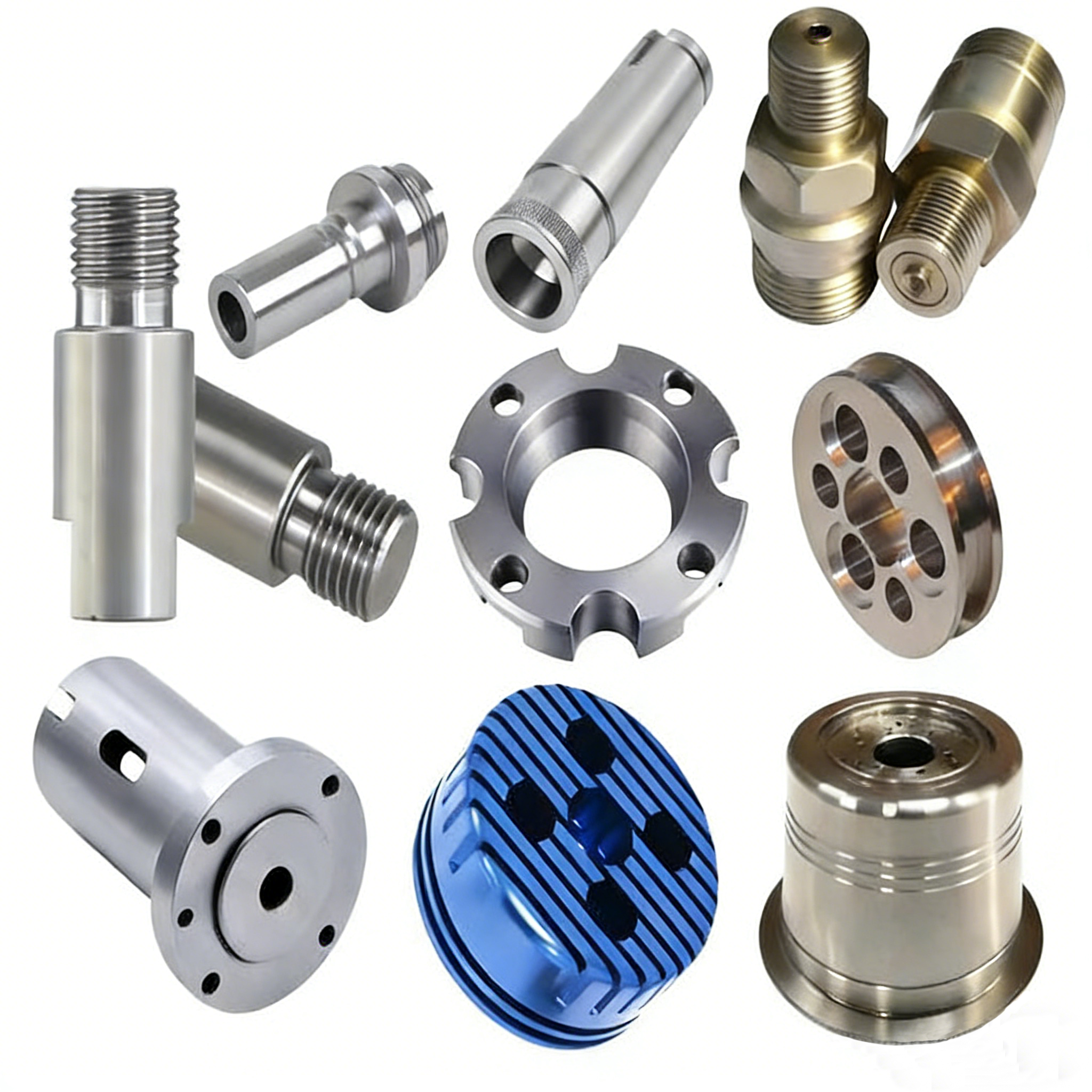
Choosing the right tolerance level for custom CNC components involves balancing design functionality with manufacturing complexity. Standardizing on a standard tolerance of ±0.1 mm for non-critical dimensions, while reserving a precision tolerance of ±0.03 mm only for critical mating surfaces, prevents unnecessary machining steps and reduces over-engineering costs.
Core Solutions & Key Takeaways
- Match Tolerances to Functional Needs: Reserve tight tolerances (±0.03 mm) for critical alignments, bearing fits, and high-speed rotating assemblies. Apply standard tolerances (±0.1 mm) to clearance fits and external structural profiles.
- Account for Material Characteristics: Hard metals like stainless steel (Grades 304, 316) hold tight tolerances reliably but increase tool wear, whereas engineering plastics (like POM, Nylon, or PTFE) expand thermally and require relaxed tolerances to prevent warping.
- Optimize for Specific Applications: High-precision limits are essential in automated systems, valve and pipeline systems, and food processing equipment to ensure airtight seals and fluid control.
- Consult Manufacturing Capabilities Early: Leverage direct factory feedback to adjust designs, ensuring your specifications align with standard CNC turning and CNC milling setups without requiring costly secondary grinding or wire EDM processes.
Detailed Architectural/Principle Analysis
In precision manufacturing, every decimal place added to a dimension tolerance exponentially increases production costs. Achieving a precision tolerance of ±0.03 mm requires specialized machining center setups, slower feed rates, frequent quality control checks, and sometimes specialized post-treatments. For instance, ZheJiang Dream Industry Limited utilizes highly automated CNC machining centers and CNC lathes to maintain key dimensional accuracies up to ±0.03 mm for critical industrial components. However, applying this level of precision to non-mating dimensions on a bracket or housing raises costs by requiring extended cycle times and higher tool consumption.
For standard components, a tolerance of ±0.1 mm is easily achieved through standard CNC turning and CNC milling, minimizing production cycle times to as low as 15 minutes per piece. This cost-efficient approach is widely adopted in real-world projects. For example, in a Valve Handwheel Supply Project for an industrial valve manufacturer in the United States, utilizing standard tolerances on non-critical handwheel dimensions allowed the cost-effective production of 8,000 units while ensuring perfect functional fit. Conversely, in a CNC Machine Clamping Knob Project in Italy consisting of 65,000 pieces, maintaining tight precision tolerances on the internal threads was necessary to guarantee reliable locking performance and wear resistance under continuous vibration.
The manufacturing process also dictates the achievable tolerance limit. Swiss machining and grinding can hold extremely tight tolerances, while basic laser cutting and drilling operate on looser standards. In all cases, raw material selection heavily influences dimensional stability. Stainless steel grades like 304 and 316 resist corrosion but generate high cutting heat, making tight tolerances more difficult to maintain than with free-machining aluminum grades like 6061 or brass alloys like C360. In-process inspection, such as First Article Inspection (FAI) and multi-step dimensional verification, ensures that components conform to designated tolerances prior to final packaging.
Data/Solution Comparison
The table below compares different tolerance levels, showing how material choice, typical manufacturing processes, and cost factors interact across various industrial scenarios.
| Tolerance Class | Dimensional Range | Common Materials | Typical CNC Processes | Cost Impact | Typical Industry Applications |
|---|---|---|---|---|---|
| Standard Tolerance (±0.1 mm) | Diameter: 0.5–500 mm Length: 1–1500 mm |
Aluminum 6061, Brass H59, Carbon Steel 1045, POM | Standard CNC Turning, CNC Milling, Drilling, Tapping | Base Cost (Highly Efficient) | Packaging Machinery, Agricultural Machinery, Outer Housings |
| Precision Tolerance (±0.03 mm) | Diameter: 1.0–300 mm Length: 5–500 mm |
Stainless Steel 304/316, Alloy Steel 4140, PEEK | Multi-axis CNC Machining, Swiss Machining, Fine Grinding | 1.5x to 2x Base Cost | Valve Systems, Food Processing Equipment, Semiconductor Parts |
| Ultra-Precision (Below ±0.01 mm) | Diameter: 1.0–100 mm Length: 2–200 mm |
Hardened Tool Steels (17-4PH, 420), Carbides | Honed Grinding, Wire EDM, 5-Axis Swiss Machining | 3x to 5x Base Cost (Requires special inspection) | Aerospace Components, Medical Implants, High-Speed Bearings |
Frequently Asked Questions (FAQ)
Q1: Why does choosing a tight tolerance increase the overall cost of CNC components?
A1: Tight tolerances require highly calibrated CNC machines, slower machining feed rates, specialized cutting tools, and more frequent manual quality checks. The risk of part rejection also increases, which manufacturers must factor into the unit price. Standardizing non-critical dimensions to ±0.1 mm helps bypass these secondary operations and extra quality steps.
Q2: How do different materials affect the ability to maintain tight CNC tolerances?
A2: Rigid metals like stainless steel and alloy steel hold tight dimensions exceptionally well but accelerate tool wear. Aluminum and brass are highly machinable, making tight tolerances easier and cheaper to achieve. In contrast, engineering plastics like PTFE and Nylon absorb moisture and expand with heat, making tolerances tighter than ±0.1 mm highly difficult to sustain without custom environmental controls.
Q3: What standard drawing formats are accepted for specifying tolerances?
A3: Technical drawings should be provided in 2D and 3D formats. Standard accepted file types include PDF, DWG, and DXF for 2D views (where specific tolerance annotations are placed), and STEP, IGS, or STP for 3D solid geometry.
Final Conclusion & Recommendations
To avoid over-engineering costs, always define your custom CNC component tolerances based on functional fit rather than default title block templates. Utilize standard ±0.1 mm limits for external dimensions and general profiles, reserving precise ±0.03 mm specifications exclusively for critical locating holes, mating shafts, and seal grooves. Partnering with a manufacturer that provides clear prototype testing and flexible manufacturing quantities ensures that your designs are optimized for mass production without unnecessary machining overhead. For detailed technical solutions or support, please reach out to us via 86-15868979792.
About Us
ZheJiang Dream Industry Limited (brand name MXCZ) has over 20 years of experience in precision manufacturing, specializing in custom design and production of precision CNC machined parts and assemblies in stainless steel, aluminum, brass, copper, carbon steel, and engineering plastics. Established in 2008, the company operates a 2500sqm factory facility equipped with over 100 automated production units. The company holds ISO certification (number ZT-Q-24120011S) and multiple patent certifications, reliably serving international industrial clients across more than 30 countries and regions including Europe, America, and Southeast Asia.
Lastest
-
What key quality control documents should I request when auditing a potential CNC components factory?
2026-07-05 -
How long does it usually take a manufacturer to produce and ship custom CNC component prototypes?
2026-07-05 -
How do I choose between 3-axis and 5-axis CNC components for high-precision aerospace parts?
2026-07-05 -
Are there any emerging materials that could replace traditional steel CNC components to reduce weight?
2026-07-05 -
Can you explain the process of adding a custom logo and specific dimensions to a cast iron handwheel?
2026-07-05
SUBSCRIBE
INQUIRY