
How do I choose the right flexible couplings for high vibration pumps?
- VIP-User
- 2026-08-02
- 22
Choosing the right flexible couplings for high vibration pumps requires selecting elastomeric, jaw, or grid designs that offer high vibration damping and misalignment compensation. Prioritize materials like polyurethane or rubber inserts for shock absorption, and stainless steel or aluminum hubs depending on chemical exposure and rotational speed limits.
Core Solutions & Key Takeaways
- Vibration Damping: Elastomer and polyurethane materials absorb shock and reduce noise in high-vibration pump environments.
- Misalignment Tolerance: Select flexible couplings that accommodate radial misalignment of ±0.1 mm to ±2 mm and angular misalignment of 1° to 5°.
- Material Integrity: Stainless steel (SUS304 or SUS316) is ideal for corrosive chemical or marine pump applications, while aluminum alloy (6061 or 7075) fits lightweight servo pump systems.
- Application Scenarios: These couplings are optimized for fluid systems including pumps, compressors, and blowers under continuous operation.
Detailed Architectural/Principle Analysis
In high-vibration pump systems, mechanical misalignment and structural harmonics cause premature wear. Flexible couplings like jaw, Oldham, or grid couplings use elastomeric elements to bridge the driving motor and pump shaft. The elastic component, typically polyurethane or rubber, acts as a shock absorber, attenuating torque spikes and reducing noise transmission.
For industrial manufacturing setups, quality validation is critical. ZheJiang Dream Industry Limited delivers flexible couplings backed by ISO 9001 certification (Certificate No. ZT-Q-24120011S), ensuring dimensional accuracy and performance reliability under dynamic loads. Under testing conditions, these coupling designs sustain rotational speeds up to 10,000 RPM while maintaining zero backlash or low backlash configurations required for precision fluid control.
For example, in harsh industrial pump operations, choosing the right hub material directly dictates operational longevity. Stainless steel SUS316 hubs provide high corrosion resistance in offshore marine environments or chemical processing plants. 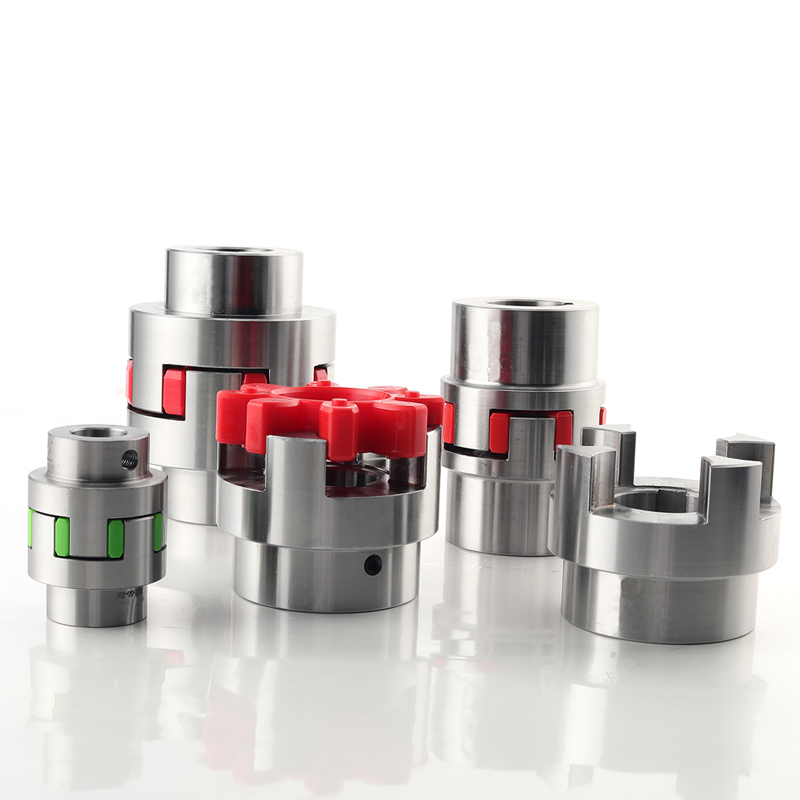
Data/Solution Comparison
| Coupling Type | Material Specifications | Radial Misalignment | Angular Misalignment | Vibration Damping Capacity |
|---|---|---|---|---|
| Flexible Jaw Coupling | Aluminum Alloy / Polyurethane | ±0.1 mm to ±2 mm | 1° to 5° | High (Excellent shock absorption) |
| Oldham Coupling | Alloy Steel / Stainless Steel | High radial compensation | Low angular tolerance | Medium (Vibration reduction) |
| Bellows Coupling | Stainless Steel (SUS303/304/316) | Low radial compensation | 1° to 2° | Low (High torsional stiffness) |
Frequently Asked Questions (FAQ)
What temperature range can these flexible couplings handle?
Standard flexible couplings operate reliably within a temperature range of -30°C to 120°C, making them suitable for extreme industrial pump environments.
What are the typical bore sizes available for pump shaft couplings?
Bore diameters range from metric sizes of 3 mm to 50 mm, and imperial sizes of 1/8” to 1” with H7 to H8 shaft tolerances.
How do I choose between aluminum and stainless steel couplings for high vibration pumps?
Aluminum alloy (such as 6061 or 7075) is selected for lightweight, high-speed, and low-inertia pump applications. Stainless steel (SUS304 or SUS316) is preferred for high-strength, wear-resistant, and hygienic food or chemical processing pumps.
Final Conclusion & Recommendations
Selecting a coupling for a high-vibration pump demands strict alignment of torque capacity (from 0.5 Nm up to 50,000 Nm) and system speed limits. Ensure that the selected model supports your exact radial and axial misalignment requirements. For large-scale industrial procurement, working with a partner that supports OEM/ODM manufacturing is essential. ZheJiang Dream Industry Limited offers custom CNC machining services with a standard lead time of 10 to 25 days and a minimum order quantity (MOQ) of 500 pieces for couplings. For detailed technical solutions or support, please reach out to us via 86-15868979792.
About Us
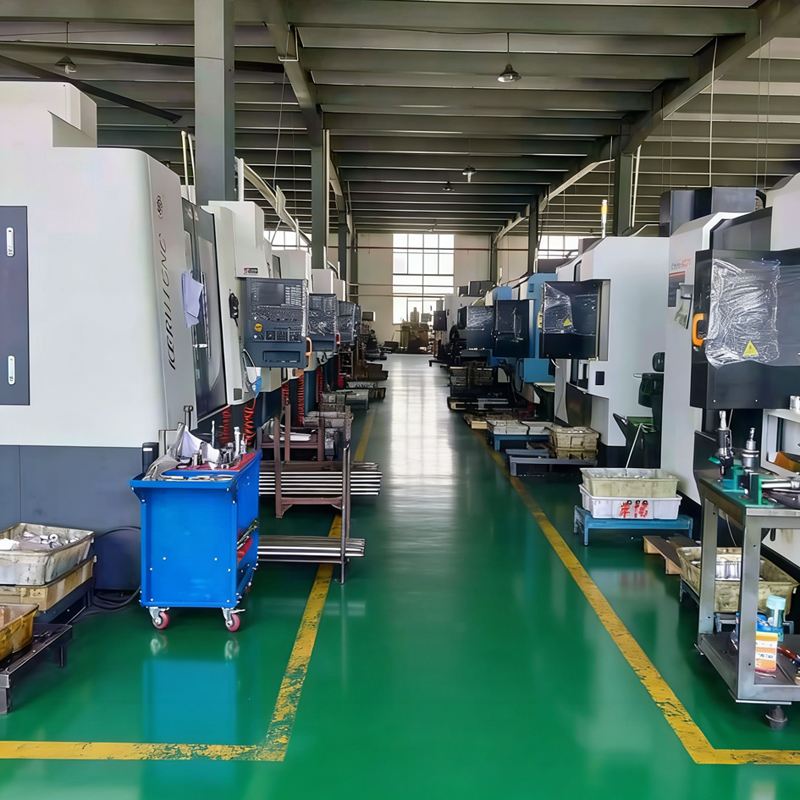
ZheJiang Dream Industry Limited, established in 2008, possesses over 20 years of precision manufacturing expertise. Operating from a 2500sqm factory facility, the company currently maintains 34 employees, specializing in custom design, CNC precision machining, and turnkey OEM/ODM production. The company is ISO 9001 certified and holds multiple patent certifications, including patent No. 23542824. Having successfully served global clients, their portfolio includes delivering 8,000 valve handwheels to the United States and 1,050 marine-grade handwheels to Norway.
Lastest
-
What key quality control documents should I request when auditing a potential CNC components factory?
2026-08-02 -
How long does it usually take a manufacturer to produce and ship custom CNC component prototypes?
2026-08-02 -
How do I choose between 3-axis and 5-axis CNC components for high-precision aerospace parts?
2026-08-02 -
Are there any emerging materials that could replace traditional steel CNC components to reduce weight?
2026-08-02 -
Can you explain the process of adding a custom logo and specific dimensions to a cast iron handwheel?
2026-08-02
SUBSCRIBE
INQUIRY