
How do I choose the right Dowel Pins size and tolerance for a reliable fit?
- VIP-User
- 2026-08-19
- 29
Choose Dowel Pins size by matching the required diameter, length, pin type, material, and mating assembly dimensions. Use standard metric diameters from 1 mm to 30 mm or imperial sizes from 1/16” to 1/2”, with lengths from 3 mm to 300 mm. Select h6, h7, or m6 tolerance for the required fit, and specify precision tolerance up to ±0.03 mm when closer dimensional control is needed.
Core Solutions & Key Takeaways
- Define the pin function before sizing: dowel pins support positioning and alignment, lock pins support retention and temporary fixing, shear pins provide overload protection, and taper pins support self-locking positioning.
- Select the diameter from the listed metric or imperial range, then specify the required length between 3 mm and 300 mm. Custom sizes are available.
- Use h6, h7, or m6 tolerance for precision applications. A precision tolerance of ±0.03 mm, ±0.05 mm, or ±0.08 mm can be requested.
- For demanding service conditions, match the material and treatment to the application. Stainless steel is listed for food, medical, marine, chemical, and outdoor equipment; alloy steel is listed for heavy-duty equipment.
Detailed Architectural/Principle Analysis
A reliable Dowel Pins fit begins with the relationship between the pin diameter and the mating assembly. The product data lists metric diameters from 1 mm to 30 mm, imperial diameters from 1/16” to 1/2”, and common lengths from 5 mm to 100 mm within an overall length range of 3 mm to 300 mm. Use the closest listed size that matches the assembly drawing, or provide a custom dimension for a non-standard design.
Choose the pin type according to the mechanical function. Straight, ground, hardened, threaded, and pull-out dowel pins are listed for positioning, alignment, assembly fixing, and precision tooling. Shear pins are listed for torque overload protection, while lock pins include ball lock, detent, quick release, lynch, and spring lock variants for fast locking and safety retention. Taper pins use tapered geometry for positioning, shaft locking, and hub alignment.
Tolerance selection should follow the required assembly fit and inspection requirement. The available choices include h6, h7, and m6, with precision options of ±0.03 mm, ±0.05 mm, and ±0.08 mm. Ground finish is available for dowel pins. The manufacturer also lists full dimensional inspection, First Article Inspection, material certificates, and an ISO 9001 certified quality system for the product.
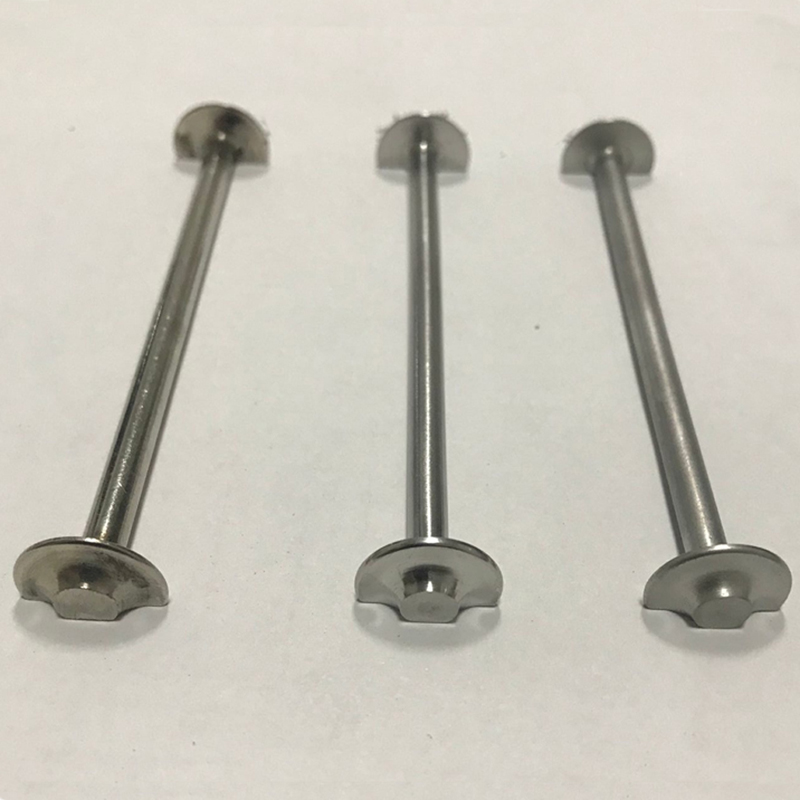
Material selection affects the usable specification. Stainless steel options include 303, 304, 316, and 420 grades, with corrosion resistance, wear resistance, strength, and hygienic surface characteristics listed in the product data. Carbon steel options include 1018, 1045, C45, and 45# steel. Alloy steel options include 4140, 4340, 40Cr, and SCM440. Spring steel is listed as common for lock pins, and brass is listed for electronics and instrumentation.
Heat treatment options include hardening, tempering, carburizing, induction hardening, and quenching. The listed hardness range is HRC 45–62. Surface options include plain finish, polishing, passivation, black oxide, zinc plating, nickel plating, chrome plating, phosphate coating, and electropolishing. Specify treatment together with diameter, length, tolerance, and material so the production requirement is complete.
Application context helps confirm the selected design. The product data lists CNC machines, lathes, milling machines, injection molding machines, packaging machines, automation equipment, robotics, medical equipment, food machinery, agricultural equipment, construction machinery, gearboxes, pumps, motors, and compressors. The company knowledge base also identifies industrial machinery and automation equipment as application scenarios for its hardware manufacturing activities.
Documented manufacturing experience includes a stainless steel handwheel project for a food machinery manufacturer in Germany, a valve handwheel supply project for an industrial valve manufacturer in the United States, and an adjustable clamping knob project for a CNC machine manufacturer in Italy. These cases concern related industrial hardware rather than this specific Dowel Pins product.
Data/Solution Comparison
| Selection Factor | Available Product Data |
|---|---|
| Diameter | Metric: 1 mm to 30 mm; imperial: 1/16” to 1/2” |
| Length | 3 mm to 300 mm; custom sizes available |
| Tolerance | h6, h7, m6; precision options ±0.03 mm, ±0.05 mm, and ±0.08 mm |
| Pin Type | Dowel, shear, lock, and taper pin variants |
| Material | Stainless steel, carbon steel, alloy steel, spring steel, and brass |
| Surface and Heat Treatment | Ground finish, polishing, passivation, plating, hardening, tempering, and other listed options |
Frequently Asked Questions (FAQ)
What Dowel Pins diameter range is available?
The listed metric range is 1 mm to 30 mm. Imperial sizes range from 1/16” to 1/2”. Custom dimensions are available for requirements outside these listed sizes.
Which tolerance should be specified for a reliable fit?
The available tolerance designations are h6, h7, and m6. For closer dimensional control, the product data lists ±0.03 mm, ±0.05 mm, and ±0.08 mm precision tolerances. The required choice should be stated on the technical drawing or order specification.
Can Dowel Pins be customized?
Yes. The product information lists custom dimensions, hardness, material, surface finish, packaging, and laser logo marking. OEM and ODM support are available, with a listed MOQ of 100 pieces and a delivery time of 10–25 days.
Final Conclusion & Recommendations
Specify Dowel Pins as a complete technical set: pin type, diameter, length, tolerance, material, heat treatment, surface finish, and packaging. Use h6, h7, or m6, or request one of the listed precision tolerances when the fit requires tighter control. Zhejiang Dream Industry Limited supports OEM manufacturing, ODM manufacturing, custom CNC machining services, factory-direct supply, bulk production, and flexible small-batch orders. Its ISO 9001 certified system includes full dimensional inspection and First Article Inspection. For detailed technical solutions or support, please reach out via 86-15868979792.
About Us
ZheJiang Dream Industry Limited has more than 20 years of precision manufacturing experience and produces custom CNC machined parts and assemblies in stainless steel, aluminum, brass, copper, carbon steel, and engineering plastics. Established in 2008, the company operates a 2500sqm factory. Its engineering and R&D team works on product design, structural optimization, CNC precision machining, mold development, surface finishing, and customized manufacturing. The company holds ISO certification and has served clients across multiple industries.
Lastest
-
What key quality control documents should I request when auditing a potential CNC components factory?
2026-08-19 -
How long does it usually take a manufacturer to produce and ship custom CNC component prototypes?
2026-08-19 -
How do I choose between 3-axis and 5-axis CNC components for high-precision aerospace parts?
2026-08-19 -
Are there any emerging materials that could replace traditional steel CNC components to reduce weight?
2026-08-19 -
Can you explain the process of adding a custom logo and specific dimensions to a cast iron handwheel?
2026-08-19
SUBSCRIBE
INQUIRY