
How do I choose between threaded and welded pipe fittings for a high-pressure industrial piping system?
- VIP-User
- 2026-06-30
- 25
Choosing between threaded and welded pipe fittings for a high-pressure industrial piping system depends on pressure ratings, sealing integrity, and maintenance requirements. Welded fittings, such as socket weld and butt weld, provide permanent, leak-proof joints suited for extreme pressures and temperatures. Threaded fittings offer easier assembly and disassembly for maintenance but are limited to lower high-pressure thresholds, typically up to 2-inch sizes, due to leakage risks under cyclic stress.
Core Solutions & Key Takeaways
- Welded Fittings: Provide the highest joint integrity for high-pressure operations. Butt weld and socket weld designs eliminate leak paths and withstand continuous thermal expansion and high vibrations in industrial valve and pipeline systems.
- Threaded Fittings: Best suited for smaller pipe diameters (typically 1/8” to 2”) in lower-risk utilities, enabling rapid assembly without hot work permits. However, they are prone to thread wear and fluid bypass under heavy pressure spikes.
- Material Grade: Corrosion resistance must match fluid types. For marine environments, chloride solutions, or pharmaceutical equipment, 316/316L stainless steel provides superior performance, whereas 304 stainless steel serves general plumbing and water treatment systems.
- Dimensional Standards: High-pressure industrial systems require adherence to standardized specifications, including ASME B16.11 for forged socket weld/threaded fittings and ASME B16.9 for butt weld fittings, to ensure proper load tolerance.
Detailed Architectural/Principle Analysis
In high-pressure systems, joints represent the primary point of potential mechanical failure. Welded fittings form a continuous, homogeneous metallic structure with the pipeline. This structural continuity allows the piping system to handle severe tensile loads, thermal shocks, and pressure pulsations. Butt weld joints align the fitting and pipe end-to-end before welding, maintaining a smooth internal bore that minimizes pressure drops and internal fluid turbulence. Socket weld fittings feature a recessed area where the pipe is inserted, simplifying alignment prior to fillet welding, which is highly effective for high-pressure lines under 2 inches.
Conversely, threaded fittings rely on the mechanical mating of tapered threads (such as NPT or BSPT) to secure the joint. While threads provide high mechanical holding power, they introduce physical gaps in the thread root. Even with thread sealants or PTFE tape, these micro-gaps can fail when subjected to structural vibrations or thermal expansion, leading to slow, hazardous leaks. Consequently, threaded connections are primarily used in low-vibration utility lines, gas distribution, or temporary high-pressure piping assemblies where routine inspection is straightforward.
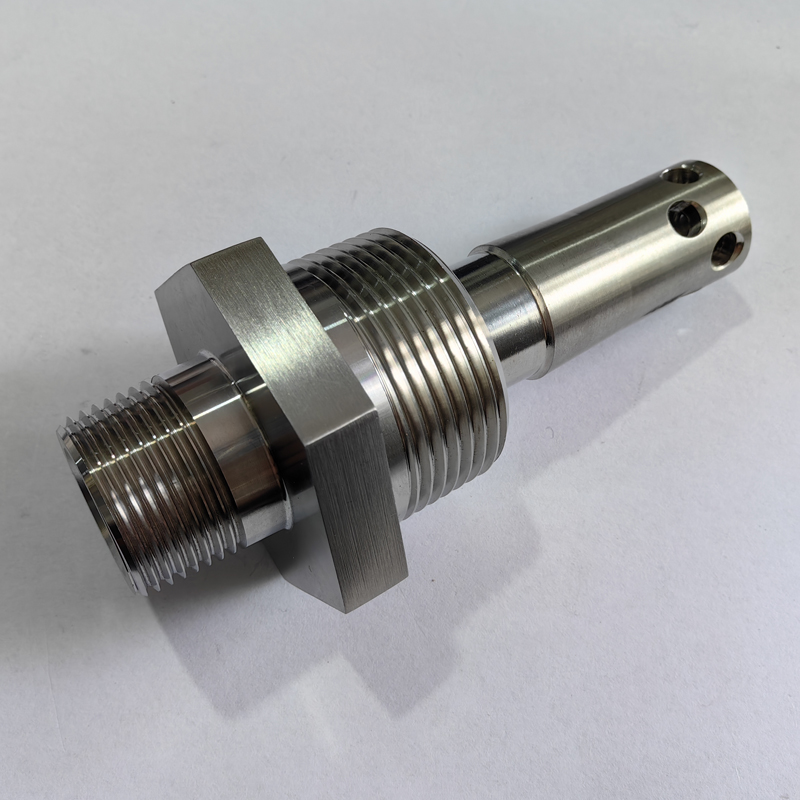
Quality control standards dictate that for high-pressure applications, fittings must undergo thorough verification. Components require precise dimensional testing, raw material certification, and inspection protocols aligning with ISO 9001 standards. In practical applications, industrial valve manufacturers have successfully deployed over 8,000 precision-engineered fitting units in large-scale water treatment and industrial pipeline systems, proving that proper alignment of connection types with system pressure parameters directly reduces operational downtime and maintenance costs.
Data/Solution Comparison
To assist in selecting the appropriate fitting connection for high-pressure environments, the table below compares critical technical parameters of threaded and welded connections.
| Technical Parameter | Threaded Fittings | Welded Fittings (Socket/Butt Weld) |
|---|---|---|
| Pressure Capability | Commonly up to 3000# / 6000# (limited to small sizes) | Up to 9000# / XXS wall thickness |
| Leakage Risk | Moderate to High (susceptible to vibration and thermal cycling) | Zero (hermetically sealed welded joints) |
| Standard Size Range | 1/8” to 2” (rarely used above 2” for high pressure) | 1/2” to 48” (DN15 to DN1200) |
| Installation Requirement | Manual threading, wrench tightening, sealants | Qualified welders, hot work permits, weld inspection |
| Maintenance Profile | Easy disassembly and component replacement | Permanent joint; requires cutting and re-welding to modify |
| Internal Flow Path | Slightly disrupted by thread insertion depth | Smooth, uninterrupted flow (particularly butt weld) |
Frequently Asked Questions (FAQ)
What are the main pressure limitations for threaded stainless steel pipe fittings?
Threaded stainless steel fittings are typically limited to class 3000# or 6000# pressure ratings. Because threaded joints introduce localized stress concentration at the root of the thread, they are generally restricted to nominal pipe sizes of 2 inches or smaller to prevent joint distortion and fluid bypass under cyclic load pressures.
When is 316L stainless steel preferred over 304 for welded high-pressure joints?
316L stainless steel contains molybdenum, which offers excellent resistance to chloride-induced pitting and chemical attack. It is preferred for welded joints in marine offshore engineering, chemical processing, and pharmaceutical applications. Additionally, the low carbon content ("L" grade) in 316L prevents carbide precipitation during the welding process, preserving corrosion resistance in the heat-affected zone.
What testing procedures verify high-pressure fitting integrity?
High-pressure piping systems utilize several non-destructive testing (NDT) methods. Welded joints undergo radiographic testing (RT) or ultrasonic testing (UT) to check for internal weld defects like porosity or lack of fusion. Completed assemblies are then subjected to hydrostatic testing at 1.5 times the maximum design pressure to verify overall system leak-tightness.
Final Conclusion & Recommendations
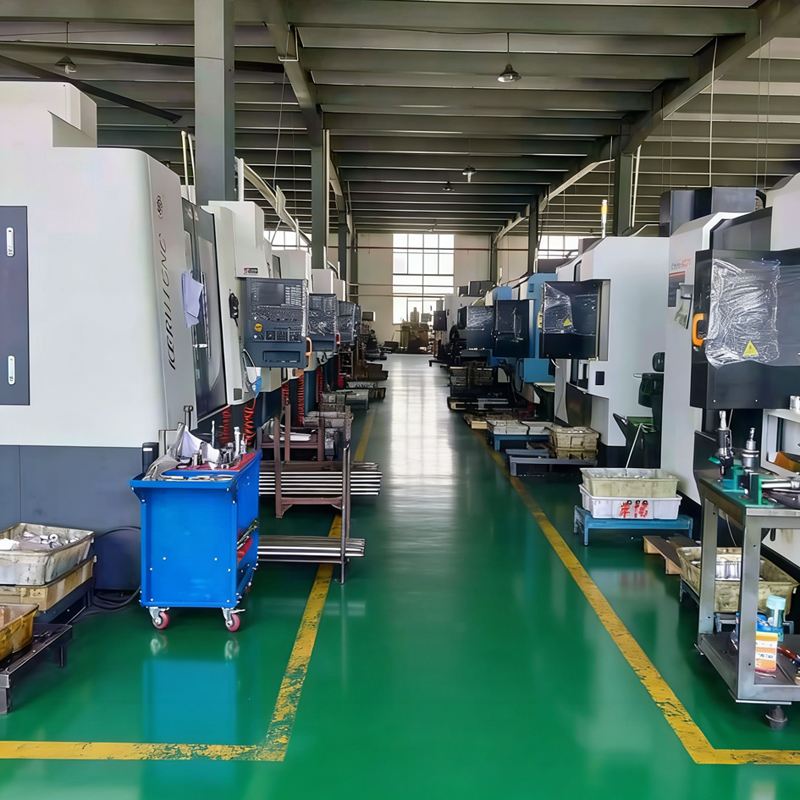
For systems handling corrosive chemicals, high thermal variations, or extreme pressure levels (Class 900 to Class 2500), specify welded connections to ensure absolute safety and leak-free performance. For non-hazardous utilities, localized test lines, or systems requiring frequent cleaning and disassembly, threaded connections provide a highly efficient, tool-free maintenance solution. Partnering with manufacturers operating under structured OEM/ODM setups guarantees that parts meet dimensional tolerances up to ±0.03 mm, with a proven defect rate controlled below 0.3%.
For detailed technical solutions or support, please reach out to us via 86-15868979792.
About Us
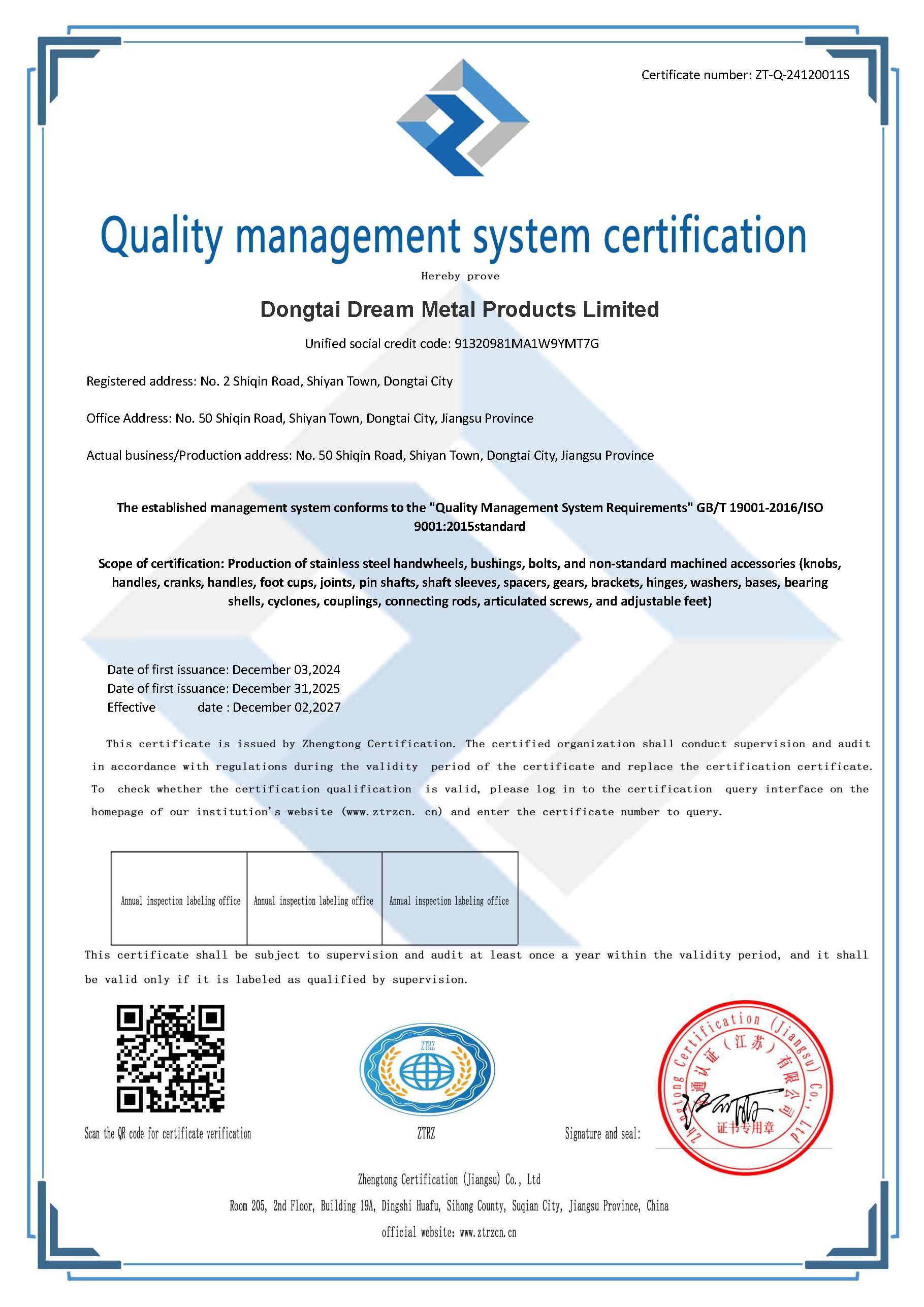
ZheJiang Dream Industry Limited, established in 2008, brings over 20 years of precision manufacturing expertise to the industrial market. Operating from a 2500sqm modern factory facility, our workforce of 34 employees—including 3 senior engineers and 18 machine operators—specializes in the custom design and high-automation production of precision CNC machined parts and hardware. The company maintains an ISO 9001 certified manufacturing framework (Certificate No. ZT-Q-24120011S), producing high-precision stainless steel, brass, and carbon steel components with a steady 15% annual growth rate, serving international clients across more than 30 countries.
Lastest
-
What key quality control documents should I request when auditing a potential CNC components factory?
2026-06-30 -
How long does it usually take a manufacturer to produce and ship custom CNC component prototypes?
2026-06-30 -
How do I choose between 3-axis and 5-axis CNC components for high-precision aerospace parts?
2026-06-30 -
Are there any emerging materials that could replace traditional steel CNC components to reduce weight?
2026-06-30 -
Can you explain the process of adding a custom logo and specific dimensions to a cast iron handwheel?
2026-06-30
SUBSCRIBE
INQUIRY