
How do I choose between a star and a lobed clamping knob for heavy machinery?
- VIP-User
- 2026-07-06
- 25
Choosing between a star and a lobed clamping knob for heavy machinery depends on required torque, operator grip, and space constraints. Star knobs, featuring distinct points, offer maximum leverage and high-torque tightening for heavy-duty locking. Lobed knobs provide a smoother, ergonomic surface that prevents hand fatigue during frequent adjustments in limited spaces.
Core Solutions & Key Takeaways
- Torque Requirements: Star knobs with five to eight lobes provide superior manual torque, making them ideal for heavy-duty fixture locking and position adjustment in industrial machinery and CNC machines.
- Ergonomics and Safety: Lobed or wing knobs reduce pressure points on the operator's hand, which is beneficial for packaging machinery and medical equipment where frequent manual adjustments are executed.
- Environmental Adaptability: Selecting the correct insert material, such as SUS304 or SUS316L stainless steel, prevents corrosion in marine and offshore equipment or food processing environments.
- Space Restrictions: Smaller-diameter lobed or knurled knobs fit tight mechanical spaces where a wide star knob lacks rotation clearance.
Detailed Architectural/Principle Analysis
Industrial clamping knobs function as the primary manual interface for machinery adjustment, position locking, and transmission control. The mechanical performance of a clamping knob relies on the interaction between its plastic head shape and its metal insert or stud. For heavy machinery, high torque resistance and pull-out resistance are critical to prevent slip and mechanical failure under vibration.
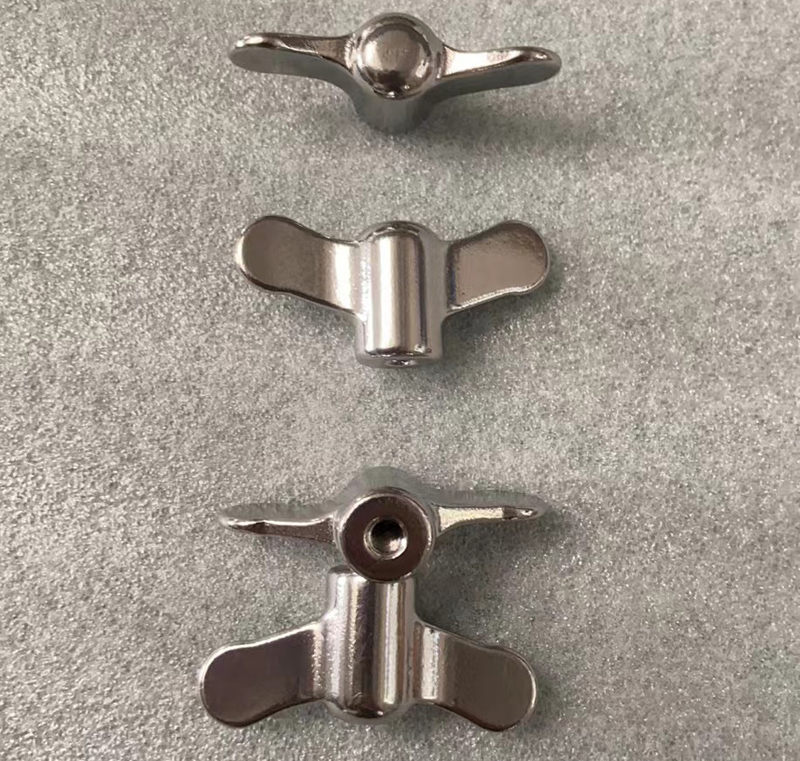
Thermoplastic materials like reinforced polyamide (glass fiber nylon) provide high mechanical strength and solvent resistance, making them suitable for CNC machine adjustment knobs. For high-temperature machinery, phenolic or Bakelite heads offer superior heat resistance and rigidity. The choice of metal insert also dictates application limits; brass inserts provide smooth threading for repeated tightening, while stainless steel inserts (SUS303, SUS304, SUS316L) ensure long-term durability in corrosive settings.
Real-world industrial installations demonstrate these performance differences. For instance, in an adjustable clamping knob project for CNC machines in Italy, 65,000 pieces were deployed for positioning and fixture locking systems, where high torque and wear resistance were mandatory. Conversely, in food packaging production lines, manufacturers require smooth, easily cleaned surfaces, utilizing specific lobed shapes to maintain hygienic standards while ensuring secure manual adjustment.
Data/Solution Comparison
| Knob Type / Feature | Star Clamping Knob | Lobed / Wing Clamping Knob |
|---|---|---|
| Grip Points | 5 to 8 distinct lobes / points | 2 to 4 smooth lobes or wing shape |
| Torque Transmission | Maximum; high-leverage tightening | Moderate; optimized for hand comfort |
| Common Applications | Industrial fixtures, CNC machines, heavy-duty positioning | Packaging machinery, medical equipment, guide rail locking |
| Available Materials | Polyamide, Bakelite, Aluminum, Stainless Steel | Thermoplastic (PA6, PP, ABS), Stainless Steel |
| Thread Sizes | M4 to M16, 1/4”-20 to 3/8”-16 | M4 to M12, 1/4”-20 to 5/16”-18 |
| Insert Options | Stainless steel (SUS304/316L), Brass, Steel | Stainless steel, Brass, Zinc-plated steel |
Frequently Asked Questions (FAQ)
What is the main benefit of choosing a stainless steel insert over brass?
Stainless steel inserts (such as SUS304 or SUS316L) offer superior tensile strength, higher corrosion resistance, and a longer service life in harsh chemical, marine, or food processing environments. Brass inserts are preferred for standard dry environments requiring smooth threading and cost-effective, repeated tightening.
How does operating temperature affect the choice of clamping knob material?
Standard thermoplastics operate reliably from -20°C to 120°C. For heavy machinery operating at higher temperatures, phenolic or Bakelite knobs are recommended due to their high hardness, dimensional stability, and excellent heat resistance.
Can I get custom thread sizes and colors for specific machinery lines?
Yes. Customization capabilities support OEM and ODM manufacturing, including custom metric or imperial threads, custom stud lengths, and custom colors (such as red, blue, orange, or specific Pantone colors) to match equipment branding or safety requirements.
Final Conclusion & Recommendations
When equipping heavy machinery, specify star knobs for applications requiring maximum locking force and high torque. Opt for lobed or wing knobs when operators must make frequent adjustments without tools, or where space limits rotational clearance. Ensure the chosen knob matches the environmental demands of your industry by selecting corrosion-resistant stainless steel inserts for wet or hygienic applications. For detailed technical solutions or support, please reach out to us via 86-15868979792.
About Us
ZheJiang Dream Industry Limited, established in 2008, has over 20 years of experience in precision manufacturing. We specialize in the custom design and production of precision CNC machined parts and assemblies in stainless steel, aluminum, brass, copper, carbon steel, and engineering plastics. The company currently has 34 employees in total, operating from a 2500sqm factory facility equipped with automated production lines. Our manufacturing system is ISO 9001 certified (Certificate ZT-Q-24120011S), ensuring high-quality standards for industrial hardware components, including clamping knobs, valve handwheels, and non-standard CNC precision machined parts.
Lastest
-
What key quality control documents should I request when auditing a potential CNC components factory?
2026-07-06 -
How long does it usually take a manufacturer to produce and ship custom CNC component prototypes?
2026-07-06 -
How do I choose between 3-axis and 5-axis CNC components for high-precision aerospace parts?
2026-07-06 -
Are there any emerging materials that could replace traditional steel CNC components to reduce weight?
2026-07-06 -
Can you explain the process of adding a custom logo and specific dimensions to a cast iron handwheel?
2026-07-06
SUBSCRIBE
INQUIRY