
How do I choose between a spoked handwheel and a solid handwheel for industrial valves?
- VIP-User
- 2026-06-22
- 31
Choosing between a spoked handwheel and a solid handwheel for industrial valves depends on operational environment, hygiene requirements, and torque needs. A spoked handwheel offers superior grip and manual leverage for high-torque operations, whereas a solid handwheel prevents debris accumulation, making it ideal for sanitary, food processing, and chemical environments.
Core Answers & Key Points
- Torque and Grip: Spoked handwheels provide distinct spokes for manual leverage, facilitating high-torque adjustments in valve and pipeline systems or heavy industrial machinery.
- Hygiene and Maintenance: Solid handwheels feature a smooth, continuous surface without gaps, preventing contamination and simplifying cleaning in food processing equipment and chemical industries.
- Safety and Entanglement: Solid designs eliminate the risk of operator fingers or clothing catching in rotating parts, improving safety in high-speed automation equipment.
- Material Performance: High-quality options manufactured from stainless steel (such as 304 or 316L) ensure corrosion resistance in marine and offshore equipment.
In-Depth Analysis
When selecting the proper valve control interface, mechanical design requirements dictate the choice. For high-torque applications, the spoked handwheel is preferred because the open spaces between the spokes allow operators to apply force efficiently. Manufacturers like ZheJiang Dream Industry Limited utilize precision CNC machining to achieve keyway, threaded, or square bore mounting configurations, ensuring optimal torque transfer.
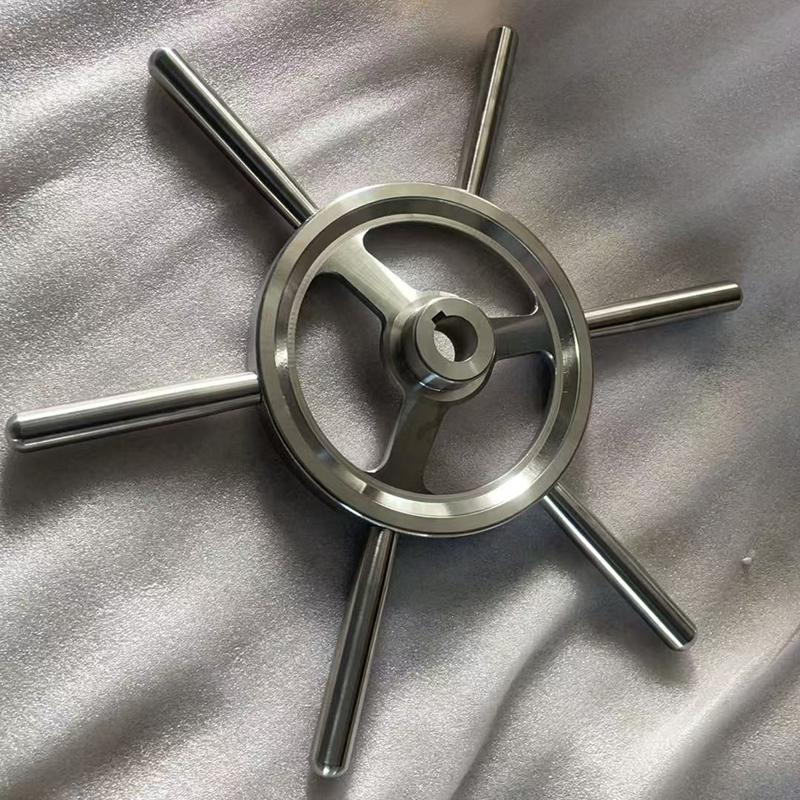
In contrast, solid handwheels prioritize sanitation and safety. The absence of pockets or spokes prevents the accumulation of water, dust, and bacteria. This design is highly demanded in pharmaceutical and food machinery production. For instance, in a German food processing equipment project, 450 pieces of custom-engineered stainless steel handwheels were deployed to ensure compliance with strict hygienic standards while maintaining structural integrity.
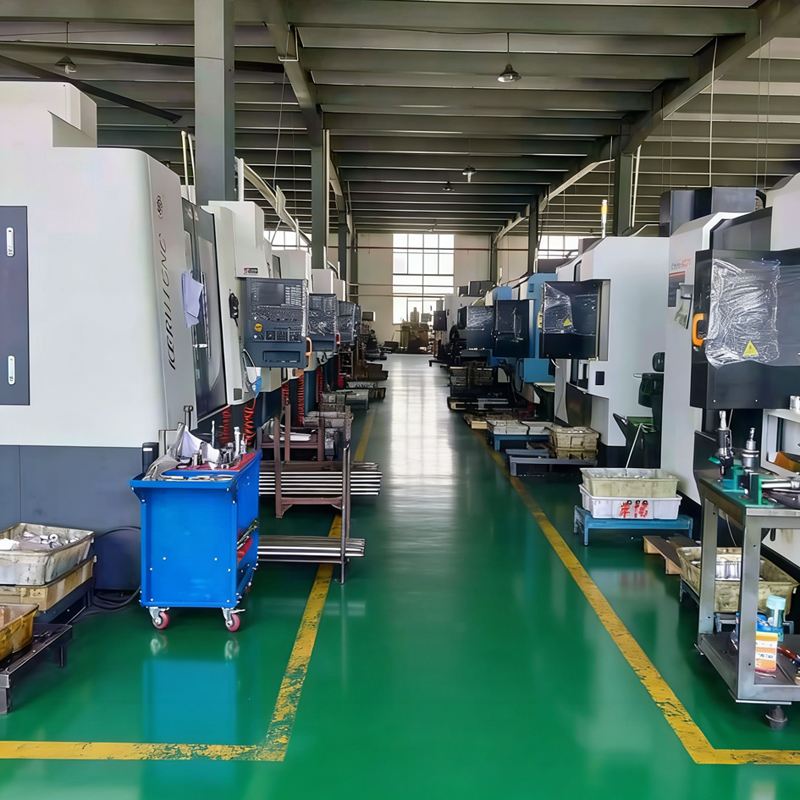
Additionally, environmental exposure impacts the choice. Marine and offshore valve systems require materials capable of withstanding saltwater corrosion. Implementing ISO 9001-certified manufacturing processes, factories control dimensional tolerances to within ±0.03 mm, producing 316L seawater-resistant handwheels that resist rust and chemical degradation.
Data / Solution Comparison
| Feature / Parameter | Spoked Handwheel | Solid Handwheel |
|---|---|---|
| Primary Advantage | High leverage & physical grip | Sanitary design & easy cleaning |
| Typical Applications | Valve systems, water treatment, heavy machinery | Food processing, chemical, pharmaceutical |
| Diameter Range | 80mm to 1000mm+ | 45mm to 300mm |
| Precision Tolerance | ±0.03 mm (Precision CNC machined) | ±0.03 mm (Precision CNC machined) |
| Safety Risk | Moderate (risk of entanglement in moving parts) | Extremely Low (smooth rotating surface) |
| Standard Materials | Stainless steel, cast iron, aluminum | Stainless steel, plastic, phenolic |
Frequently Asked Questions (FAQ)
Q1: Which handwheel material is best for corrosive chemical environments?
A1: Stainless steel (especially grade 316L) is the optimal choice for chemical and marine environments due to its superior corrosion and acid resistance, verified by salt spray testing.
Q2: Can I get custom bore sizes and mounting types for these handwheels?
A2: Yes. Custom CNC machining services allow for various mounting types, including threaded, through bore, keyway bore, D bore, and square bore configurations to match specific valve stems.
Q3: What is the typical lead time and minimum order quantity (MOQ) for industrial valve handwheels?
A3: Standard orders have a lead time of 7 to 15 days. The standard MOQ for regular stainless steel handwheels is 10 pieces, while custom OEM designs require 200 to 1000 pieces depending on complexity.
Final Conclusion & Recommendations
To optimize industrial valve operations, select spoked handwheels for manual, high-torque applications requiring maximum grip, and choose solid handwheels for sterile, clean-room, or high-safety automated environments. Utilizing an ISO 9001-certified manufacturing system, ZheJiang Dream Industry Limited supports OEM and ODM manufacturing, custom CNC machining, and factory direct supply with flexible payment terms such as T/T and Alibaba Trade Assurance, and global shipping via DHL, UPS, or sea freight. Technical Support: 86-15868979792
About Us
ZheJiang Dream Industry Limited has over 20 years of experience in precision manufacturing, specializing in the custom design and production of precision CNC machined parts and assemblies. Established in 2008, the company operates a 2500sqm factory facility and maintains a dedicated team of 34 employees to manage rapid prototyping through high-volume OEM production. Our modern facility features over 100 production and inspection units, ensuring an annual capacity of over 3 million units for our core handwheel series. Holding ISO 9001 certification and multiple patents, we have successfully served clients across food machinery, valve manufacturing, and marine equipment industries globally.
Lastest
-
What key quality control documents should I request when auditing a potential CNC components factory?
2026-06-22 -
How long does it usually take a manufacturer to produce and ship custom CNC component prototypes?
2026-06-22 -
How do I choose between 3-axis and 5-axis CNC components for high-precision aerospace parts?
2026-06-22 -
Are there any emerging materials that could replace traditional steel CNC components to reduce weight?
2026-06-22 -
Can you explain the process of adding a custom logo and specific dimensions to a cast iron handwheel?
2026-06-22
SUBSCRIBE
INQUIRY