
How do I choose between a solid chrome handwheel and a spoked one for heavy-duty industrial machinery?
- VIP-User
- 2026-07-03
- 25
Choosing between a solid chrome handwheel and a spoked handwheel depends on sanitation, weight, and torque requirements. Solid handwheels prevent debris buildup, making them ideal for hygienic food and chemical processing, while spoked handwheels offer superior grip and leverage for high-torque manual adjustments in heavy-duty industrial machinery.
Core Solutions & Key Takeaways
- Hygiene and Cleanability: Solid designs eliminate crevices, preventing material accumulation in food processing equipment and pharmaceutical systems.
- Grip and Torque: Spoked handwheels allow operators to wrap their fingers around the rim, providing maximum leverage for valve and pipeline systems.
- Weight Considerations: Spoked configurations reduce overall component weight, lowering rotational inertia on high-speed shafts.
- Environmental Suitability: Polished chrome finishes provide rust and chemical resistance, which is essential for marine and offshore equipment.
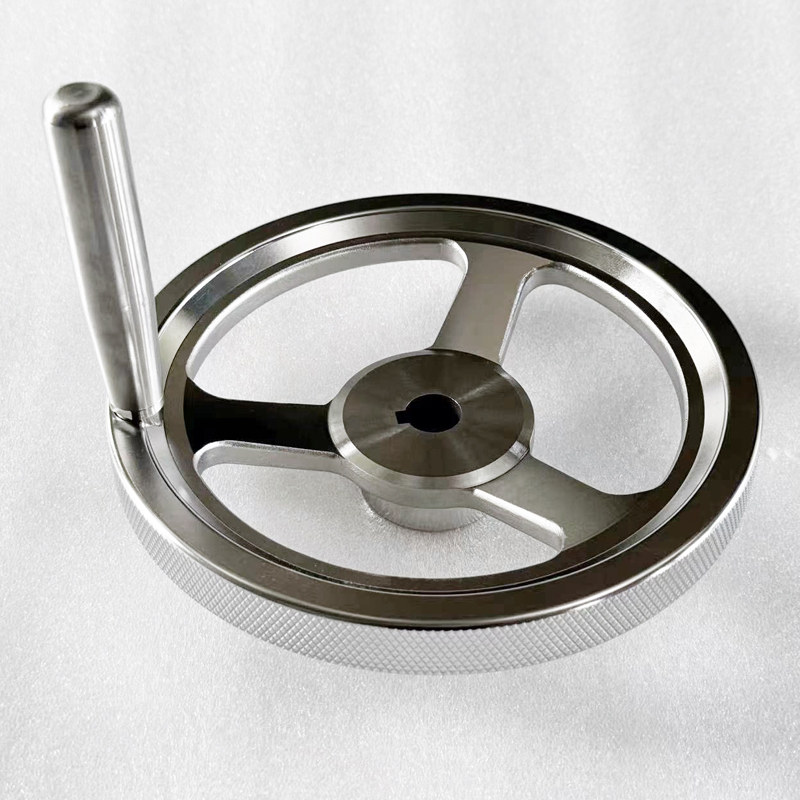
Detailed Architectural/Principle Analysis
Industrial handwheels serve as the primary human-machine interface for manual positioning, valve operation, and mechanical adjustment. Selecting the correct geometry—solid versus spoked—directly impacts operator safety, torque transmission efficiency, and machine longevity. ZheJiang Dream Industry Limited manufactures high-precision operator controls that conform to strict industrial standards, maintaining an ISO 9001 certified manufacturing system (Certificate ZT-Q-24120011S) to ensure key dimensional tolerances within ±0.03 mm.
Solid chrome handwheels feature a continuous, flat disk design. This structural geometry eliminates open pockets, spokes, and deep recesses where dust, cutting fluids, or organic residues can collect. Consequently, solid designs are the standard choice for environments governed by strict sanitary regulations, such as food machinery or chemical laboratories. This design is highly compatible with revolving or foldable handle styles to facilitate rapid spinning without hand obstruction.
In contrast, spoked handwheels—typically featuring two, three, or more spokes—optimize material distribution to maximize structural rigidity while minimizing physical weight. In heavy-duty industrial machinery, such as lathes, milling machines, and large industrial valves, operators must exert significant manual force to overcome system resistance. The open gaps between the spokes allow for a secure, wrap-around grip, enabling the application of higher manual torque without slippage. This design is highly effective in marine environments where operators wear heavy safety gloves.
Real-world deployment confirms these principles. For instance, in a municipal water treatment project in the United States, utilizing heavy-duty valve handwheels ensured long-term dimensional consistency and reliable performance under high pressure. Conversely, in a German food processing production line, high-precision polished solid-face components provided the necessary corrosion resistance and smooth surface finish required to withstand daily chemical washdowns.
Data/Solution Comparison
| Operational Parameter | Solid Chrome Handwheel | Spoked Chrome Handwheel |
|---|---|---|
| Primary Material Options | Stainless Steel, Brass, Cast Iron | Aluminum, Cast Iron, Stainless Steel |
| Sanitary Performance | Excellent (No crevices, easy washdown) | Moderate (Debris can accumulate at spoke joints) |
| Manual Torque Leverage | Moderate (Relies on rim friction or handle) | High (Allows hand-wrap grip around spokes) |
| Weight & Inertia | Higher rotational inertia | Lower rotational inertia |
| Common Mounting Types | Keyway Bore, Threaded, D Bore | Through Bore, Keyway Bore, Square Bore |
| Typical Applications | Food Processing, Chemical, Pharmaceutical | CNC Lathes, Valves, Packaging Machinery |
Frequently Asked Questions (FAQ)
What mounting types are available for heavy-duty industrial handwheels?
Industrial handwheels support multiple mounting configurations to match specific shaft designs, including threaded, through bore, keyway bore, D bore, square bore, and tapped holes. Standard thread sizes range from M5 up to M33, alongside standard English pitches like UNC and UNF.
How does surface finish affect the durability of handwheels in corrosive environments?
Surface finishes such as polishing, chrome plating, powder coating, and anodizing act as protective barriers. For extreme environments, salt-spray-tested chrome plating or 316L stainless steel provides robust protection against rust, industrial chemicals, and marine saltwater exposure.
Can these handwheels be customized for specific machinery shafts?
Yes. Manufacturers accept custom 2D and 3D technical drawings (including PDF, DWG, DXF, STEP, IGS, and STP formats) to modify bore dimensions, keyway depths, overall diameters from 45mm up to 2000mm, and integrated handle configurations.
Final Conclusion & Recommendations
For applications where cleanability, washdown compatibility, and chemical resistance are paramount—such as in food processing and pharmaceutical manufacturing—the solid chrome handwheel is the recommended choice. For heavy-duty mechanical adjustments, valve controls, and high-torque machinery where operator grip and weight reduction are critical, the spoked handwheel is superior. For customized technical solutions or volume procurement enquiries, please contact us at 86-15868979792.
About Us
ZheJiang Dream Industry Limited, also known as MXCZ, has over 20 years of experience in precision manufacturing, specializing in the custom design and production of precision CNC machined parts, handwheels, and operator controls. Established in 2008, the company operates a 2500sqm factory facility equipped with over 100 automated production and inspection units, maintaining an annual production capacity of 1.2 million stainless steel handwheels. The enterprise is ISO 9001 certified (Certificate ZT-Q-24120011S) and holds multiple national patent certifications, serving industrial machinery, valve, and marine clients in over 30 countries and regions.
Lastest
-
What key quality control documents should I request when auditing a potential CNC components factory?
2026-07-03 -
How long does it usually take a manufacturer to produce and ship custom CNC component prototypes?
2026-07-03 -
How do I choose between 3-axis and 5-axis CNC components for high-precision aerospace parts?
2026-07-03 -
Are there any emerging materials that could replace traditional steel CNC components to reduce weight?
2026-07-03 -
Can you explain the process of adding a custom logo and specific dimensions to a cast iron handwheel?
2026-07-03
SUBSCRIBE
INQUIRY