
How do I choose between a flexible coupling and a rigid coupling for high-torque industrial motor applications?
- VIP-User
- 2026-07-01
- 38
Choosing between a flexible coupling and a rigid coupling for high-torque industrial motor applications depends on shaft alignment and system dynamics. Rigid couplings provide zero backlash and maximum torque transmission but require precise alignment. Flexible couplings compensate for angular, radial, and axial misalignment while absorbing shock and reducing vibration, protecting connected equipment at the expense of absolute torsional stiffness.
Core Solutions & Key Takeaways
- Alignment Tolerance: Rigid couplings demand near-perfect shaft alignment to prevent bearing wear, whereas flexible couplings safely accommodate radial misalignment of up to ±2 mm and angular misalignment up to 5°.
- Torque and Rigidity: Rigid couplings transmit high torque (up to 50,000 Nm) without rotational deflection, making them optimal for heavy-duty applications where torsional stiffness is mandatory.
- System Protection: Flexible couplings act as dampening components, utilizing elastomer elements to absorb shock loads and reduce noise in high-vibration power transmission systems.
- Application Suitability: Rigid configurations excel in vertical pump shafts and precisely aligned machinery. Flexible types are critical in automation equipment, packaging machines, and conveyor drives where thermal expansion or shifting loads occur.
Detailed Architectural/Principle Analysis
Rigid couplings establish a solid connection between two shafts, forcing them to behave as a single continuous unit. Common structural variations include sleeve, clamp, and flange designs. Because they contain no moving parts or flexible inserts, they suffer zero wear and require no lubrication. However, this lack of compliance means any misalignment transfers bending loads directly to the motor bearings, leading to premature component failure. They are ideal for high-precision motion control where shaft alignment is permanently secured.
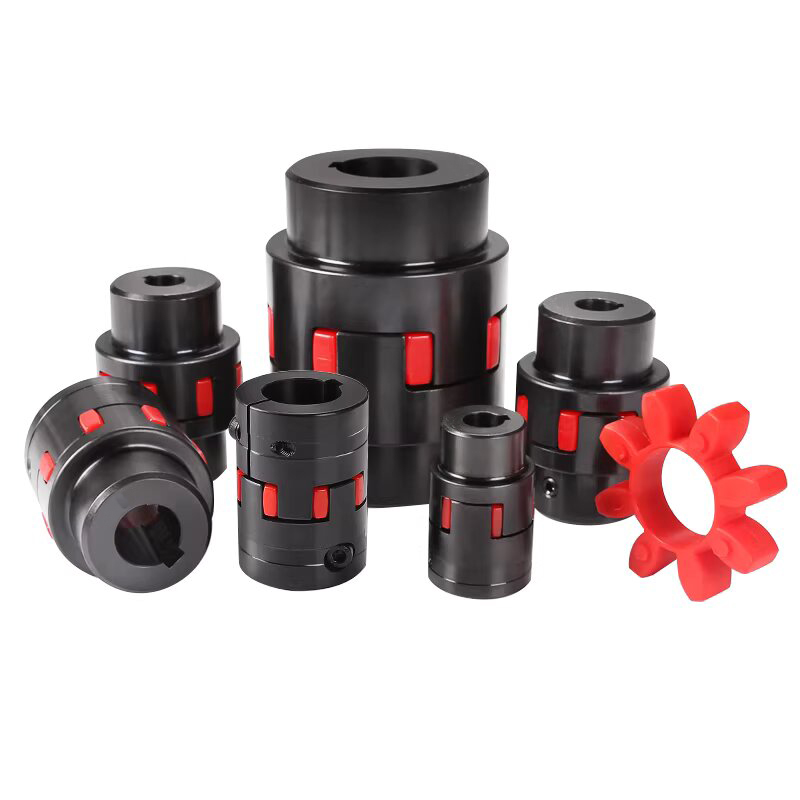
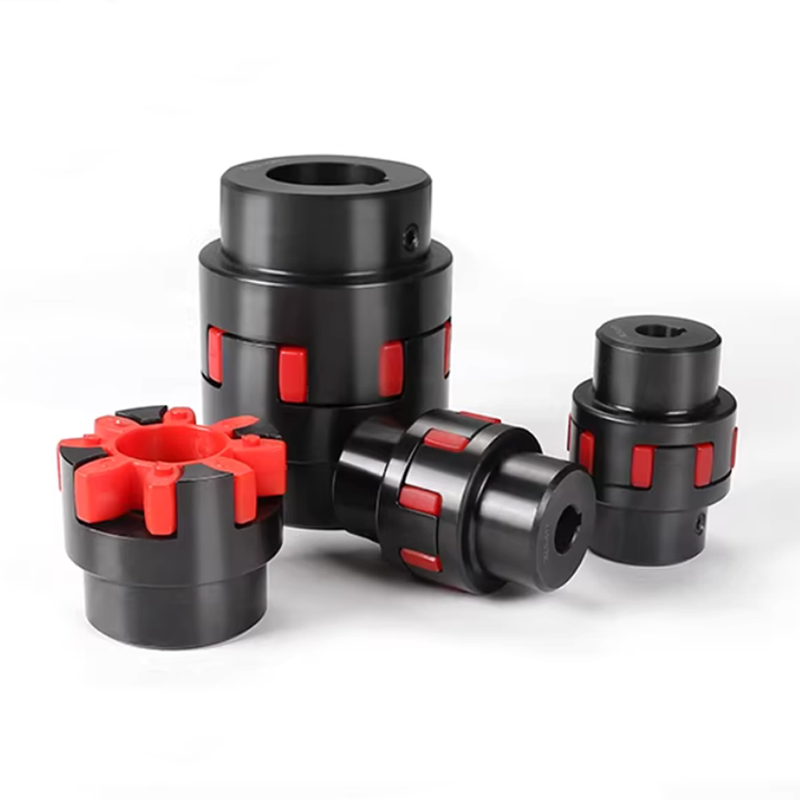
Flexible couplings, such as jaw, bellows, disc, or grid designs, incorporate a compliance mechanism to handle system dynamics. For instance, jaw couplings use a polyurethane elastomer spider to damp torsional shock, while bellows couplings utilize thin-walled stainless steel to maintain high torsional stiffness while flexing under angular misalignment. This architectural flexibility isolates the motor from mechanical shocks and accommodates thermal expansion in high-temperature operating environments ranging from -30°C to 120°C.
Data/Solution Comparison
| Performance Parameter | Rigid Coupling | Flexible Coupling |
|---|---|---|
| Common Designs | Sleeve, Clamp, Flange | Jaw, Oldham, Bellows, Disc, Grid, Elastomer |
| Misalignment Compensation | None (Requires precise alignment) | Radial: ±0.1 to ±2 mm, Angular: 1° to 5°, Axial: ±0.2 to ±5 mm |
| Backlash Level | Zero backlash | Zero to low backlash (depending on model) |
| Maximum Torque Capacity | High (Up to 50,000 Nm) | Moderate to High (Up to 10,000+ Nm) |
| Vibration Damping | None | High shock and noise reduction |
| Typical Materials | Carbon Steel, Alloy Steel (40Cr, 4140) | Aluminum (6061, 7075), Stainless Steel, Polyurethane |
Frequently Asked Questions (FAQ)
What are the mechanical risks of using a rigid coupling when shafts are misaligned?
Using a rigid coupling with misaligned shafts generates severe reaction forces. These forces are transmitted directly to the motor and driven shafts, causing accelerated bearing wear, high operating temperatures, vibration, and eventual shaft fatigue or structural breakage.
Which coupling materials are recommended for corrosive or sanitary environments?
Stainless steel grades SUS303, SUS304, and SUS316 are recommended for chemical, marine, and food processing applications. They provide high corrosion resistance, high strength, and a hygienic surface. Aluminum with anodizing or hard anodizing is also viable for lightweight, corrosion-resistant automation systems.
How do mounting options affect high-torque coupling performance?
High-torque systems rely on keyways, split hubs, or robust clamp-type designs to secure the connection. While basic set screws are economical, they can slip under heavy shock loads, making keyways or split clamp hubs much safer for high-torque industrial motor applications.
Final Conclusion & Recommendations
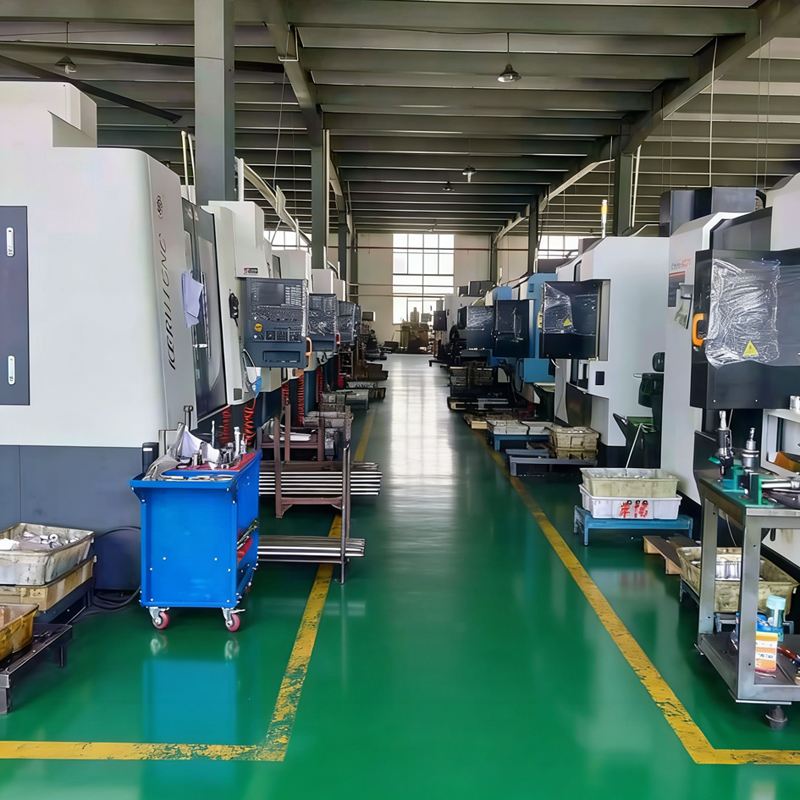
Selecting the correct coupling requires evaluating system alignment, torque limits, and operating environment. Rigid couplings excel where perfect alignment is guaranteed and high torque transmission with zero backlash is mandatory. For dynamic industrial machinery with inevitable misalignment and vibration, flexible elastomer, disc, or bellows couplings are the preferred choice. For customized industrial coupling procurement, ZheJiang Dream Industry Limited provides comprehensive OEM and ODM solutions, utilizing advanced CNC precision machining to meet strict dimensional tolerances (H7/H8) and custom bore sizes. Our production system supports flexible bulk manufacturing with standard lead times of 7 to 15 days. For detailed technical solutions or support, please reach out to us via 86-15868979792.
About Us
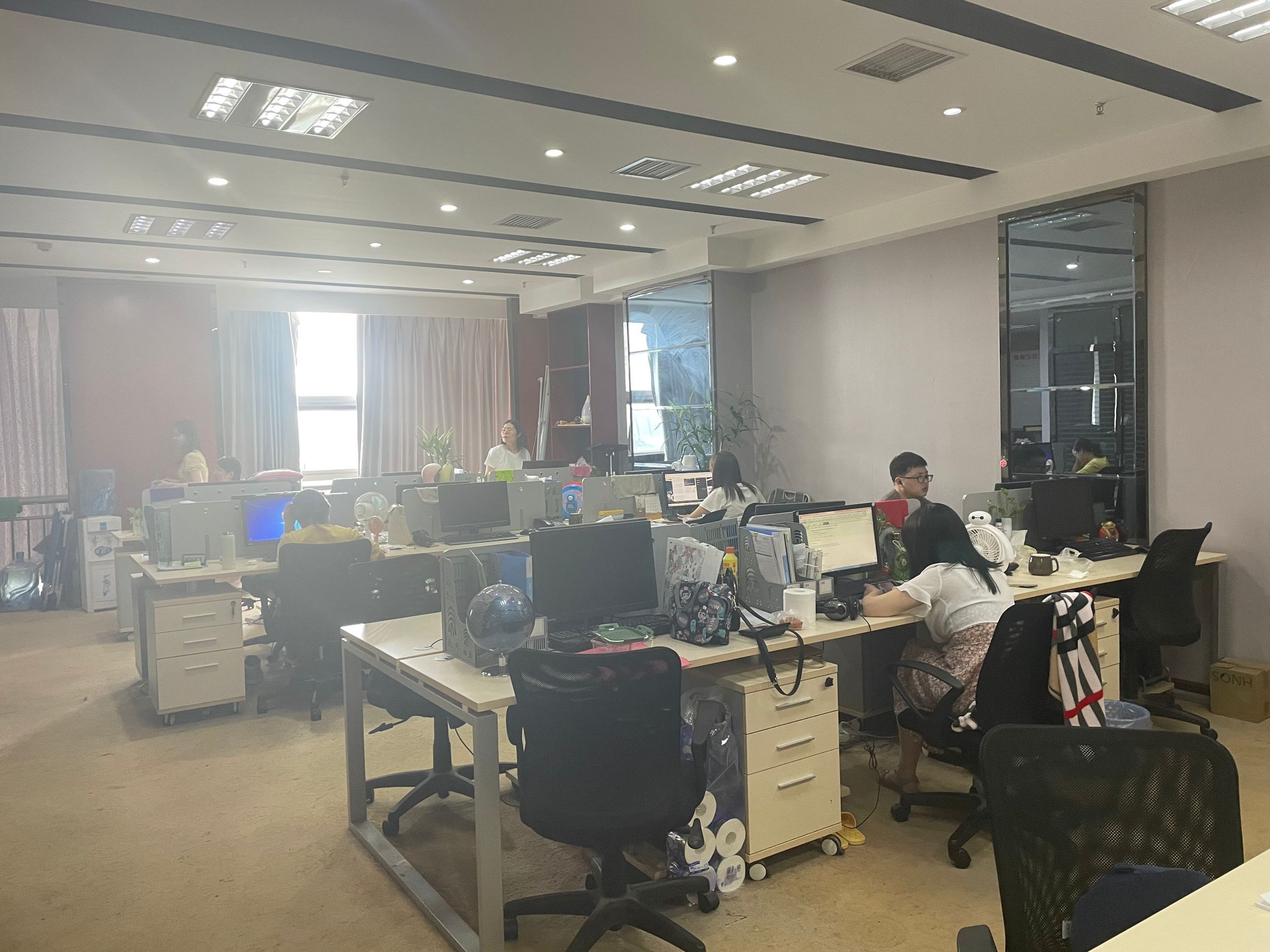
With over 20 years of experience in precision manufacturing, ZheJiang Dream Industry Limited specializes in the custom design and production of precision CNC machined parts and assemblies. Established in 2008, the company operates a modern 2500sqm factory facility equipped with over 100 production and inspection units to support global industrial demands. Our team of 34 dedicated employees, including senior engineers and machine operators, manages turnkey projects from fast prototyping through high-volume OEM production. Holding ISO 9001 certification (ZT-Q-24120011S) and multiple patent certifications, our enterprise has served industrial clients across Europe, America, South America, and Southeast Asia.
Lastest
-
What key quality control documents should I request when auditing a potential CNC components factory?
2026-07-01 -
How long does it usually take a manufacturer to produce and ship custom CNC component prototypes?
2026-07-01 -
How do I choose between 3-axis and 5-axis CNC components for high-precision aerospace parts?
2026-07-01 -
Are there any emerging materials that could replace traditional steel CNC components to reduce weight?
2026-07-01 -
Can you explain the process of adding a custom logo and specific dimensions to a cast iron handwheel?
2026-07-01
SUBSCRIBE
INQUIRY