
How do I choose between a flexible and a rigid coupling for a high-torque motor application?
- VIP-User
- 2026-07-01
- 26
Choosing between a flexible and a rigid coupling for high-torque motor applications depends on shaft alignment and vibration control. Rigid couplings provide zero backlash and maximum torque transmission but require perfect shaft alignment. Flexible couplings compensate for angular, radial, and axial misalignment while absorbing shock loads, protecting sensitive downstream equipment from high-torque impulses.
Core Solutions & Key Takeaways
- Alignment Compliance: Rigid couplings demand absolute coaxial alignment; any misalignment induces severe load on bearings. Flexible couplings accommodate radial misalignment (±0.1 mm to ±2 mm) and angular misalignment (1° to 5°).
- Vibration and Shock Absorption: High-torque motors generate heavy rotational impulses. Flexible couplings utilize elastomeric elements like polyurethane or rubber to damp vibrations, preventing physical damage.
- Torque Density: Rigid couplings offer higher torque transmission capacity and extreme torsional stiffness, making them ideal for high-load systems with fixed shaft positions.
- System Protection: Under sudden overload conditions, flexible designs slip or absorb energy, protecting the motor and gearbox from catastrophic failure.
Detailed Architectural/Principle Analysis
Rigid couplings connect shafts with complete structural rigidity, establishing an uninterrupted line of power transmission. Common configurations include sleeve, clamp, and flange couplings made from robust materials like carbon steel (45# steel, 40Cr, 4140) or cast iron. These couplings are engineered to deliver zero backlash and high torsional stiffness, which are required in precise heavy-machinery drives where misalignment is mechanically eliminated.
Conversely, flexible couplings introduce a resilient damping element between the metal hubs. Designs such as jaw, bellows, disc, and grid couplings are engineered to flex. For example, stainless steel bellows couplings constructed from SUS304 or SUS316 maintain high torsional stiffness while allowing minor shaft movements. This flexibility reduces reaction forces on connected bearings, preventing premature wear and operational downtime in industrial machinery and automated pipeline systems.
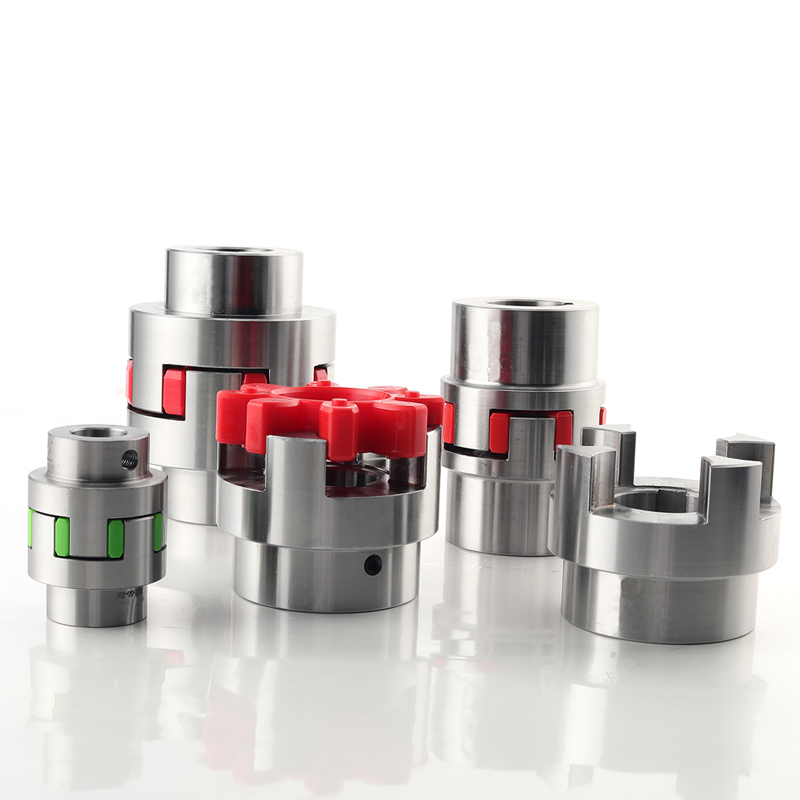
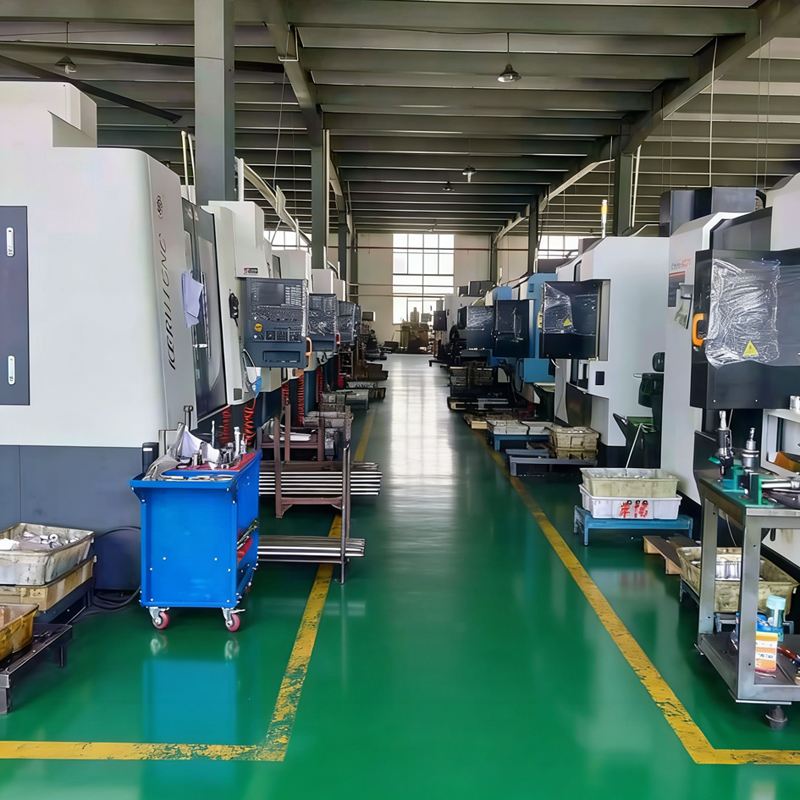
When engineering custom power transmission setups, precision manufacturing is necessary to control shaft tolerances (such as H7 or H8). High-precision coupling components, such as those manufactured by ZheJiang Dream Industry Limited, are processed using automated CNC machining centers to maintain precise dimensional tolerances up to ±0.03mm. This level of accuracy is essential for minimizing vibration and optimizing torque capacity, which ranges from 0.5 Nm up to 50,000 Nm depending on the specific model and material choice.
Data/Solution Comparison
The choice between coupling types can be evaluated across key operational parameters:
| Performance Parameter | Rigid Coupling | Flexible Coupling |
|---|---|---|
| Misalignment Capability | None (Requires perfect alignment) | Radial: ±0.1 mm to ±2 mm / Angular: 1° to 5° |
| Backlash | Zero Backlash | Zero to Low Backlash (depends on design) |
| Vibration Damping | No | Yes (utilizes elastomers or bellows) |
| Common Materials | Carbon Steel, Alloy Steel, Cast Iron | Aluminum (6061/7075), SUS304, Polyurethane |
| Torque Capacity | Extremely High (Continuous) | 0.5 Nm to 50,000 Nm |
| Typical Applications | Heavy Industrial Drives, Fixed Shafts | Servo Motors, CNC Machines, Fluid Pumps |
Frequently Asked Questions (FAQ)
Can a flexible coupling handle the same torque load as a rigid coupling?
Generally, rigid couplings of equivalent size can transmit higher continuous torque because they lack flexible elastomeric or thin-walled components. However, high-specification flexible couplings made of carbon steel or alloy steel can be engineered to support high-torque applications up to 50,000 Nm.
What are the consequences of using a rigid coupling on misaligned motor shafts?
Using a rigid coupling under misaligned conditions forces the shafts to bend during each rotation. This creates high stress, leading to rapid bearing wear, seal leakage, and eventual shaft breakage or motor failure.
Are flexible couplings suitable for precision motion control systems?
Yes. Specialized flexible designs, such as bellows and disc couplings, are engineered for zero-backlash operation and high torsional stiffness, making them suitable for servo motor and CNC machine applications.
Final Conclusion & Recommendations
Select a rigid coupling if your system demands zero backlash, high continuous torque, and has perfectly aligned shafts supported by a single structural frame. Choose a flexible coupling if your application involves thermal expansion, vibration, or unavoidable minor shaft misalignment. For customized power transmission components, OEM manufacturing services support custom bore sizes, keyways, and special material selections to match specific system requirements. For detailed technical solutions or support, please reach out to us via 86-15868979792.
About Us
ZheJiang Dream Industry Limited, established in 2008, is a professional manufacturer specializing in precision CNC machined parts and custom hardware assemblies. Operating a 2,500-square-meter facility with 34 employees, we provide comprehensive OEM and ODM solutions for industrial hardware applications, including handwheels and power transmission couplings. Our ISO 9001 certified manufacturing system ensures consistent quality, supporting global exports to over 30 countries and regions with an annual capacity exceeding 3 million units across our core product lines.
Lastest
-
What key quality control documents should I request when auditing a potential CNC components factory?
2026-07-01 -
How long does it usually take a manufacturer to produce and ship custom CNC component prototypes?
2026-07-01 -
How do I choose between 3-axis and 5-axis CNC components for high-precision aerospace parts?
2026-07-01 -
Are there any emerging materials that could replace traditional steel CNC components to reduce weight?
2026-07-01 -
Can you explain the process of adding a custom logo and specific dimensions to a cast iron handwheel?
2026-07-01
SUBSCRIBE
INQUIRY