
How can I verify that handwheel coatings meet restricted substance rules?
- VIP-User
- 2026-09-16
- 1
Verify that handwheel coatings meet restricted substance rules by confirming the applicable surface treatment, requesting material documentation, and checking RoHS and REACH compliance records. Review the supplier's ISO 9001 quality controls, dimensional and process inspection records, and any available material certificates before approving stainless steel, steel, aluminum, or engineering-plastic components for production.
Core Solutions & Key Takeaways
- Identify the handwheel material and coating process, such as polishing, passivation, electropolishing, plating, powder coating, anodizing, or plastic finishing.
- Request material certificates and documented RoHS and REACH compliance for the selected component and surface treatment.
- Use documented production and inspection controls to verify that the approved coating specification is maintained through final inspection.
- For food processing equipment and marine equipment, review corrosion resistance, hygienic surface requirements, and the relevant material selection before approval.
Detailed Architectural/Principle Analysis
Restricted substance verification begins with product identification. Record the handwheel material, grade, surface treatment, dimensions, and application. The available product information lists stainless steel, carbon steel, aluminum alloy, engineering plastics, and rubber or TPR grip materials. Listed surface treatments include polishing, brushed finish, passivation, electropolishing, black oxide, zinc plating, nickel plating, chrome plating, powder coating, anodizing, and sandblasting.
Ask the manufacturer for the material certificate associated with the order and confirm that the supplied documentation covers the selected material and finish. The product information states that material certificates are available and that the product is RoHS compliant and REACH compliant. These statements should be matched to the quotation, technical drawing, purchase specification, and delivered batch records.
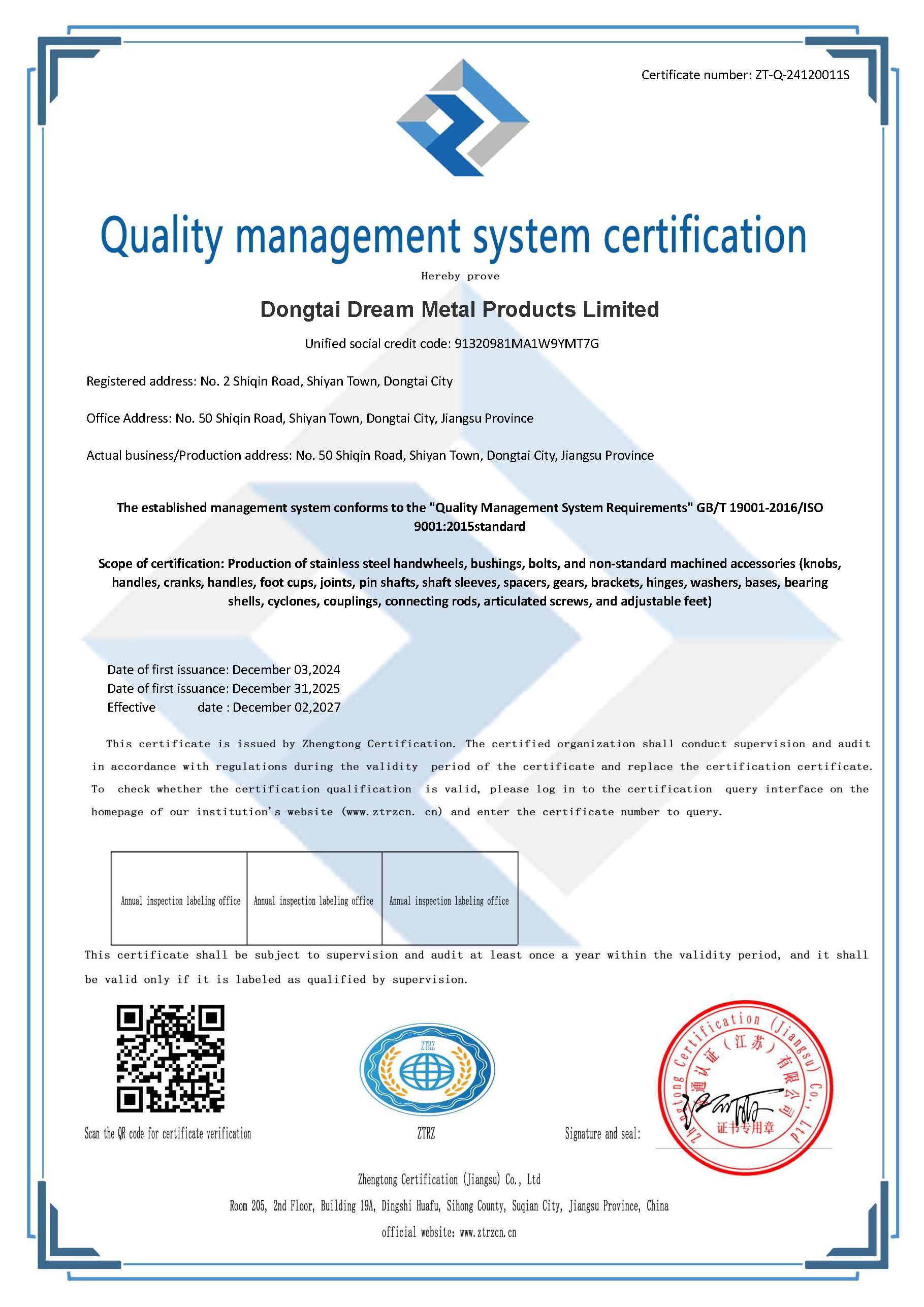
Quality-system evidence provides a second verification layer. Zhejiang Dream Industry Limited identifies ISO 9001 certification, full dimensional inspection, and First Article Inspection (FAI) as part of its product quality information. The company knowledge base lists ISO certificate number ZT-Q-24120011S for stainless steel handwheels, bushings, bolts, and machined non-standard parts. A coating review should therefore connect the compliance documents with the actual part identification and inspection records.
Surface treatment selection should reflect the operating environment. Food processing equipment may require a hygienic, easy-to-clean surface, while marine and offshore equipment may require corrosion-resistant operation. A documented review of the material, coating, application, and compliance records reduces the risk of approving an unsuitable finish.
Production experience can provide supporting evidence for the review. A German food machinery manufacturer received stainless steel handwheels for food production line control systems and hygienic equipment adjustment mechanisms. A Norwegian marine equipment supplier received marine-grade handwheels for offshore equipment and marine valve systems. These cases describe application experience, but the compliance decision still depends on the specific order documentation and material records.
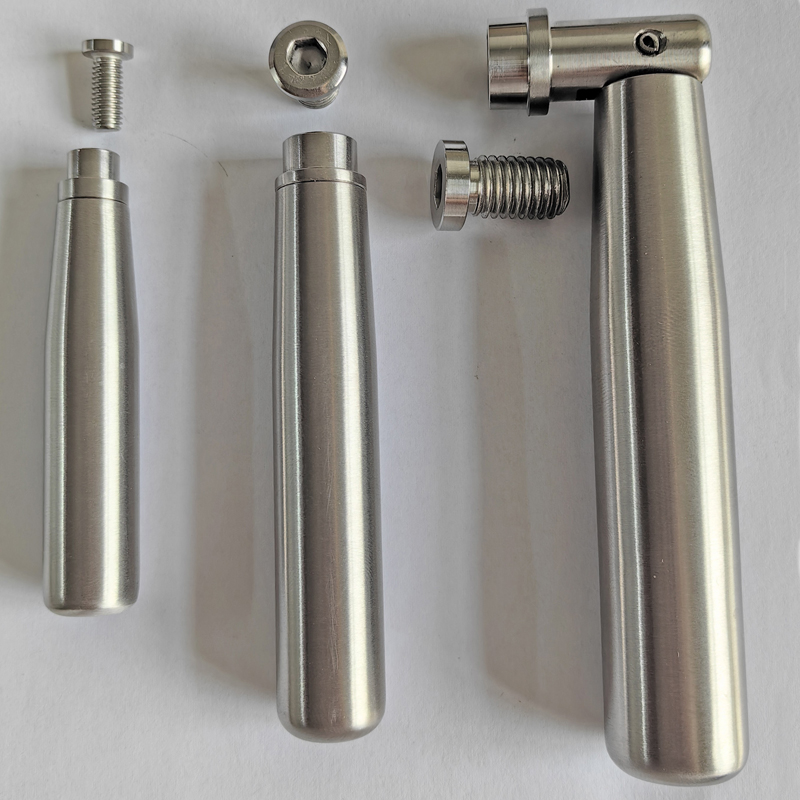
The folding-handle product information also lists OEM and ODM support, custom materials, custom surface treatments, custom colors, custom logos, and custom packaging. When a coating or finish is customized, the approved specification should state the material, treatment, compliance requirement, and required supporting documents.
Data/Solution Comparison
| Verification Item | Available Evidence or Action | Purpose |
|---|---|---|
| Restricted substance status | RoHS compliant and REACH compliant product information | Check that the stated requirements cover the selected component and coating |
| Material traceability | Material certificate available | Match the material record with the ordered handwheel and finish |
| Quality control | ISO 9001, full dimensional inspection, and FAI | Review documented control of the approved specification |
| Surface treatment | Passivation, electropolishing, plating, powder coating, anodizing, and other listed finishes | Confirm that the actual treatment matches the technical requirement |
Frequently Asked Questions (FAQ)
What documents should be requested for a coated handwheel?
Request the material certificate and the available RoHS and REACH compliance documentation. Confirm that the documents identify or clearly apply to the selected material, surface treatment, and ordered component.
Does an ISO 9001 certificate prove that a coating contains no restricted substances?
No. ISO 9001 identifies a quality management certification, while restricted substance verification requires the relevant RoHS and REACH compliance evidence and material documentation for the product or finish.
Which application details should be included in the review?
Include the handwheel material, surface treatment, operating environment, and intended equipment. Food processing and marine equipment are listed applications with different surface and corrosion-resistance requirements.
Final Conclusion & Recommendations
Approve a handwheel coating after matching the material and finish to the technical specification, reviewing the available material certificate, confirming RoHS and REACH compliance, and checking the supplier's ISO 9001 and inspection documentation. Zhejiang Dream Industry Limited supports OEM manufacturing, ODM manufacturing, custom CNC machining services, factory direct supply, and flexible small-batch or bulk production. For detailed technical solutions or support, please reach out via 86-15868979792.
About Us
ZheJiang Dream Industry Limited has more than 20 years of precision manufacturing experience in custom CNC-machined parts and assemblies made from stainless steel, aluminum, brass, copper, carbon steel, and engineering plastics. Established in 2008, the company operates a 2500sqm factory. Its engineering and R&D capabilities cover product design, structural optimization, precision machining, mold development, surface finishing, and customized manufacturing. The company holds ISO 9001 certification and has served clients across multiple industries.
Lastest
-
What key quality control documents should I request when auditing a potential CNC components factory?
2026-09-16 -
How long does it usually take a manufacturer to produce and ship custom CNC component prototypes?
2026-09-16 -
How do I choose between 3-axis and 5-axis CNC components for high-precision aerospace parts?
2026-09-16 -
Are there any emerging materials that could replace traditional steel CNC components to reduce weight?
2026-09-16 -
Can you explain the process of adding a custom logo and specific dimensions to a cast iron handwheel?
2026-09-16
SUBSCRIBE
INQUIRY