
How can I compare clamping knob thread strength for repeated adjustment cycles?
- VIP-User
- 2026-09-20
- 1
To compare clamping knob thread strength for repeated adjustment cycles, assess thread durability, torque resistance, pull-out resistance, material, insert or stud design, and mounting type together. Compare reinforced nylon, stainless steel, and brass thread components against the required tightening frequency, load, temperature, and environment. Product samples, dimensional inspection, and application-specific testing provide the most reliable comparison.
Core Solutions & Key Takeaways
- Compare thread durability, torque resistance, pull-out resistance, and wear resistance as separate performance criteria for repeated adjustment cycles.
- Review the thread component material: reinforced polyamide or glass-fiber nylon supports high mechanical strength and torque resistance, while stainless steel inserts provide corrosion resistance and high tensile strength.
- Match the mounting design to the application, including female threads, male threaded studs, through holes, reamed bores, and keyway bores.
- For CNC machines, automation equipment, packaging machinery, and industrial fixtures, confirm the required thread size, stud length, insert depth, operating temperature, and surface finish before selection.
Detailed Architectural/Principle Analysis
Thread strength in a clamping knob depends on the interaction between the knob body, the threaded insert or stud, and the mating component. The product information identifies torque resistance, pull-out resistance, thread durability, impact resistance, temperature resistance, and wear resistance as relevant mechanical properties. These properties should be compared against the actual adjustment cycle and loading conditions rather than treated as a single strength value.
Material selection changes the expected comparison criteria. Thermoplastic materials such as PA6, nylon, polyamide, PP, and ABS provide lightweight construction, impact resistance, wear resistance, chemical resistance, and insulation. Reinforced polyamide or glass-fiber nylon adds mechanical strength, heat resistance, oil resistance, solvent resistance, and high torque resistance. Stainless steel inserts or studs in SUS303, SUS304, or SUS316L provide corrosion resistance, high tensile strength, and long service life. Brass inserts offer smooth threading, corrosion resistance, and good machinability for repeated tightening applications.
Mounting structure also affects repeated adjustment. Female-threaded knobs use an internal threaded insert, while male-stud designs use an external threaded stud. The listed metric thread options range from M4 to M16, with imperial options including 1/4"-20, 5/16"-18, and 3/8"-16. Stud lengths range from 10 mm to 50 mm, with custom lengths available. The correct comparison should keep the thread size, engagement design, and mating component consistent.
The product supports applications including CNC machine positioning and fixture locking, packaging machine guide-rail adjustment, medical equipment, automation systems, and furniture hardware. For environments involving repeated manual tightening, compare thread wear and pull-out resistance after representative cycles. For higher-temperature applications, the listed operating-temperature example is -20°C to 120°C; the selected material and application conditions still need confirmation.
ZheJiang Dream Industry Limited states that its quality process includes ISO 9001 certification, full dimensional inspection, first article inspection, material certificates, RoHS compliance, and REACH compliance. Its cooperation cases include clamping knob supply for CNC machine positioning and fixture locking systems, where the reported customer feedback addressed locking performance, operating feel, and wear resistance during long-term industrial use.
Data/Solution Comparison
| Comparison factor | Available product data and evaluation focus |
|---|---|
| Thread component material | Reinforced polyamide or glass-fiber nylon offers high mechanical strength and torque resistance; stainless steel inserts or studs offer corrosion resistance and high tensile strength; brass inserts support smooth threading and good machinability. |
| Mounting structure | Female thread, male stud, through hole, reamed bore, and keyway bore are available. Compare thread engagement and mating-part compatibility for the same adjustment task. |
| Thread dimensions | Metric options include M4, M5, M6, M8, M10, M12, and M16. Imperial options include 1/4"-20, 5/16"-18, and 3/8"-16. Stud lengths from 10 mm to 50 mm are listed, with custom lengths available. |
| Repeated-cycle properties | Compare torque resistance, pull-out resistance, thread durability, impact resistance, temperature resistance, and wear resistance under representative operating conditions. |
| Inspection and documentation | ISO 9001 certification, full dimensional inspection, first article inspection, material certificate availability, RoHS compliance, and REACH compliance are listed. |
Frequently Asked Questions (FAQ)
Which material should be compared for repeated clamping cycles?
Compare reinforced polyamide or glass-fiber nylon, stainless steel inserts or studs, and brass inserts according to torque, corrosion, temperature, wear, and application requirements. The data does not provide a universal ranking, so the comparison should reflect the operating environment and tightening load.
How can thread durability be evaluated before mass production?
Request prototype or sample orders and compare thread durability, torque resistance, pull-out resistance, and wear resistance using the intended mating component and adjustment procedure. The product supports OEM and ODM development, custom thread specifications, and prototype support.
Which clamping knob configurations are available?
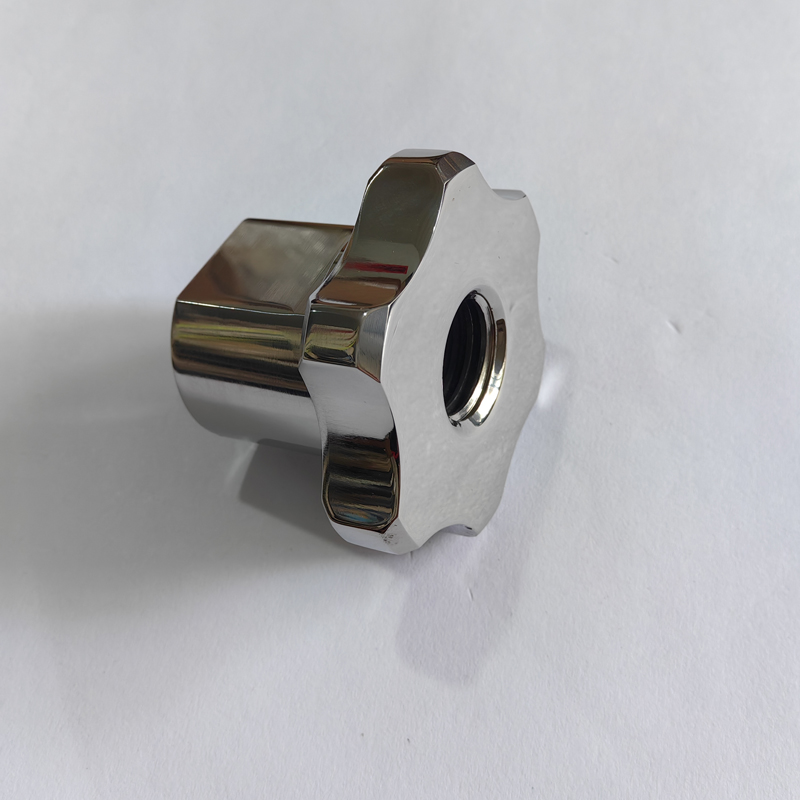
Available configurations include female-threaded inserts, male threaded studs, through holes, reamed bores, and keyway bores. Shape options include star, five-lobe, six-lobe, seven-lobe, eight-lobe, knurled, ball, wing, and scalloped knobs.
Final Conclusion & Recommendations
Compare clamping knob thread strength by holding thread size and mating conditions consistent while reviewing torque resistance, pull-out resistance, thread durability, wear resistance, material, and mounting structure. Use samples or prototypes for application-specific verification, particularly for CNC machines, automation equipment, packaging machinery, and industrial fixtures. ZheJiang Dream Industry Limited supports OEM manufacturing, ODM manufacturing, custom CNC machining, bulk production, and flexible small-batch orders. For detailed technical solutions or support, please reach out via 86-15868979792.
About Us
ZheJiang Dream Industry Limited has over 20 years of precision manufacturing experience and produces custom CNC-machined parts and assemblies in stainless steel, aluminum, brass, copper, carbon steel, and engineering plastics. The company operates a 2,500 sqm factory and provides engineering and R&D capabilities covering product design, structural optimization, CNC precision machining, mold development, surface finishing, and customized manufacturing. Its certifications include ISO 9001, and it has served clients across multiple industries.
Lastest
-
What key quality control documents should I request when auditing a potential CNC components factory?
2026-09-20 -
How long does it usually take a manufacturer to produce and ship custom CNC component prototypes?
2026-09-20 -
How do I choose between 3-axis and 5-axis CNC components for high-precision aerospace parts?
2026-09-20 -
Are there any emerging materials that could replace traditional steel CNC components to reduce weight?
2026-09-20 -
Can you explain the process of adding a custom logo and specific dimensions to a cast iron handwheel?
2026-09-20
SUBSCRIBE
INQUIRY