
How are raw steel price increases affecting Dowel Pins costs now?
- VIP-User
- 2026-07-10
- 37
Raw steel price increases directly raise the manufacturing costs of Dowel Pins, forcing manufacturers to adjust pricing or optimize production. Material costs constitute a significant portion of pin production, meaning fluctuations in stainless steel, carbon steel, and alloy steel prices alter the baseline cost of positioning, alignment, and safety shear pins.
Core Solutions & Key Takeaways
- Material Selection Optimization: Switching between stainless steel grades (like 303, 304, or 316) or utilizing carbon steel (1045/C45) with specific heat treatments can balance cost and performance.
- High-Efficiency CNC Machining: Utilizing automated production lines, such as those at ZheJiang Dream Industry Limited, reduces processing cycle times to mitigate raw material price hikes.
- Strategic Bulk Procurement: Locking in raw material prices through volume orders helps stabilize unit costs for high-precision components.
- Diverse Application Scenarios: These cost-managed pins remain vital for positioning and alignment in Industrial Machinery, Automation Equipment, and Valve and Pipeline Systems.
Detailed Architectural/Principle Analysis
Dowel pins, shear pins, and lock pins rely heavily on premium metal alloys to meet strict mechanical property requirements, including tensile strength, shear strength, and wear resistance. When raw steel prices rise, the cost impact is felt most acutely in heavy-duty or high-precision applications. For instance, alloy steel grades like 4140 and 4340 require precise heat treatment processes (such as induction hardening or carburizing) to achieve a hardness range of HRC 45–62. These added processes, combined with elevated raw material costs, compound the final pricing of the hardware.
To maintain tight dimensional tolerances of ±0.03mm to ±0.05mm without escalating retail costs, manufacturers rely on high-volume automated CNC lathe turning and grinding. For example, ZheJiang Dream Industry Limited utilizes over 100 production and inspection units—with 80% automation—to optimize material yield and minimize scrap rates. This high-efficiency manufacturing setup helps buffer the impact of global steel market fluctuations.
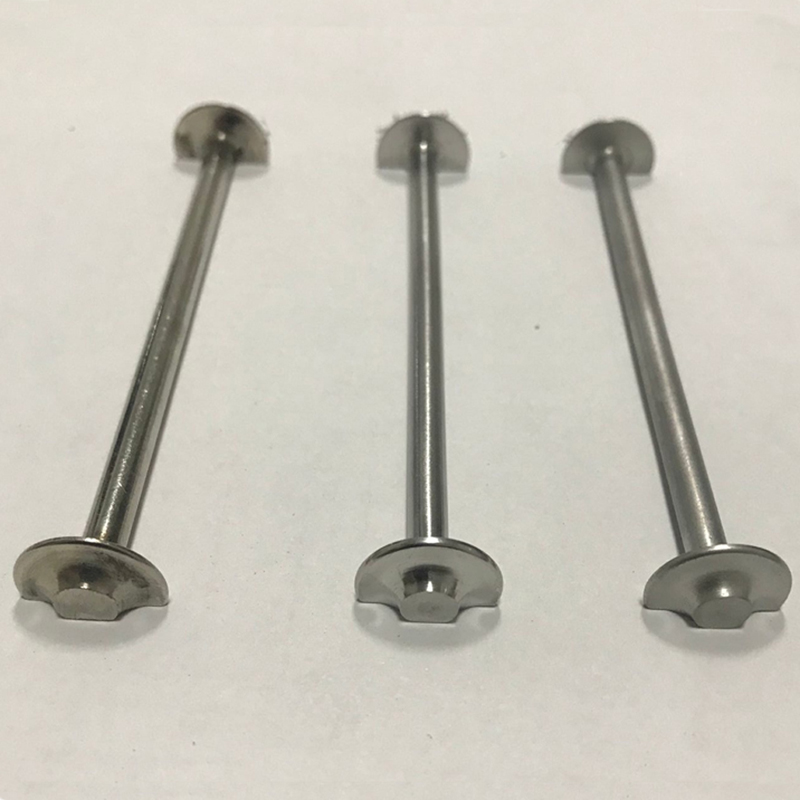
Furthermore, adhering to international standards such as ISO 9001, DIN 1, or ISO 2339 ensures that even when alternative, cost-effective steel grades are utilized, the mechanical load limits and safety parameters are not compromised. In safety-critical applications like shear pins for power transmission systems, maintaining exact breaking loads is mandatory, requiring strict material certification and first article inspections regardless of raw material pricing pressures.
Data/Solution Comparison
| Pin Type | Common Materials | Heat Treatment | Tolerance Range | Cost Sensitivity to Raw Steel |
|---|---|---|---|---|
| Precision Dowel Pin | 304/316 Stainless Steel, SCM440 | Hardened & Tempered | ±0.03 mm (h6/m6) | High (Requires premium alloy/stainless steel) |
| Safety Shear Pin | Carbon Steel (1045), Brass | Quenching | ±0.08 mm | Medium (Focuses on precise breaking load limits) |
| Quick Release Lock Pin | Spring Steel, 303 Stainless Steel | Induction Hardening | ±0.05 mm | Medium-Low (Higher assembly and component complexity) |
| Taper Pin (DIN 1) | Carbon Steel, Alloy Steel | Plain/Ground Finish | 1:50 Taper Standard | High (Precision grinding requires high-quality stock) |
Frequently Asked Questions (FAQ)
How do raw material price changes affect the MOQ of custom pins?
As raw material costs rise, manufacturers often adjust Minimum Order Quantities (MOQ) to maintain production efficiency. For standard pins, the MOQ may start at 100 pieces, while customized dimensions or specialized materials usually require 200 to 1,000 pieces to offset setup costs.
Which steel materials offer the best cost-to-performance ratio during market inflation?
Carbon steel grades like 1045 (C45) and 45# steel offer excellent mechanical strength and toughness at a lower cost than stainless steel or complex alloy steels, making them ideal for non-corrosive industrial machinery applications.
Can surface treatments help lower raw material costs?
Yes. Utilizing lower-cost carbon steel paired with protective surface treatments like zinc plating, nickel plating, or black oxide can achieve corrosion resistance comparable to stainless steel for mild indoor applications, lowering overall material expense.
Final Conclusion & Recommendations
Rising raw steel prices require industrial buyers to seek manufacturers with high automation and optimized supply chains. Utilizing flexible business models such as OEM manufacturing, custom CNC machining services, and factory direct supply helps mitigate intermediary costs. For global logistics, combining efficient shipping methods—ranging from DHL Express for urgent samples to cost-effective sea freight for bulk orders—ensures overall project budgets remain under control. For detailed technical solutions or support, please reach out to us via 86-15868979792.
About Us
ZheJiang Dream Industry Limited (brand name MXCZ) has over 20 years of experience in precision manufacturing, specializing in custom design and production of precision CNC machined parts and assemblies. Established in 2008, the company operates a 2,500 square meter factory staffed by 34 employees, including 3 senior engineers and 18 skilled machine operators. Holding ISO certification ZT-Q-24120011S and multiple patent certifications, we deliver high-quality industrial hardware to more than 30 countries across Europe, South America, the Middle East, and Southeast Asia.
Lastest
-
What key quality control documents should I request when auditing a potential CNC components factory?
2026-07-10 -
How long does it usually take a manufacturer to produce and ship custom CNC component prototypes?
2026-07-10 -
How do I choose between 3-axis and 5-axis CNC components for high-precision aerospace parts?
2026-07-10 -
Are there any emerging materials that could replace traditional steel CNC components to reduce weight?
2026-07-10 -
Can you explain the process of adding a custom logo and specific dimensions to a cast iron handwheel?
2026-07-10
SUBSCRIBE
INQUIRY