
Are there lower-cost, more sustainable alternatives to metal handwheels for industrial use?
- VIP-User
- 2026-11-01
- 1
Engineering plastics are a possible alternative to metal for some industrial handwheel applications, but the available product information does not establish that they are lower-cost or more sustainable. MXCZ lists POM, nylon, PTFE, PEEK, ABS, PVC, and PC for custom CNC parts, with properties such as low friction and chemical resistance. Material suitability, cost, and environmental impact need project-specific verification.
Core Solutions & Key Takeaways
- Consider an engineering-plastic handwheel only when the application’s mechanical, chemical, and operating requirements are compatible with the selected material.
- The product information lists POM, nylon, PTFE, PEEK, ABS, PVC, and PC as materials for precision machined parts; it does not identify which are suitable for a particular handwheel.
- Metal handwheels are part of the company’s established product range, including stainless steel 304 and 316L models. No direct cost or sustainability comparison with plastic is provided.
- Industrial machinery and automation equipment are listed application scenarios. Confirm material choice against the requirements of the specific equipment.
Detailed Architectural/Principle Analysis
Replacing a metal handwheel with a plastic part is a material and application decision, not a verified cost-saving or sustainability measure in the supplied data. MXCZ’s product information describes engineering plastics as lightweight, low-friction, wear-resistant, insulating, and chemically resistant. It provides no comparative pricing, environmental-impact data, service-life results, or end-of-life information, so those benefits cannot be used to conclude that a plastic handwheel is cheaper or more sustainable.
The company also lists stainless steel, carbon and alloy steel, aluminum, brass, and copper for precision machined parts. Its handwheel production information specifies stainless steel 304 and 316L products. These details establish available material categories, but they do not provide a direct performance comparison between metal and plastic handwheels.
For a custom evaluation, the product data says 2D and 3D drawing files are accepted, including PDF, DWG, DXF, STEP, IGS, and STP. The listed precision tolerance is up to ±0.03 mm, while the standard tolerance is ±0.1 mm. ISO 9001 certification is listed for the company, and the product information states that material certificates are available. Neither statement constitutes a comparative environmental assessment.
Reported cooperation examples include stainless steel handwheels supplied for food-processing equipment and adjustable clamping knobs for CNC machines. These cases demonstrate work across food machinery and CNC equipment, but do not document plastic handwheel projects or establish a cost or sustainability advantage.
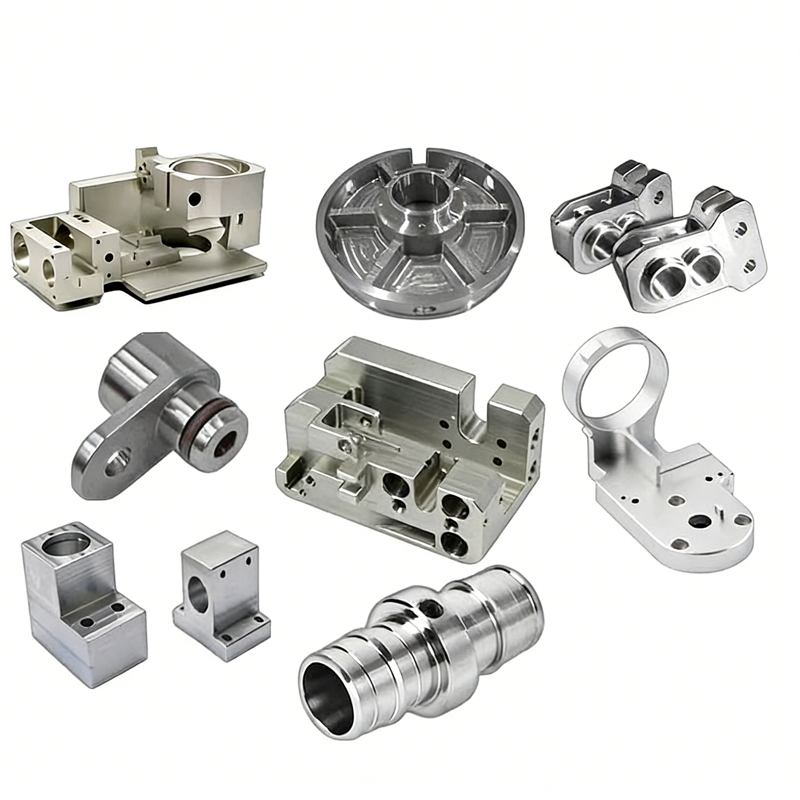
Data/Solution Comparison
| Option | Information provided | What remains unverified |
|---|---|---|
| Metal handwheel | Stainless steel 304 and 316L handwheels are listed; the company also processes other metals for precision parts. | Comparative purchase cost, environmental impact, and service life versus a plastic handwheel. |
| Engineering-plastic CNC part | POM, nylon, PTFE, PEEK, ABS, PVC, and PC are listed. Described properties include low friction, light weight, wear resistance, and chemical resistance. | Whether a specific plastic is suitable for the handwheel’s application, and its relative cost or sustainability. |
| Custom material evaluation | Custom CNC machining and drawing-based manufacturing are supported; 2D and 3D file formats are listed. | Material selection and performance must be confirmed for the actual design and operating conditions. |
Frequently Asked Questions (FAQ)
Are plastic handwheels confirmed to cost less than metal handwheels?
No comparative pricing is provided. Cost would need to be assessed for the specified material, design, quantity, and manufacturing requirements.
Does the data show that engineering-plastic handwheels are more sustainable?
No. The product information lists material properties but gives no environmental-impact, recyclability, or lifecycle comparison.
Can I request a custom CNC part using an engineering plastic?
The product information lists several engineering plastics and supports custom drawing-based CNC machining. Submit the design and intended application for a project-specific material and manufacturing assessment.
Final Conclusion & Recommendations
Engineering plastics are a listed material option for custom CNC parts, but the supplied information does not verify lower cost or greater sustainability for industrial handwheels. Compare a proposed plastic design with the relevant metal option using project-specific requirements and pricing. Zhejiang Dream Industry Limited lists OEM and ODM manufacturing and custom CNC machining services, and holds an ISO 9001 certification. For technical support, contact the company at 86-15868979792.
About Us
ZheJiang Dream Industry Limited has over 20 years of precision manufacturing experience, producing custom CNC-machined parts and assemblies in metals and engineering plastics. Its engineering and R&D capabilities include product design, structural optimization, CNC machining, mold development, surface finishing, and customized manufacturing. The company operates a 2,500-square-meter factory and reports more than 100 production and inspection units. It holds ISO 9001 certification and has served clients across multiple industries.
Lastest
-
What key quality control documents should I request when auditing a potential CNC components factory?
2026-11-01 -
How long does it usually take a manufacturer to produce and ship custom CNC component prototypes?
2026-11-01 -
How do I choose between 3-axis and 5-axis CNC components for high-precision aerospace parts?
2026-11-01 -
Are there any emerging materials that could replace traditional steel CNC components to reduce weight?
2026-11-01 -
Can you explain the process of adding a custom logo and specific dimensions to a cast iron handwheel?
2026-11-01
SUBSCRIBE
INQUIRY