
Are there lower-cost alternatives to Dowel Pins that still provide reliable joint alignment?
- VIP-User
- 2026-08-15
- 17
Yes. The most practical lower-cost alternatives to precision-ground Dowel Pins are standard-tolerance carbon steel cylindrical or locating pins and, where self-locking alignment is required, taper pins. Reliable joint alignment depends on matching pin geometry, material, tolerance, hardness, and surface finish to the load. Lock pins suit temporary retention, while shear pins should primarily provide overload protection rather than precision alignment.
Core Solutions & Key Takeaways
- A carbon steel straight, cylindrical, or locating pin can reduce material and finishing requirements compared with a hardened, precision-ground stainless steel Dowel Pin. Carbon steel grades listed for these pins include 1018, 1045, C45, and 45# steel.
- Taper pins are suitable for precise positioning, shaft locking, and hub alignment. Their tapered geometry provides self-locking positioning, with a common taper of 1:50 and listed standards including DIN 1, DIN 258, and ISO 2339.
- Lock pins support fast locking, temporary fixing, and safety retention, but their suitability for repeatable joint alignment depends on the required clearance and assembly design.
- Shear pins are designed for torque overload and mechanical safety protection. They are relevant to agricultural machinery and power transmission systems, but should not replace a locating pin when alignment is the primary function.
Detailed Architectural/Principle Analysis
The lowest-cost solution is often a simplified Dowel Pin specification rather than a completely different component. A designer can assess whether the joint needs stainless steel, heat treatment, precision grinding, a tight tolerance, or a specialized coating. Removing requirements that do not contribute to the actual load, environment, or alignment target can reduce manufacturing complexity without changing the basic locating principle.
Carbon steel is identified as a cost-effective pin material with high mechanical strength, good machinability, and good toughness. It is suitable for general machinery, industrial fixtures, machine assembly, and transmission equipment. Where corrosion resistance or a hygienic surface is required, stainless steel grades such as 303, 304, 316, and 420 remain relevant, even if their material requirements do not represent the lowest-cost option.
Dowel Pins used for accurate locating are often hardened and precision ground. Available heat-treatment processes include hardening, tempering, carburizing, induction hardening, and quenching, with a listed hardness range of HRC 45–62. These processes can improve wear resistance, fatigue strength, and service life, but they should be specified according to the operating requirement rather than applied automatically.
Fit and tolerance determine whether a lower-cost pin will still align the joint reliably. Available tolerance references include h6, h7, and m6, while listed precision tolerances include ±0.03 mm, ±0.05 mm, and ±0.08 mm. The appropriate tolerance should be selected from the joint clearance, hole accuracy, assembly method, expected wear, and required positioning repeatability.
A taper pin is a functional alternative when the assembly requires accurate positioning with self-locking behavior. It is used in gear assemblies, couplings, pulleys, and machine tools. The mating tapered hole must correspond to the selected geometry, so any component-level saving must be evaluated together with hole preparation and assembly requirements.
Lock pins, including ball lock pins, detent pins, quick release pins, lynch pins, and spring lock pins, prioritize rapid installation and removal. They are used in trailers, construction equipment, agricultural machinery, and automation fixtures. They can retain components effectively, but a clearance-based quick-release design may not provide the same locating accuracy as a ground Dowel Pin.
Shear pins serve a different mechanical purpose. They are designed to break under defined overload conditions to protect machinery such as gear drives, conveyors, agricultural equipment, and power transmission systems. Breaking load, shear strength, proof load, and yield strength therefore take priority over reusable precision alignment.
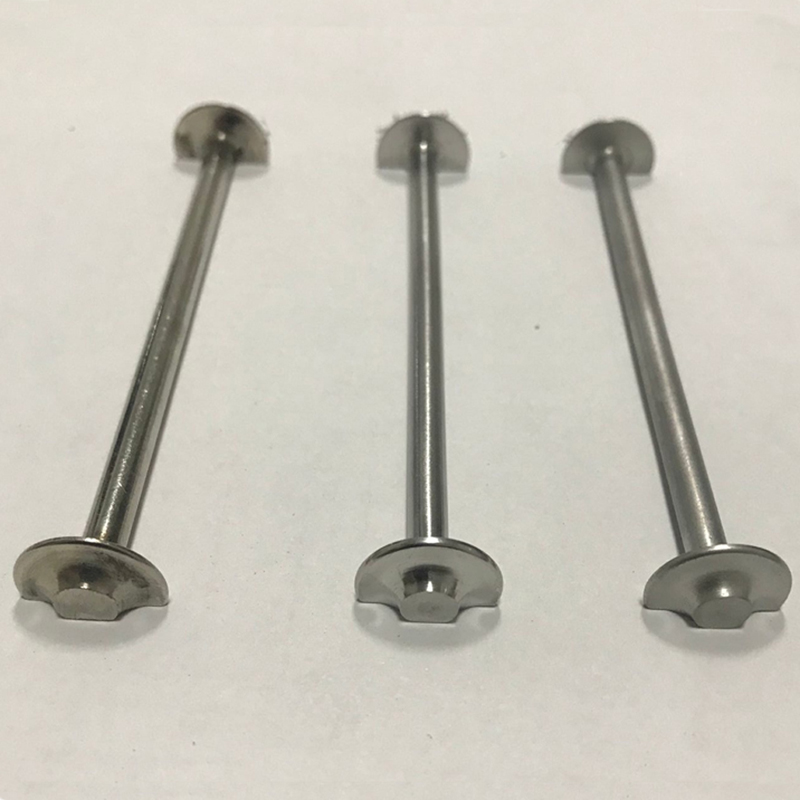
MXCZ pin specifications support diameters from 1 mm to 30 mm in the listed metric range, selected imperial sizes from 1/16 inch to 1/2 inch, and lengths from 3 mm to 300 mm. Custom dimensions, materials, hardness, surface finishes, packaging, and laser logo marking are available through OEM and ODM manufacturing. The product information also lists full dimensional inspection, ISO 9001 certification, material certificates, and RoHS and REACH compliance.
Data/Solution Comparison
| Pin solution | Primary function | Alignment suitability | Relative cost potential | Selection limits |
|---|---|---|---|---|
| Hardened, ground Dowel Pin | Precision positioning and repeatable alignment | High | Higher | Grinding, heat treatment, and tight tolerances should be justified by the application |
| Standard-tolerance carbon steel cylindrical or locating pin | General positioning and assembly fixing | Medium to high when the selected fit meets the joint requirement | Lower | Corrosion resistance, hardness, wear, and hole accuracy must be verified |
| Taper pin | Self-locking positioning, shaft locking, and hub alignment | High for compatible tapered joints | Project-dependent | Requires a matching tapered hole; listed common taper is 1:50 |
| Lock pin | Fast locking, temporary fixing, and safety retention | Low to medium | Project-dependent | Clearance for quick release may reduce positioning accuracy |
| Shear pin | Torque overload and mechanical safety protection | Low as a primary locating component | Project-dependent | Defined shear behavior takes priority over reusable alignment |
Frequently Asked Questions (FAQ)
Can an unhardened carbon steel pin replace a hardened Dowel Pin?
It can be considered for general machinery, fixtures, and assemblies with moderate wear and load requirements. The substitution should be based on required hardness, fatigue resistance, service life, corrosion exposure, and dimensional fit. Hardened and ground pins remain more appropriate where repeated assembly or accurate locating creates significant wear.
Is a taper pin more accurate than a straight locating pin?
A taper pin provides precise, self-locking positioning in a correctly prepared tapered hole. A straight locating pin can also provide precise alignment when its diameter, tolerance, finish, and mating hole are controlled. The better option depends on joint geometry, disassembly needs, hole-manufacturing requirements, and expected loading.
Can a quick-release lock pin maintain reliable joint alignment?
A quick-release lock pin is suitable for temporary fixing and safety retention. It may support general positioning, but it should not be assumed to match the repeatability of a precision-ground Dowel Pin. The actual pin-to-hole clearance and load direction must be evaluated before using it as the primary alignment element.
Final Conclusion & Recommendations
For cost-sensitive joint alignment, begin with a standard-tolerance carbon steel cylindrical or locating pin and specify only the hardness, grinding, coating, and tolerance required by the application. Use a taper pin where self-locking positioning justifies the tapered-hole design. Reserve lock pins for removable retention and shear pins for overload protection. OEM manufacturing, ODM manufacturing, prototypes, flexible small batches, and bulk production are supported, while the ISO 9001-certified inspection system includes dimensional checks throughout production. For detailed technical solutions or support, please reach out via 86-15868979792.
About Us
ZheJiang Dream Industry Limited provides custom design and production of precision CNC-machined parts and assemblies in stainless steel, aluminum, brass, copper, carbon steel, and engineering plastics. The company operates a 2,500-square-meter factory and covers design review, CNC turning and milling, surface treatment, precision casting, and final inspection. Its engineering and R&D capabilities include product design, structural optimization, CNC precision machining, mold development, surface finishing, and customized OEM and ODM manufacturing. The company holds ISO certificate ZT-Q-24120011S and has served clients across multiple industries.
Lastest
-
What key quality control documents should I request when auditing a potential CNC components factory?
2026-08-15 -
How long does it usually take a manufacturer to produce and ship custom CNC component prototypes?
2026-08-15 -
How do I choose between 3-axis and 5-axis CNC components for high-precision aerospace parts?
2026-08-15 -
Are there any emerging materials that could replace traditional steel CNC components to reduce weight?
2026-08-15 -
Can you explain the process of adding a custom logo and specific dimensions to a cast iron handwheel?
2026-08-15
SUBSCRIBE
INQUIRY