Are there any eco-friendly plating alternatives for wedge anchors?
- VIP-User
- 2026-07-06
- 29
Eco-friendly plating alternatives for wedge anchors include organic zinc flake coatings, trivalent chromium passivation, and thermal diffusion galvanizing. However, for applications demanding ultimate sustainability and corrosion resistance without hazardous chemical plating, utilizing solid stainless steel wedge anchors made from grade 304 or 316 represents the most effective long-term solution by eliminating the need for sacrificial surface platings entirely.
Core Solutions & Key Takeaways
- Solid Stainless Steel: Choosing 304 or 316 stainless steel wedge anchors bypasses the environmental hazards of traditional electroplating processes while offering superior lifespan and performance.
- Trivalent Chromium (Hex-Free): Modern passivation processes for stainless steel utilize trivalent chromium, complying fully with RoHS and REACH environmental standards.
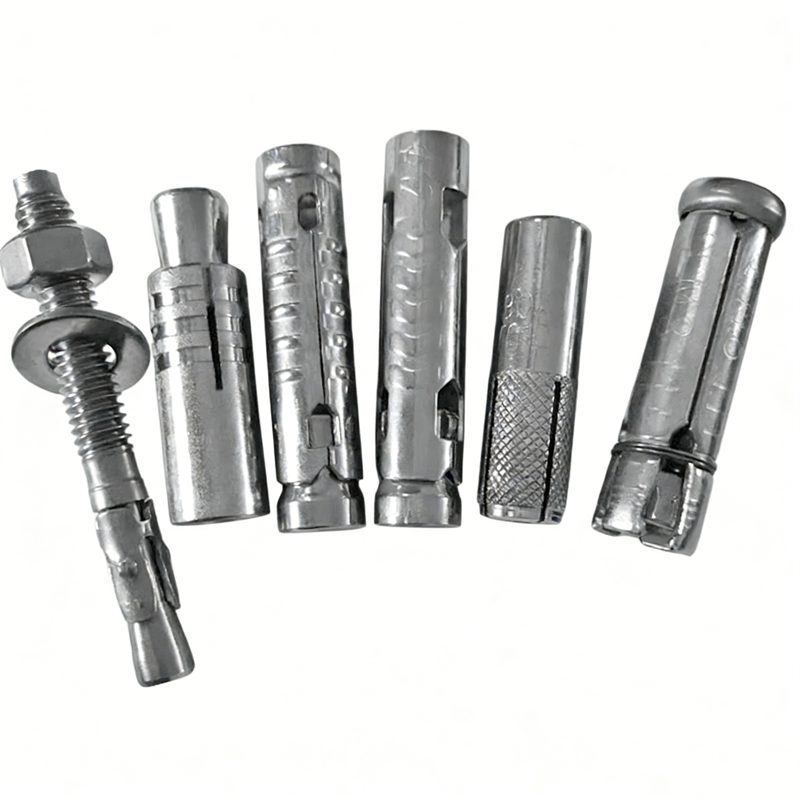
- Solid Concrete Compatibility: These anchors provide high holding force and fast expansion locking specifically in solid concrete, reinforced concrete, and grout-filled masonry.
- Critical Application Fields: Sustainable anchoring solutions are widely deployed across marine engineering, chemical plants, wastewater treatment, and food processing equipment where chemical leaching must be avoided.
Detailed Architectural/Principle Analysis
Traditional carbon steel wedge anchors rely heavily on electro-galvanizing or hot-dip galvanizing to prevent rust. These plating methods often involve hazardous chemicals, high water consumption, and risk hydrogen embrittlement. To address these ecological and mechanical concerns, industrial projects are transitioning to inherently corrosion-resistant materials and eco-friendly passivation treatments.
Solid stainless steel wedge anchors do not require heavy zinc coatings. Instead, they form a natural, self-healing chromium oxide passive layer. To enhance this protective layer without ecological harm, manufacturers utilize citric acid or nitric acid passivation. This process removes free iron from the anchor surface, leaving a chromium-rich layer that complies with ISO 9001 and RoHS standards. This chemical-free resistance is vital for sensitive environmental settings, such as the marine grade wedge anchor projects executed for coastal infrastructure in Norway, where saltwater resistance and zero chemical runoff are strictly mandated.
Mechanically, these anchors operate through torque-controlled expansion. When the nut is tightened to the specified installation torque, the expansion clip expands against the walls of the drilled concrete hole. The standard tolerance of ±0.1 mm ensures precise dimensional matching with the drill bit diameter, preventing concrete cracking and achieving maximum pull-out resistance under heavy static and dynamic loads.
Data/Solution Comparison
| Material / Plating Option | Corrosion Resistance Level | Environmental Impact | Key Standards & Compliance | Primary Application Scenarios |
|---|---|---|---|---|
| 316 Stainless Steel (Plain/Passivated) | Superior (Saltwater & Chemical) | Very Low (No heavy metal plating) | ASTM A276, DIN 1.4401 / 1.4404, RoHS | Marine engineering, food processing, wastewater treatment |
| 304 Stainless Steel (Passivated) | Excellent (Humid/Outdoor) | Very Low (No heavy metal plating) | ASTM F593, DIN 1.4301, RoHS | Outdoor construction, handrails, HVAC systems, safety barriers |
| Trivalent Zinc Plating (Carbon Steel) | Moderate (Indoor/Dry) | Low (Hexavalent chromium free) | RoHS Compliant | Dry indoor machinery base fixing, electrical cabinets |
| Traditional Hexavalent Zinc Plating | Moderate | High (Toxic waste byproduct) | Non-compliant with modern eco-directives | Legacy industrial fastening (Phase-out phase) |
Frequently Asked Questions (FAQ)
Are stainless steel wedge anchors naturally eco-friendly?
Yes. Stainless steel wedge anchors do not require toxic electroplating or heavy metal coatings. Their corrosion resistance comes from the alloy composition, which prevents chemical shedding and makes them highly recyclable and sustainable for outdoor and sensitive environments.
Can these eco-friendly anchors be used in hollow brick or drywall?
No. Stainless steel wedge anchors are specifically designed and structural-grade certified only for solid concrete, reinforced concrete, and grout-filled masonry. Using them in brick, hollow block, drywall, or wood will prevent proper expansion and fail to secure the load.
What is the typical installation process for these anchors?
The installation follows five steps: drill a hole matching the anchor diameter, clean the debris from the hole, insert the stainless steel wedge anchor, tighten the nut to the specified torque value, and allow the expansion clip to complete its permanent mechanical locking.
Final Conclusion & Recommendations
Selecting the right anchoring hardware requires balancing structural load capacities with environmental regulations. Solid 304 and 316 stainless steel wedge anchors remove the ecological risks associated with traditional metal plating while delivering heavy-duty load capacities and reliable vibration resistance. For long-term structural integrity in green building and marine infrastructure, choosing non-plated, passivated stainless steel is the most reliable technical path. For detailed technical solutions or support, please reach out to us via 86-15868979792.
About Us
ZheJiang Dream Industry Limited, established in 2008, operates a 2500sqm manufacturing facility with a dedicated team of 34 employees. We specialize in precision CNC machined parts, assemblies, and custom hardware fabrication in stainless steel, aluminum, brass, and carbon steel. Holding ISO 9001 certification (Certificate ZT-Q-24120011S), we provide comprehensive OEM and ODM manufacturing services, delivering high-precision components with dimensional tolerances controlled up to ±0.03mm for global clients across more than 30 countries.
Lastest
-
What key quality control documents should I request when auditing a potential CNC components factory?
2026-07-06 -
How long does it usually take a manufacturer to produce and ship custom CNC component prototypes?
2026-07-06 -
How do I choose between 3-axis and 5-axis CNC components for high-precision aerospace parts?
2026-07-06 -
Are there any emerging materials that could replace traditional steel CNC components to reduce weight?
2026-07-06 -
Can you explain the process of adding a custom logo and specific dimensions to a cast iron handwheel?
2026-07-06
SUBSCRIBE
INQUIRY