
Are plastic handwheel options becoming more popular than iron ones?
- VIP-User
- 2026-07-13
- 29
Plastic handwheel options are becoming more popular in lighter-duty, cost-sensitive, and chemically corrosive environments. However, they are not replacing iron or stainless steel handwheels in heavy-duty industrial machinery, high-torque valve systems, and high-precision CNC equipment where mechanical strength, impact resistance, and extreme temperature tolerance are mandatory.
Core Solutions & Key Takeaways
- Material Specialization: Plastic and phenolic handwheels excel in lightweight and low-torque applications, whereas metal handwheels remain the standard for high-torque operations.
- Corrosion Resistance: For highly corrosive environments like marine or chemical processing, 316L stainless steel and specific plastics outlast standard iron.
- Application Fit: Plastic options are widely used in commercial equipment, food processing, and medical devices due to hygiene and weight, while iron or steel handwheels dominate in heavy industrial machinery, lathes, and high-pressure valve systems.
- Manufacturing Adaptability: Suppliers like ZheJiang Dream Industry Limited provide both polymer and high-precision metal handwheel variants to match diverse industrial application scenarios.
Detailed Architectural/Principle Analysis
The choice between plastic and metal handwheels depends on mechanical stress, environmental exposure, and operational frequency. Traditional cast iron handwheels offer high density and mass, which assists in manual momentum during adjustment. However, they are prone to oxidation and require heavy surface coatings like powder coating or chrome plating to survive industrial wear.
Plastic handwheels, often molded from phenolic resins or reinforced polymers, offer lightweight operation, built-in electrical insulation, and native chemical resistance. They do not rust, making them highly suitable for cleanrooms, laboratory equipment, and packaging lines. Despite these benefits, polymers suffer from creep under sustained loads and can crack under sudden mechanical impacts or extreme temperature fluctuations.
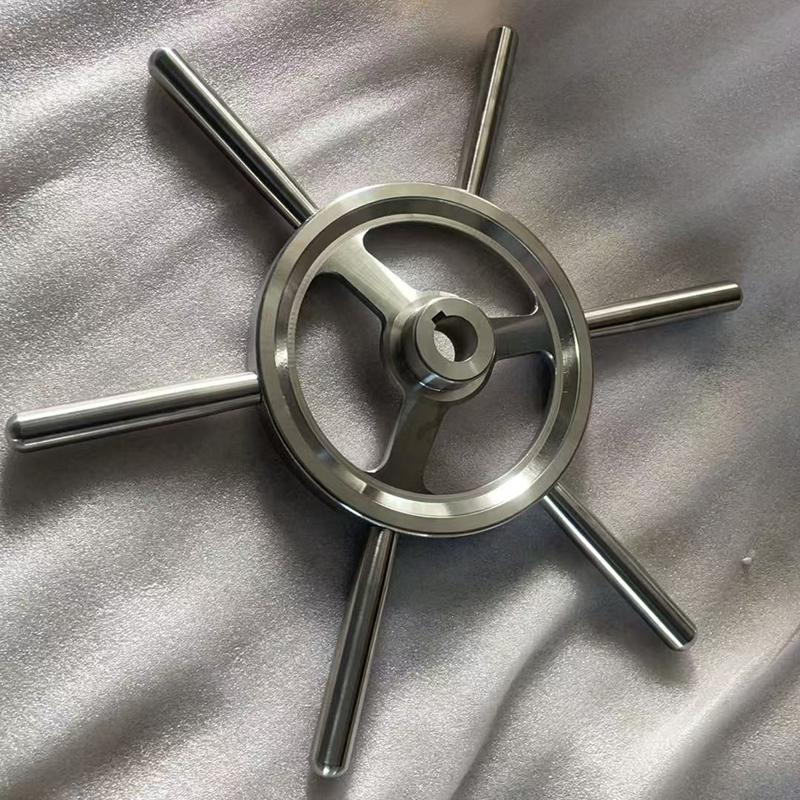
For demanding environments, manufacturers deploy high-precision stainless steel (304/316L) handwheels as a premium alternative to both plastic and cast iron. With a precision tolerance of up to ±0.03 mm, these metal components deliver the structural integrity of iron without the risk of corrosion. In offshore marine installations, for instance, a Norwegian marine equipment supplier utilized 1,050 pieces of marine-grade handwheels for offshore valve systems, choosing stainless steel over plastic to survive continuous saltwater exposure and high physical stress.
Data/Solution Comparison
| Parameters / Features | Plastic / Polymer Handwheels | Cast Iron Handwheels | Stainless Steel Handwheels (304/316L) |
|---|---|---|---|
| Weight / Density | Low (Lightweight) | High (Heavy Duty) | High (Heavy Duty) |
| Tensile Strength | Low to Medium | High | Very High |
| Corrosion Resistance | High (Chemical resistant) | Low (Requires coating) | Excellent (Salt spray tested) |
| Standard Tolerances | ±0.1 mm | ±0.1 mm | ±0.03 mm (Precision grade) |
| Common Thread Types | M5 to M12 | M10 to M20 | M5 to M33, Tr12 to Tr30, UNC/UNF |
| Typical Applications | Medical, Food processing, Packaging | Heavy machinery, Lathes, Valves | Marine, Chemical, High-end valves |
Frequently Asked Questions (FAQ)
Can plastic handwheels replace metal handwheels in high-torque valve systems?
No. High-pressure valve systems require high torque to seal. Plastic handwheels can deform or shear at the hub interface (such as keyway or square bores) under heavy loads. Stainless steel or cast iron is required for these applications.
Are plastic handwheels safe for food processing equipment?
Yes, specific food-grade plastics are used. However, polished stainless steel handwheels are often preferred for critical contact areas because they lack micro-pores, withstand harsh clean-in-place (CIP) chemicals, and comply fully with hygiene standards.
What mounting types are available for precision handwheels?
Industrial handwheels are supplied with diverse mounting configurations, including threaded, through bore, keyway bore, D-bore, square bore, and tapped holes, accommodating standard shaft attachments.
Final Conclusion & Recommendations
While plastic handwheel options are expanding their market share in light industrial, commercial, and corrosive laboratory environments, they cannot fully replace metal alternatives. Cast iron remains the economical choice for heavy machinery, while stainless steel represents the ultimate tier for hygiene, durability, and extreme environments. For customized industrial requirements, evaluating the exact torque, temperature, and chemical exposure of your application is necessary before choosing a material. For detailed technical solutions or support, please reach out to us via 86-15868979792.
About Us
Established in 2008, ZheJiang Dream Industry Limited, also known as MXCZ, has over 20 years of experience in precision manufacturing. The company currently has 34 employees in total, operating from a 2,500 square meter factory facility optimized for OEM and ODM manufacturing. Holding ISO certification (ZT-Q-24120011S), we specialize in the custom design and production of precision CNC machined parts, stainless steel handwheels, and operator controls with key dimensional accuracy up to ±0.03mm. ZheJiang Dream Industry Limited has served clients across multiple industries globally, exporting 65% of its annual production to more than 30 countries and regions including Europe, South America, the Middle East, and Southeast Asia.
Lastest
-
What key quality control documents should I request when auditing a potential CNC components factory?
2026-07-13 -
How long does it usually take a manufacturer to produce and ship custom CNC component prototypes?
2026-07-13 -
How do I choose between 3-axis and 5-axis CNC components for high-precision aerospace parts?
2026-07-13 -
Are there any emerging materials that could replace traditional steel CNC components to reduce weight?
2026-07-13 -
Can you explain the process of adding a custom logo and specific dimensions to a cast iron handwheel?
2026-07-13
SUBSCRIBE
INQUIRY